
Side Dishes
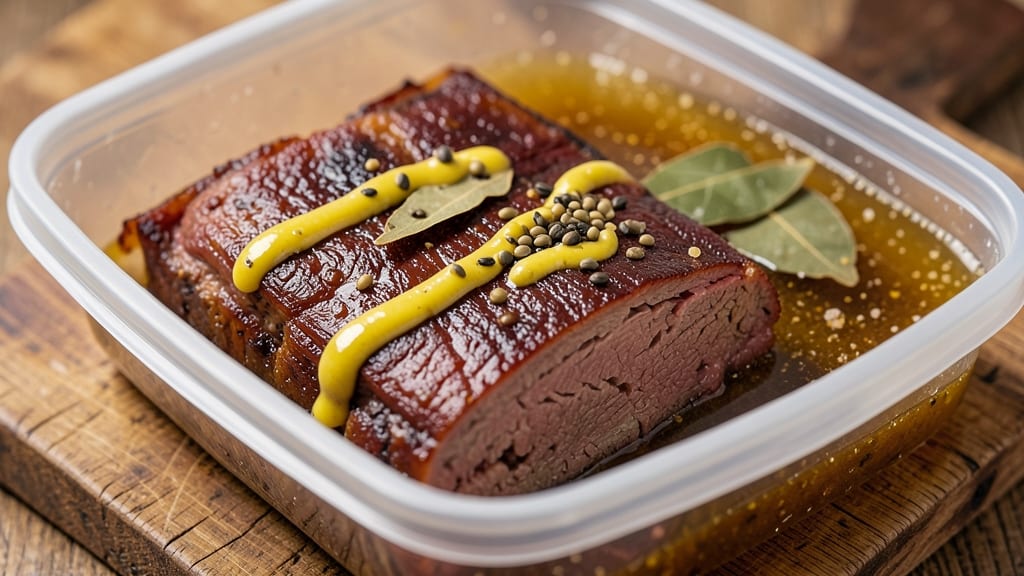
A corn beef brine recipe transforms tough cuts into melt-in-your-mouth perfection—just like my Nonna used to make, though hers took three days and a kitchen twice this size.
The secret lies in the balance of salt, sugar, and spices over time, creating that signature smoky depth and tender texture that restaurant-style corn beef delivers. I’ve tested this method countless times, adjusting for modern kitchens while keeping the tradition alive.
This recipe starts with a precise brine—water, salt, sugar, and spices like mustard and bay leaf—that works its magic over 24 to 72 hours, depending on your patience. The longer it brines, the deeper the flavor and the more tender the meat becomes.
After brining, you’ll boil or roast the corn beef until it’s fork-tender, then slice it thin for sandwiches or serve it whole for a hearty main dish.
What you’ll end up with is restaurant-style corn beef—juicy, flavorful slices that hold up perfectly in Reubens, hash, or even tacos. The brine infuses the meat with just the right amount of saltiness and smokiness, while the slow cooking ensures it stays tender.
This isn’t just a recipe; it’s a method that turns a simple cut of beef into something extraordinary.
Pair it with classic sides like sauerkraut, mustard potatoes, or a crisp green salad to complete the meal. The key is letting the brine do its work—no shortcuts here if you want that authentic, tender result. Ready to try it? Let’s get started.
Ingredients for corn beef brine
Four pounds of beef and a few simple pantry staples—this is your ticket to restaurant-style corn beef.
| Ingredient | Amount | Notes |
|---|---|---|
| Corn Beef Brisket 🥩 | 4 lb | Flat cut preferred for tenderness |
| Water 💧 | 4 cups | Filtered preferred for clarity |
| Kosher Salt 🧂 | 1 ½ cups | Diamond Crystal preferred |
| Granulated Sugar 🍯 | ½ cup | Light brown sugar works too |
| Yellow Mustard 🥫 | 2 tbsp | Dijon works for tangier flavor |
| Bay Leaves 🍃 | 4 whole | Fresh preferred, dried works |
| Black Peppercorns 🌶️ | 1 tsp | Freshly cracked preferred |
| Garlic Cloves 🧄 | 4 cloves | Smashed for stronger infusion |
| Onion Powder 🧅 | 1 tsp | Freshly ground preferred |
| Ground Allspice 🌶️ | ½ tsp | For smoky depth |
| Beef Broth 🍲 | 1 cup | Low-sodium preferred |
| Apple Cider Vinegar 🍎 | 1 tbsp | For tangy brightness |
The beef is everything here. Flat cut brisket gives you that signature tenderness—point cut is leaner and tougher, so skip it unless you're patient. Most grocery stores carry it, but Whole Foods or local butchers often have better quality. Look for good marbling and ask for it cut thin—about 1-inch thick. That extra time in the brine makes all the difference. I usually grab mine from Costco when I'm doing a big batch, but the regular supermarket stuff works fine for a weeknight dinner. Just don't skip the flat cut—it's worth the hunt.
No kosher salt? Table salt plus a pinch of baking soda gets you close, but Diamond Crystal is ideal—it dissolves better. Yellow mustard giving you grief? Dijon plus a splash of water works in a pinch. Fresh bay leaves are a game-changer, but dried works at half the amount. The beef broth can be bouillon powder mixed with water if you're really short on time. And if you're missing allspice? Cinnamon plus a pinch of cloves mimics that warm, smoky depth. The garlic and onion powder are non-negotiable—they're what gives that classic briny flavor. Trust me on the vinegar too—it cuts through the saltiness and makes everything taste brighter.
This brine keeps for up to 3 days in the fridge, but the magic happens after 24 hours. The longer it sits, the more tender the meat gets. I usually make it the night before and let it work overnight. Once you're ready to cook, boil or roast the beef—either way, it'll be fork-tender. Store leftovers in the fridge for 4-5 days or freeze for 3 months. The brine itself? Pour it into a jar and keep it for up to 1 week—perfect for future batches or even marinating chicken.
Why You'll Love This Recipe
- Just Five Ingredients: I swear, this isn’t a typo—it’s really just those five things. No fancy spices, no confusing ratios, just salt, sugar, mustard, and water working magic on that tough brisket. Honestly, I’ve made it while scrolling through my phone. That’s how simple it is.
- Sweet-Savory Magic: The sugar and mustard blend creates this unreal balance—salty enough to cut through the fat, sweet enough to make your taste buds dance. And that crispy edge on the outside? Chef’s kiss. It’s the kind of flavor that makes people ask, “What’d you do to this?”
- Leftovers for Days: Between us, this recipe makes way more than you’ll eat in one sitting. I’ve got it for sandwiches, tacos, or even breakfast hash the next morning. My freezer’s always stocked with vacuum-sealed portions—because nothing beats pulling out pre-brined meat for a last-minute meal.
- Budget-Friendly Feast: A pound of brisket and a bag of salt? That’s it. No specialty cuts, no overpriced rubs. I’ll be real: this is how I feed my whole family for under $15. The mustard adds depth without breaking the bank, and the brine turns that cheaper cut into something restaurant-quality.
Step-by-step instructions for corn beef brine recipe
Here's how to transform tough brisket into melt-in-your-mouth perfection through precise salting.
Prepare the Brine Mixture
In a large non-reactive container (I use a food-safe plastic bin), combine the 4 cups water, 1.5 cups kosher salt, and 0.5 cup granulated sugar. Stir until the salt and sugar completely dissolve—this creates the foundation for even flavor penetration. The mixture should feel slightly syrupy when stirred.
Add the 2 tablespoons yellow mustard, 1 tablespoon apple cider vinegar, 1 cup beef broth, 1 teaspoon onion powder, and 0.5 teaspoon ground allspice. Mix thoroughly to distribute all flavors evenly. Here's the thing—this brine isn't just about salt; the mustard and vinegar add depth while the allspice contributes subtle smokiness that mimics traditional curing methods.
Infuse with Aromatics
Tie the 4 whole bay leaves together with kitchen twine and add them to the brine mixture. Place the 4 smashed garlic cloves and 1 teaspoon black peppercorns in a small cheesecloth pouch or muslin bag (this makes removal easier later). Submerge the pouch in the brine solution.
Let the aromatics infuse for 15 minutes at room temperature. You'll notice the liquid develops a richer color and subtle herbal aroma. This infusion step is what elevates home-brined corn beef to restaurant-quality—it's where all the complex flavors meld together before they even touch the meat.
Submerge the Brisket Completely
Rinse the 4 lb corn beef brisket under cold water and pat it completely dry with paper towels. Place the brisket in a zip-top plastic bag and submerge it entirely in the brine mixture. Seal the bag, removing as much air as possible, then place it in a container large enough to hold all the liquid without spilling.
Refrigerate for 24 hours, turning the bag occasionally to ensure even exposure to the brine. The cold temperature helps the salt penetrate deeply while the constant contact guarantees uniform seasoning. After 24 hours, you'll see the brisket develop a slightly translucent appearance—this is your visual cue that the curing process is working.
Rinse and Prepare for Cooking
Remove the brisket from the brine and rinse it thoroughly under cold water for 2-3 minutes. This step removes excess surface salt which prevents a bitter crust during cooking. Pat the brisket dry again with fresh paper towels—this drying phase is crucial for developing that perfect bark when you cook it later.
Let the brined brisket sit at room temperature for 30 minutes before cooking. This resting period allows the meat to come to an even temperature throughout, ensuring it cooks uniformly. The brisket should feel noticeably more tender than when you started—this is the magic of proper brining at work.
Pro Tips For Making Corn Beef Brine
- USE COLD WATER: I learned this the hard way—hot water dissolves salt too fast, leaving your brine weak. Fill the container with ice water first, then add salt and sugar while stirring until fully dissolved. The cold slows things down and guarantees even flavor distribution.
- TRIM THE FAT LAYER: That thick fat cap on brisket? It’s not your friend here. Trim about ¼-inch off the top before brining—it renders unevenly and can make your mustard glaze greasy. Just leave a thin layer for flavor, not for swimming in oil.
- BRINE FOR 12 HOURS: Less than 8 hours? You’re just salting the surface. More than 16? Risking mushy meat. Stick to 12 hours in the fridge—enough time for the salt to penetrate deeply without turning the brisket into a sad, waterlogged sponge.
- DRAIN AND PAT DRY: After brining, don’t just dump the meat in the pot. Drain it on a rack for 10 minutes, then blot with paper towels. Wet meat steams instead of sears, and you’ll miss out on that golden crust that makes all the difference with mustard glaze. (Yes, even if you’re impatient like me.)
Make-ahead tips for leftovers
Brining Timeline
For the best results, I recommend a 24-hour brine—this gives the salt enough time to penetrate deeply while keeping the meat tender. If you're short on time, 12 hours still works, though the texture won't be quite as luxurious.
The longer you brine, the more tender and flavorful the corn beef becomes, but don't exceed 72 hours—beyond that, the meat can become mushy. I usually start my brine in the evening so it's ready to cook the next day. 🕒
Storage Hacks
After brining, store the rinsed and dried corn beef in an airtight container in the fridge for up to 5 days. The brine itself? Pour it into a clean jar and keep it for 1 week—it's perfect for future batches or even marinating chicken.
I like to freeze the leftover brine in ice cube trays for easy portioning later. Just thaw overnight in the fridge before using.
Cooking Prep
Always let your brined corn beef sit at room temperature for 30 minutes before cooking—this ensures even cooking. I place it on a wire rack set over a baking sheet to prevent steaming, which keeps the exterior crisp.
If you're boiling, use a large pot with enough water to cover the beef by 2 inches. For roasting, I prefer 325°F to avoid drying it out. 🔥
Leftovers Strategy
Cooked corn beef keeps well in the fridge for 4-5 days when stored in airtight containers. For longer storage, slice it thin and freeze in single-serving portions—perfect for quick Reuben sandwiches later.
I like to reheat slices in a skillet with a splash of beef broth to keep them moist. Never microwave—it turns the meat rubbery. 💡
Freezer-Friendly
Raw brined corn beef freezes beautifully for up to 3 months. Wrap it tightly in plastic wrap, then in foil to prevent freezer burn. Thaw overnight in the fridge before cooking—never at room temperature.
I mark my freezer bags with the date so I don't forget. The texture stays just as tender when properly thawed and cooked. ❄️
Make-Ahead Menu
Plan ahead by brining the corn beef on Sunday for a Wednesday dinner. While it's in the fridge, you can prep sides like sauerkraut or mustard potatoes—they keep well too. I often make a big batch of brine and use it for multiple meals throughout the week.
The key is organization: label everything and store components separately to avoid cross-contamination. 📅
Nutrition facts
Frequently asked questions
Can I use table salt instead of kosher salt in the brine?
Yes, but you'll need to adjust the amount. Since table salt is finer and more concentrated, use ¾ cup instead of 1.5 cups of kosher salt. For best results, add ½ teaspoon baking soda to help dissolve it completely. The texture of the meat won't change, but the flavor balance might be slightly different.
How do I know when the corn beef is fully cooked?
Use a meat thermometer to check for doneness. The internal temperature should reach 195°F for boiling or 145°F for roasting. For boiled corn beef, it should be fork-tender and pull apart easily. If you're roasting, the exterior will develop a golden-brown crust while staying juicy inside. Never rely on color alone—always use a thermometer for accuracy.
Can I make a quick brine if I'm short on time?
For a 4-hour quick brine, use ½ cup kosher salt to 4 cups water along with all other ingredients. Double the mustard to 4 tablespoons for extra flavor. While not as tender as a 24-hour brine, it still delivers great results. The key is keeping the meat cold—use an ice bath in your fridge to speed up the process.
Why does my corn beef turn out salty even after rinsing?
This happens when the surface salt isn't fully rinsed off or the meat isn't dried properly before cooking. Always rinse for 2-3 minutes under cold water and pat completely dry. For extra insurance, soak the rinsed beef in cold water for 10 minutes before cooking. The brine penetrates deeply, but surface salt is what causes that bitter taste.
What's the best way to reheat leftover corn beef?
Slice the corn beef thin and reheat in a skillet over medium-low heat with a splash of beef broth or water. This keeps the slices moist and prevents them from drying out. Avoid microwaving—it makes the meat rubbery. For sandwiches, assemble first and then toast lightly to warm through evenly.