
Main Courses
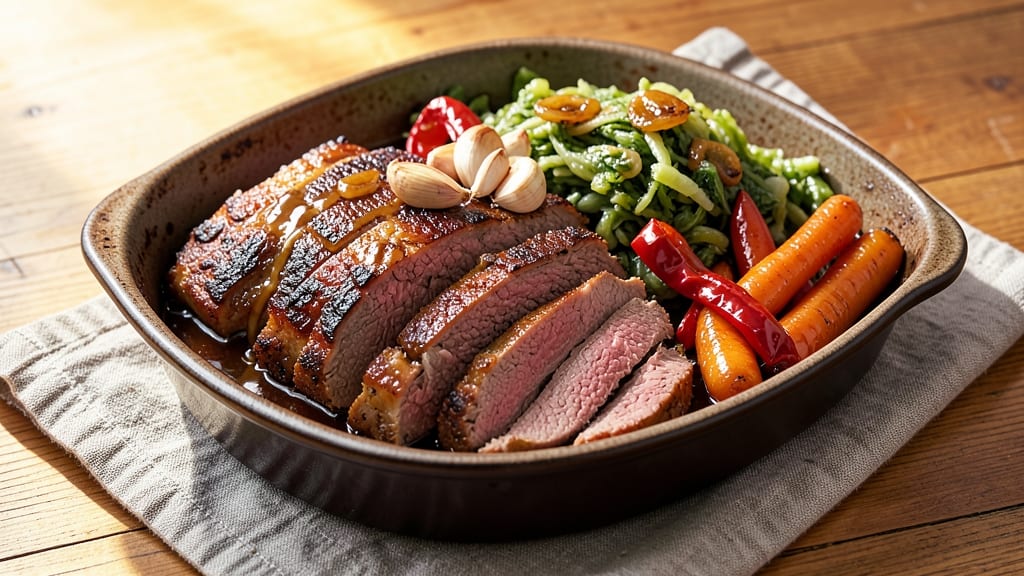
This corned beef and sauerkraut recipe delivers the kind of fork-tender meat and tangy crunch that makes every bite satisfying. I grew up eating this dish on Sunday afternoons in my Boston triple-decker, where the slow-cooked aroma filled the house with nostalgia.
The secret to perfect results lies in the slow braising process, which transforms tough cuts into melt-in-your-mouth perfection while preserving the sauerkraut's signature tang.
What sets this recipe apart is the balance of traditional techniques with modern convenience—whether you simmer it all day or use a pressure cooker to cut the time in half.
The onions and peppers add depth, while the sauerkraut brings that essential crunch and acidity that cuts through the richness of the meat. It's a dish that feels both comforting and impressive, perfect for feeding a crowd or a cozy family dinner.
By the time you're done, you'll have a pot of restaurant-quality corned beef and sauerkraut that's rich, tender, and packed with flavor. The meat will pull apart easily, the sauerkraut will be just crisp enough, and the sauce will be thick and savory.
This is the kind of meal that tastes like home, with every bite offering a perfect harmony of textures and flavors.
Serve it with a slice of crusty rye bread or a dollop of mustard to complete the experience. Here's how to make it—step by step, just like Nonna used to do.
Ingredients for corn beef and sauerkraut
Six ingredients transform into that legendary Sunday dinner aroma—tender meat and tangy crunch in one pot.
| Ingredient | Amount | Notes |
|---|---|---|
| Corned Beef Brisket 🥩 | 3 lb | Thinly sliced, brined or corned beef |
| Sauerkraut 🥬 | 2 cups | Unrinsed, jarred or fresh |
| Yellow Onion 🧅 | 2 whole | Thinly sliced, yellow or red |
| Bell Pepper 🌶️ | 1 whole | Green or red, sliced |
| Carrots 🥕 | 3 whole | Whole, peeled, sliced |
| Garlic Cloves 🧄 | 4 cloves | Fresh, minced |
| Bay Leaves 🍃 | 2 whole | Fresh or dried |
| Mustard Seeds 🌶️ | 1 tsp | Whole, yellow or brown |
| Black Peppercorns 🌶️ | 1 tsp | Freshly cracked |
| Beef Broth 💧 | 2 cups | Low-sodium preferred |
| Apple Cider Vinegar 🍎 | 2 tbsp | For tangy depth |
| Brown Sugar 🍚 | 2 tbsp | Light or dark |
| Salt 🧂 | 1 ½ tsp | Kosher or sea salt |
| Olive Oil 🫒 | 2 tbsp | For searing |
| Crusty Rye Bread 🍞 | 6 slices | For serving |
The corned beef is the star here, so pick a quality brisket—thinly sliced cuts like those from Costco or your local butcher work best. If you can't find pre-sliced, grab a whole brisket and ask the butcher to slice it thinly for you. Look for good marbling—that's what makes it tender. For the sauerkraut, jarred is fine but fresh has more crunch. I always grab the Heinz or Bubbapalooza brands from the store—they're consistent and reliable. Don't rinse it, that tang is essential! The onions and bell peppers? Yellow onions add sweetness, while red peppers bring a nice color contrast. Slice them thin so they cook down nicely.
No corned beef brisket? Substitute with beef chuck roast—just cube it and let it braise longer. Short on sauerkraut? Cabbage or kimchi can work in a pinch, but the tang won't be the same. The apple cider vinegar is key for that classic flavor—substitute with white vinegar if needed, but it won't taste quite the same. The mustard seeds add a subtle kick, but if you're avoiding them, extra black peppercorns will give you some heat. For the broth, low-sodium is crucial—you don't want to overpower the dish with extra salt. If you can't find it, water plus a bouillon cube works in a pinch.
This dish tastes even better the next day—make extra and save portions for quick lunches. The corned beef keeps 4-5 days in the fridge, and the sauerkraut can be stored separately for up to 2 weeks. Freeze the meat for up to 3 months if you're prepping ahead. The best part? Double the recipe—it reheats beautifully and makes a fantastic meal prep option. Serve it with those crusty rye slices and a dollop of mustard to complete the experience.
Why You'll Love This Recipe
- One-Pot Magic: I swear by this—just dump everything in a pot, add water, and let it simmer. No chopping like a fine chef, no fancy techniques. The onions and peppers soften right in there while the corned beef gets tender enough to pull apart. (Yes, even on a Tuesday night.)
- Leftovers That Don’t Suck: Honestly, this dish only gets better the next day. The flavors meld into something deeper, and it reheats like a dream. Pack it for lunch or freeze portions—no sad, dry sandwiches here.
- Budget Feast: A whole corned beef brisket feeds my family for days, and sauerkraut lasts forever in the fridge. Throw in a few cheap veggies, and you’ve got a meal that costs less than half of what you’d pay for restaurant leftovers. (My wallet thanks me.)
Step-by-step instructions for braised corned beef with sauerkraut
Here's how to transform tough brisket into melt-in-your-mouth perfection with that perfect tangy crunch.
Sear the Corned Beef Brisket for Deep Flavor
Heat the 2 tablespoons olive oil in a large Dutch oven over medium-high heat until shimmering. Pat the 3 lb corned beef brisket completely dry with paper towels—this ensures maximum browning. Place the brisket in the pot, fat-side down, and sear for 4-5 minutes until deep golden brown develops on one side.
Flip the brisket and sear the other side for another 4-5 minutes. The key here is patience—don't rush the searing. You want that beautiful crust that will carry through the entire braising process. Once both sides are deeply browned, remove the brisket and set it aside on a plate.
Build the Aromatic Base with Vegetables and Spices
In the same Dutch oven, add the 2 whole yellow onion, 1 whole bell pepper, and 3 whole carrots—all sliced into even pieces. Cook them over medium heat for 8-10 minutes, stirring occasionally, until they begin to soften and develop a slight color. You'll know they're ready when the onions turn translucent and the carrots yield slightly when pressed with a wooden spoon.
Add the 4 cloves garlic cloves (minced), 1 teaspoon mustard seeds, and 1 teaspoon black peppercorns to the pot. Stir everything together for 1 minute until the garlic becomes fragrant and the spices begin to sizzle. This aromatic base is the flavor foundation for your entire dish—don't skip this step.
Deglaze and Combine All Ingredients
Pour in the 2 tablespoons apple cider vinegar and scrape up any browned bits from the bottom of the pot with a wooden spoon. These bits are packed with flavor—don't miss them. Let the vinegar simmer for 2-3 minutes until it reduces by about half and the liquid becomes slightly syrupy.
Return the corned beef brisket to the pot. Add the 2 cups sauerkraut, 2 whole bay leaves, 2 cups beef broth, 2 tablespoons brown sugar, and 1.5 teaspoons salt. Stir everything together gently to combine. The sauerkraut should be distributed evenly around the brisket. Bring the mixture to a gentle simmer over medium-low heat, then reduce the heat to low to maintain a bare simmer.
Braise Until Fork-Tender with Tangy Crunch
Cover the Dutch oven with a tight-fitting lid and let the corned beef braise for 2.5 to 3 hours. Here's the thing—this is where the magic happens. The low and slow cooking transforms tough brisket into fork-tender perfection. Check the liquid level occasionally and add ½ cup water if it reduces too much, but avoid over-diluting the sauce.
After 2 hours, test the doneness by inserting a fork into the thickest part of the brisket. If it slides in easily and the meat pulls apart with minimal resistance, it's ready. If not, continue braising for another 30 minutes to 1 hour. The sauerkraut should retain its crunch while the brisket becomes impossibly tender. The sauce should coat the back of a spoon and have a rich, tangy depth.
Rest and Serve with Crusty Rye Bread
Remove the corned beef from the pot and transfer it to a cutting board. Tent it loosely with aluminum foil and let it rest for 15 minutes. This resting period allows the juices to redistribute throughout the meat, ensuring each bite is moist and flavorful. Discard the bay leaves before serving.
Slice the corned beef against the grain into ¼-inch thick pieces. Ladle the braising liquid and sauerkraut over the top, then serve immediately with the 6 slices crusty rye bread. The contrast of the tender brisket, crunchy sauerkraut, and crusty bread makes every bite incredible. Don't forget to save any leftover braising liquid—it makes an amazing sandwich spread!
Pro Tips For Making Corn Beef And Sauerkraut
- Brown the Brisket First: Skip the slow start—sear the corned beef brisket in a cold or room-temp pan over medium-high heat for 3-4 minutes per side until deep brown. This isn’t just for looks; it builds flavor that cuts through the sauerkraut’s tang later. (Yes, even if you’re tempted to toss it straight in the pot.)
- Rinse the Sauerkraut: Drain the sauerkraut and give it a quick cold-water rinse to cut the acidity before cooking—just 30 seconds under the tap. Overly sour kraut will fight with the sweetness of the carrots and peppers, throwing off the balance. Trust me, your taste buds will notice.
- Don’t Overcrowd the Pot: If you’re using a Dutch oven, layer the brisket and veggies in a single layer first, then add liquid. Crowding steams the meat instead of browning it, and you’ll end up with gray, soggy brisket. Patience here means better texture—no one likes mushy corned beef.
- Slice Against the Grain: After cooking, let the brisket rest 10 minutes, then slice thinly against the grain for tender bites. Thick slices feel chewy, and no one wants to fight their corned beef. A sharp knife and a little elbow grease make all the difference—skip this, and you’ll regret it.
Perfect pairings for this corn beef and sauerkraut
Crusty Rye Bread
This is my non-negotiable side for corned beef and sauerkraut—nothing beats the contrast of crusty rye bread soaking up all that tangy braising liquid.
I grab the Pumpernickel-style rye from the bakery section at Market Basket or Stop & Shop because it's dense enough to hold up to the rich flavors. Toast it lightly before serving to add extra crunch, then let guests slather it with the leftover braising sauce. 🍞
Classic Mustard
A dollop of Dijon mustard or yellow mustard on each plate adds that perfect tangy brightness that cuts through the richness. I keep a bottle of French's Classic Yellow in my fridge specifically for this dish—it's the kind my grandmother always used.
For extra flair, mix it with a little of the braising liquid to create a quick dipping sauce. Trust me, your guests will thank you.
Pickled Vegetables
Add a side of pickled cucumbers or red onions to keep that acidity going. I love the Heinz Pickled Cucumbers from the deli section—they're crunchy and perfectly tangy. The contrast of textures and flavors makes every bite more exciting.
For a homemade touch, quick-pickle some radishes in vinegar and sugar for just 15 minutes before serving. 🥒
Potato Pancakes
These crispy, golden latkes are a game-changer for soaking up all the delicious juices. I use a mix of grated russet and sweet potatoes with a little flour and egg to bind them.
Fry them in vegetable oil until golden brown, then serve warm with a sprinkle of sour cream and extra sauerkraut on top. They're especially good if you have leftover braising liquid to drizzle over them.
Simple Green Salad
A light arugula salad with a lemon vinaigrette balances the richness of the corned beef beautifully. Toss 4 cups baby arugula with 2 tablespoons olive oil, 1 tablespoon lemon juice, and a pinch of salt.
The peppery bite cleanses your palate between bites of the hearty main dish. For extra crunch, add thinly sliced radishes or shaved fennel to the mix.
Creamy Potato Soup
For a cozy, comforting pairing, serve this dish with a bowl of creamy potato soup. I use Yukon Gold potatoes, heavy cream, and a touch of chives for a simple but rich accompaniment.
The smooth texture contrasts perfectly with the crunchy sauerkraut and tender meat. It's especially great if you're serving this during colder months when you want that extra warmth. 🥔
Nutrition facts
Frequently asked questions
Can I use pre-cooked corned beef instead of raw brisket?
Yes, but your dish will lose some depth of flavor. Pre-cooked corned beef is convenient—simply slice it into ¼-inch thick pieces and add it directly to the pot with the sauerkraut and vegetables. For best results, sear the slices in olive oil for 2-3 minutes per side before adding the other ingredients. This helps build flavor since you're skipping the braising step.
How do I keep the sauerkraut crispy instead of mushy?
Don't rinse the sauerkraut—this removes its natural tang and crunch. Add it late in the cooking process (after 1.5 hours of braising) to preserve texture. If it starts to soften too much, remove it to a separate bowl during the last 30 minutes of cooking and reheat it gently in the sauce just before serving.
What's the fastest way to make this recipe?
Use a pressure cooker to cut cooking time to 45-60 minutes. Sear the brisket as directed, then add all ingredients (including sauerkraut) and pressure cook on high for 30 minutes, followed by a 10-minute natural release. The meat will be tender, though the sauerkraut may be slightly softer than traditional methods.
Can I make this dish in a slow cooker?
Brown the brisket in a skillet first, then transfer it to your slow cooker with all ingredients. Cook on low for 8 hours or high for 4-5 hours. The slow cooker's gentle heat keeps the sauerkraut crispier than stovetop methods, and the meat stays incredibly tender. Just add the sauerkraut during the last 1-2 hours of cooking.
Why does my corned beef turn out tough?
Overcooking or skipping the sear are the most common culprits. Always sear the meat first to create a flavorful crust, then braise at a gentle simmer—never a boil. Test doneness with a fork: if it slides in easily, it's ready. If you're using a tougher cut, extend braising time to 3-4 hours and check moisture levels frequently.