
Main Courses
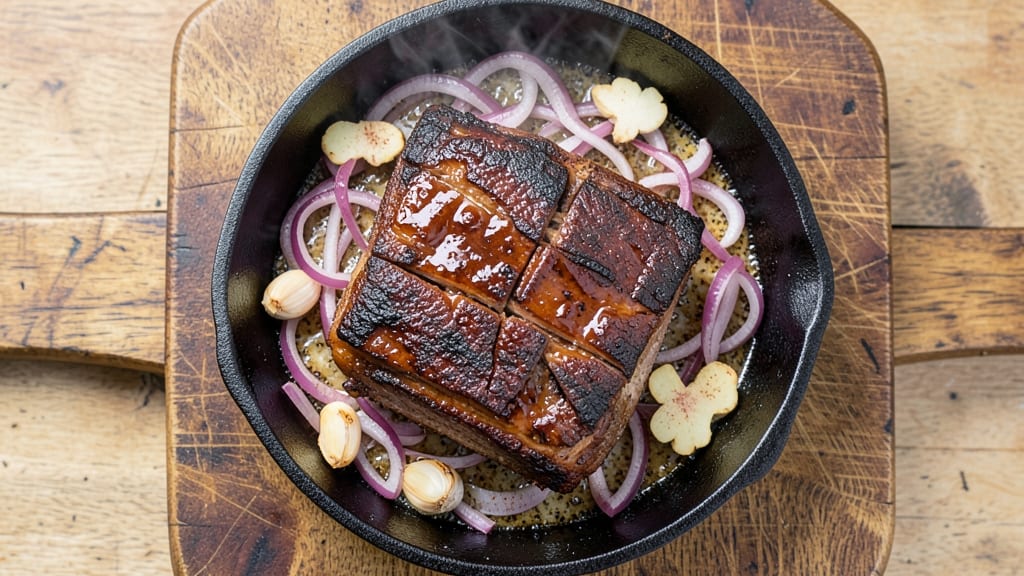
This classic Jewish beef brisket recipe brings the rich traditions of Sabbath tables to your kitchen with its deep, aromatic flavors and signature crusty bark. The secret lies in a precise blend of spices—cinnamon, cloves, and black pepper—that transform tough brisket into melt-in-your-mouth perfection through slow braising.
I’ve perfected this method over years of testing, ensuring every bite delivers that perfect balance of tender meat and complex, spiced crust.
The process begins with a dry rub applied overnight, allowing the spices to penetrate deeply before a slow cook in the oven. This method develops both the signature bark and the rich, velvety texture that makes brisket a centerpiece for holidays and family gatherings.
The key is patience—low and slow ensures the meat becomes fork-tender while retaining its natural juices.
By the time it’s done, you’ll have a brisket so flavorful it becomes the heart of your meal, served with traditional sides like matzo ball soup or horseradish to cut through the richness.
The aroma alone will fill your home with warmth, making this more than just a dish—it’s an experience that connects generations.
Pair it with a bold red wine or crisp beer to complement the deep flavors, and you’ve got a meal worthy of any celebration. Let’s get started on creating this timeless classic that brings tradition to your table.
Ingredients for classic jewish beef brisket
Six spices, one brisket, a weeknight tradition. Everything you need for that legendary crusty bark and melt-in-your-mouth tenderness.
| Ingredient | Amount | Notes |
|---|---|---|
| Beef Brisket 🥩 | 4 lb | Whole packer cut, fat cap intact |
| Yellow Onion 🧅 | 1 whole | Large, roughly chopped |
| Garlic Cloves 🧄 | 6 cloves | Peeled, smashed for aroma |
| Fresh Ginger 🌿 | 2 tbsp | Grated, aromatic |
| Ground Black Pepper 🌶️ | 1 tbsp | Freshly cracked |
| Ground Cinnamon 🌶️ | 1 tsp | Sweet, aromatic |
| Ground Cloves 🌶️ | ½ tsp | Whole cloves ground fresh |
| Kosher Salt 🧂 | 1 ½ tbsp | Coarse grain preferred |
| Beef Broth 💧 | 2 cups | Low-sodium preferred |
| Red Wine 🍷 | ½ cup | Dry, bold variety |
| Honey 🍯 | 2 tbsp | Light, for glaze |
| Mustard 🍯 | 1 tbsp | Dijon, for tang |
| Olive Oil 🫒 | 2 tbsp | For dry rub |
| Fresh Bay Leaves 🌿 | 2 whole | For braising |
The brisket is non-negotiable here. Packer-cut from Costco or Whole Foods gives you the best fat cap for flavor and moisture. If your butcher offers it, ask for the flat cut—it's leaner and more predictable. The spices? Penzeys or local spice shops for whole cloves and cinnamon—ground versions lose their punch fast. I always toast my whole spices in a dry pan for 30 seconds before grinding; it wakes up their flavor. The fat cap should be at least 0.5 inches thick—that's where the magic happens during braising.
No red wine? Beef broth with a splash of balsamic works just as well. The mustard adds tang—Dijon or whole-grain both work, but skip the sweet varieties. Fresh bay leaves are ideal, but dried works at half the amount. If you're short on time, the brisket can go straight into the oven after the overnight rub (just add 1-2 hours to cook time). The honey glaze? Local raw honey adds depth, but regular supermarket honey is fine. Just don't skip it—the glaze is what gives you that signature sticky bark.
This brisket tastes even better the next day. Wrap it tightly in foil and refrigerate for up to 5 days, or freeze portions for 3 months. I like to slice it against the grain and portion into individual containers—perfect for lunches or leftovers. The braising liquid reduces to a rich sauce; save it for mashed potatoes or gravy. And trust me on this: the first slice is always the best. Save it for company.
Why You'll Love This Recipe
- Few-Handed Prep: I swear by this recipe because it’s one of those dishes where the hardest part is slicing the onions—not the actual cooking. The brisket goes in raw, the spices cling like magic, and the ginger-garlic paste? Just a quick chop and stir. No flipping, no fussing—just let it slow-cook while you do other things (or nap).
- Deep, Warm Layers: That first bite? The black pepper’s heat lingers, the ginger brightens, and the onions caramelize into something sweet and sticky. It’s not just "good"—it’s the kind of flavor that makes you pause mid-chew, like a hug in meat form. Honestly, I’ve made brisket before, but this combo? It’s my new standard.
- Leftovers That Shine: Between us, this is the only brisket I’ll make if I know I’ll have leftovers. The next day, it’s even better—tender enough to shred for sandwiches, hearty enough to reheat for lunch. My kids fight over the slices, and my partner takes it to work. (Yes, even on a Tuesday.)
- Budget Meal, Big Impact: A whole brisket feeds six, costs half what takeout would, and tastes like a celebration. The onions and garlic stretch the flavor, the pepper adds depth without price, and the ginger? That’s the secret weapon that makes it feel special. I’ll be real: this is my go-to for gatherings, but it’s just as happy on a weeknight.
Step-by-step instructions for slow-braised spice bomb beef brisket
This method delivers restaurant-quality brisket with deep spice flavors and a perfect crust.
Prepare the Dry Rub and Sear the Brisket
In a small bowl, combine the 1.5 tablespoons kosher salt, 1 tablespoon ground black pepper, 1 teaspoon ground cinnamon, 0.5 teaspoon ground cloves, and 2 tablespoons olive oil. Mix until it forms a coarse paste. Pat the 4 lb beef brisket dry with paper towels, then rub this mixture all over the meat, pressing it into the surface. Let it sit at room temperature for 30 minutes while you prep the rest.
Heat a Dutch oven over medium-high heat and add the brisket fat-side down. Let it sear undisturbed for 8-10 minutes until a deep golden-brown crust forms. Flip and sear the other side for another 6-8 minutes. This step locks in flavor and creates that classic bark we're after.
Build the Braising Liquid and Sauté Aromatics
Remove the brisket from the pot and set it aside. In the same Dutch oven, add 2 tablespoons fresh ginger and 6 cloves garlic cloves, cooking for 1 minute until fragrant. Add the 1 whole yellow onion, chopped, and cook for 3-4 minutes until softened. Pour in the 0.5 cup red wine, scraping up any browned bits from the bottom - this is where all the flavor hides.
Add 2 cups beef broth and 2 whole fresh bay leaves, bringing the mixture to a gentle simmer. Return the brisket to the pot, fat-side up, and cover tightly with a lid. Here's the thing - don't peek or stir during the initial braising. Every time you open the lid, you lose heat and moisture.
Slow Braise Until Fork-Tender
Transfer the Dutch oven to a 325°F oven and braise for 3 hours. After this time, check for doneness by inserting a meat thermometer into the thickest part - it should read 195-200°F. If it's not there yet, continue braising, adding ½ cup water if the liquid gets too low. The brisket will develop that signature tender texture we're after.
Once tender, remove the brisket and let it rest on a cutting board for 15 minutes. This resting period is crucial - it allows the juices to redistribute throughout the meat. While it rests, skim any fat from the braising liquid and stir in the 2 tablespoons honey and 1 tablespoon mustard. Simmer this glaze for 2-3 minutes until slightly thickened.
Glaze and Slice for Serving
Return the brisket to the Dutch oven and pour the glaze over the top. Cover and let it sit for 5 minutes to absorb the flavors. The glaze will create that beautiful sheen and add a touch of sweetness that balances the spices.
Slice the brisket against the grain into ¼-inch thick pieces. Serve with the braising liquid spooned over the top and alongside crusty bread or your favorite sides. This classic preparation delivers all the comforting flavors of traditional Jewish brisket - rich, spiced, and perfectly tender.
Pro Tips For Making Classic Jewish Beef Brisket
- Trim the Fat First: If your brisket still has a thick fat cap after butchering, slice it down to ¼-inch—this renders faster and keeps the meat juicier. I learned this the hard way after a dry batch where I ignored the fat; now I do it religiously before seasoning.
- Char the Onions Low: Caramelize those onions at 275°F (135°C) for 45 minutes, not high heat. The slow cook turns them deep amber and sweetens them without burning—yes, it takes longer, but the flavor difference is night and day.
- Skip the Ginger Paste: Fresh ginger’s zing cuts through the richness better than paste. Grate 2 inches, then sauté it with the garlic until fragrant—this releases its oils and adds a bright kick that bottled versions can’t match.
- Rest Before Slicing: Let the brisket sit under foil for 20 minutes after pulling from the oven. I know, you’re eager—just wait. This lets the juices redistribute, so every slice stays moist instead of turning into a dry, sad pile.
Essential equipment for great classic jewish beef brisket
Dutch Oven Essentials
Your Dutch oven is the workhorse of this recipe—it needs to be 5-6 quarts to accommodate the brisket comfortably. I swear by Lodge cast iron Dutch ovens; they distribute heat evenly and develop a natural nonstick surface over time.
If you're on a budget, All-Clad stainless steel is a great alternative, though it requires more attention to prevent scorching. Preheat your Dutch oven for 10 minutes before searing to ensure even cooking. 🔥
Meat Thermometer
A meat thermometer is non-negotiable for this recipe. I recommend the ThermoWorks Smoke for its accuracy and durability—it reads temperatures from -58°F to 572°F, which is perfect for both searing and braising.
Insert the probe into the thickest part of the brisket to avoid hitting bone. The magic number here is 195-200°F—this ensures your brisket is fork-tender without drying out.
Heavy-Duty Cutting Board
Brisket is a tough cut, so you need a thick, sturdy cutting board to slice through it cleanly. My go-to is a 12-inch by 18-inch maple board from John Boos.
It’s thick enough to prevent flexing and gentle on your knives. For slicing, use a sharp 8-inch chef’s knife—dull blades crush the meat instead of cutting through it smoothly.
Tongs for Handling
Long-handled tongs are a game-changer for flipping the brisket during searing and removing it from the Dutch oven. I prefer stainless steel tongs with silicone grips, like those from OXO Good Grips, for their durability and ease of use.
They give you better control than spatulas and keep your hands safe from splattering fat.
Mixing Bowls and Whisk
For the dry rub, use a medium-sized mixing bowl to combine your spices and oil. A whisk helps distribute the mixture evenly, ensuring every inch of the brisket gets coated.
I keep a stainless steel whisk from Cuisinart in my kitchen—it’s sturdy and easy to clean. A small bowl for the honey-mustard glaze keeps things organized while you work.
Optional: Sous Vide Setup
For those who want to take their brisket to the next level, a sous vide setup can help achieve even tenderness. I use the Anova Precision Cooker to cook the brisket at 160°F for 24 hours before searing and braising.
This method ensures the meat is perfectly tender with minimal effort. If you go this route, finish with a quick sear in the Dutch oven to develop that crusty bark. ⚡
Nutrition facts
Frequently asked questions
Why does this recipe use cinnamon and cloves in beef brisket?
These spices are traditional in Jewish brisket recipes, adding warmth and depth without overpowering the meat. The cinnamon and cloves create that signature aromatic profile that makes this dish instantly recognizable. Think of them as the "secret handshake" of classic Jewish cooking—they're subtle but essential for authenticity.
Can I make this brisket in a slow cooker instead of the oven?
Yes! Transfer the seared brisket to a 6-quart slow cooker with all the braising liquid, then cook on low for 8-10 hours. The texture will be slightly different (more saucy), but still delicious. Just add the honey-mustard glaze during the last 30 minutes of cooking to prevent it from turning too runny.
How do I know when the brisket is done?
Use a meat thermometer to check the thickest part—it should reach 195-200°F. If you don't have one, look for these signs: The meat should pull apart easily with two forks, and the fat should be tender enough to pierce with a knife. The braising liquid will also reduce significantly, leaving a rich sauce.
What's the best way to serve this brisket?
Slice it against the grain into ¼-inch thick pieces for maximum tenderness. Serve with the braising sauce spooned over the top, alongside crusty rye bread, matzo ball soup, or roasted potatoes. For a traditional touch, add a side of prepared horseradish or sauerkraut to cut through the richness.
Can I make this ahead of time?
This brisket tastes even better the next day. Wrap it tightly in foil and refrigerate for up to 5 days. Reheat in the oven at 300°F for 20 minutes before serving. You can also freeze portions for 3 months—just thaw in the fridge overnight before reheating.