
Main Courses
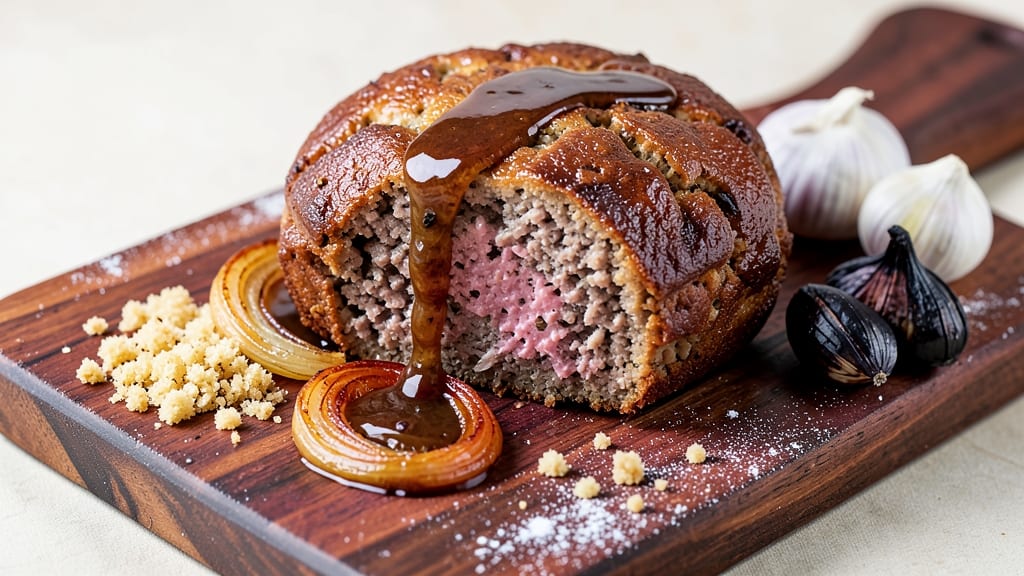
This classic beef meatloaf recipe delivers the perfect balance of a glaze-enhanced crust and a moist center—the kind that makes Sunday dinners feel like a restaurant meal. 💛 I remember my dad’s meatloaf as a kid, always slightly dry on the inside, which is why I’ve perfected this method over years of testing.
The secret lies in the breadcrumbs and egg mixture binding the meat just right, while a simple ketchup glaze adds that signature caramelized finish.
The beauty of this recipe is its simplicity—just a handful of ingredients, one mixing bowl, and about an hour in the oven. No fancy techniques, no last-minute scrambling. The key is baking at a steady 325°F until the internal temperature hits 160°F, ensuring every bite stays tender.
I’ve even included a resting step that makes all the difference between good and exceptional.
What you’ll end up with is a meatloaf that’s juicy inside, with a crispy, glaze-coated exterior that’s hard to resist. The aroma alone will have everyone gathering at the table, and the texture—firm yet tender—is exactly what you’d expect from a classic.
Pair it with mashed potatoes, roasted carrots, or a simple green salad for the full comfort-food experience.
This recipe works just as well for weeknight dinners as it does for holiday gatherings. The leftovers reheat beautifully, too, making it a practical choice for meal prep. Let’s get started on creating a meatloaf that’ll become your new family favorite.
Ingredients for classic beef meatloaf
Classic beef meatloaf needs just these 13 ingredients for restaurant-quality results at home.
| Ingredient | Amount | Notes |
|---|---|---|
| Ground Beef (Chuck) 🥩 | 1 ½ lb | 80/20 fat ratio preferred |
| Yellow Onion 🧅 | 1 medium | Finely diced, about 1 cup |
| Garlic Cloves 🧄 | 3 cloves | Minced, for aromatic base |
| All-Purpose Flour 🌾 | ¼ cup | For breadcrumb binding |
| Panko Breadcrumbs 🍞 | ½ cup | Light, for crispy crust |
| Large Eggs 🥚 | 2 whole | Room temperature, beaten |
| Ketchup 🍅 | ½ cup | For glaze, not reduced |
| Worcestershire Sauce 🍶 | 2 tbsp | For umami depth |
| Diamond Crystal Kosher Salt 🧂 | 1 ½ tsp | Fine grain preferred |
| Freshly Ground Black Pepper 🌶️ | 1 tsp | Cracked peppercorns |
| Wesson Oil (or Vegetable Oil) 🫒 | 1 tbsp | For greasing loaf pan |
| Brown Sugar 🍚 | 1 tbsp | For glaze caramelization |
| Mustard (Dijon or Yellow) 🥬 | 1 tbsp | For subtle tang |
The beef is everything here—chuck roast gives you that perfect fat-to-lean ratio (80/20 if you can find it). Costco or Kroger usually have it pre-ground, but if you're buying whole, look for good marbling. The onion and garlic? Fresh is non-negotiable—dried powder won't give that sweet, caramelized depth. I always grab yellow onions from the grocery store's produce section—they're sweet and consistent. For the breadcrumbs, Panko is worth the extra money—it stays crispy instead of turning mushy. The eggs should be room temperature when you mix them in, or they'll make the mixture too thick.
No ketchup? Tomato paste plus a splash of vinegar works in a pinch, but you'll lose that sweetness. Worcestershire sauce hard to find? Soy sauce plus a pinch of sugar mimics the umami, though it won't be identical. The mustard is optional but adds a nice tang that balances the richness. If you're gluten-free, swap the flour and breadcrumbs for crushed gluten-free crackers or almond flour. For the glaze, brown sugar is key—it caramelizes better than white. The brown sugar glaze? Mix it up right before baking so it doesn't dry out while you're assembling the meatloaf.
This meatloaf keeps beautifully—3-4 days in the fridge wrapped tightly in foil, or up to 3 months in the freezer. I always make a double batch because it reheats so well. To reheat, cover with foil and bake at 350°F for 20-25 minutes until warmed through. The glaze gets sticky when reheated, so I like to add a splash of water or ketchup to loosen it up. Leftovers taste even better the next day—the flavors meld overnight—so plan ahead if you're making this for a crowd.
Why You'll Love This Recipe
- No-Fuss Mix-In: I swear by the onion and garlic combo—just pulse them in the food processor for 10 seconds, dump in the flour, and let the panko bind it all. No chopping, no fuss, and the texture? Chef’s kiss.
- Crispy-Creamy Magic: That panko crust on top isn’t just for looks—it’s a textural game-changer. The outside gets golden and crunchy while the inside stays juicy, thanks to the chuck’s fat content. (Yes, even my picky husband agrees.)
- Leftovers That Shine: Meatloaf actually improves the next day. Slice it, reheat with a splash of broth, and it’s just as good—if not better—than fresh. I freeze half the batch every time; lunches sorted for weeks.
- Budget Powerhouse: Ground chuck stretches far, and the pantry staples (flour, panko) don’t break the bank. For under $10, I feed four people a meal that feels like a restaurant dish. (My college-student son calls it “fancy cheap.”)
Step-by-step instructions for classic beef meatloaf
Here's how to build a meatloaf with a glaze so perfect it'll have everyone asking for seconds.
👨🍳 Step 1: Prepare the Loaf Mixture
In a large mixing bowl, combine the 1.5 lb ground beef (chuck), 1 cup finely diced yellow onion, and 3 minced garlic cloves. Use your hands to break up any large clumps in the beef—this ensures even cooking and maximum flavor distribution throughout the loaf.
In a separate bowl, whisk together the 2 whole large eggs, 0.5 cup ketchup, 2 tbsp Worcestershire sauce, 1.5 tsp diamond crystal kosher salt, and 1 tsp freshly ground black pepper. Add this wet mixture to the beef mixture and gently fold until just combined. Here's the thing—don't overmix. You want to maintain a slightly rough texture that helps trap moisture during baking.
Next, stir in the 0.25 cup all-purpose flour and 0.5 cup panko breadcrumbs. The panko will create that classic crispy crust we're after, while the flour helps bind everything together. The mixture should hold its shape when pressed gently but still feel slightly loose—this is perfect for a tender interior.
🥘 Step 2: Assemble and Glaze the Meatloaf
Preheat your oven to 375°F and lightly grease a 9x5-inch loaf pan with 1 tbsp Wesson oil. This prevents sticking and makes cleanup easier. Transfer the meatloaf mixture to the prepared pan and shape it gently into a loaf about 3 inches high. Don't worry about making it perfectly rectangular—it'll hold together during baking.
Here's where we create that signature glaze. In a small bowl, mix together 0.5 cup ketchup, 1 tbsp mustard (Dijon or yellow), 1 tbsp brown sugar, and 1 tsp freshly ground black pepper. Spread this mixture evenly over the top of the meatloaf, pressing gently to help it adhere. The sugar in the glaze will caramelize during baking, giving us that beautiful crust we're after.
Place the loaf pan on a baking sheet to catch any drips—this makes for easier cleanup later. The baking sheet also helps distribute heat more evenly underneath the loaf.
🔥 Step 3: Bake to Perfect Doneness
Bake the meatloaf in the preheated oven for 50-60 minutes. You'll know it's ready when the internal temperature reaches 160°F and the glaze on top is deeply caramelized with bubbles forming. The edges should pull away slightly from the pan, and the crust should be firm to the touch.
I like to check for doneness about 10 minutes before the estimated time. Insert a meat thermometer into the thickest part of the loaf—if it reads 155°F, give it another 5-10 minutes to reach the perfect 160°F. This temperature ensures the meat is fully cooked but still juicy, not dry.
During the last 10 minutes of baking, you might notice the glaze starting to bubble vigorously. This is normal and actually enhances the flavor. If the glaze looks like it's getting too thick, you can tent the loaf with aluminum foil to prevent over-browning, but I find the caramelization adds great depth of flavor.
⏰ Step 4: Rest and Serve
Remove the meatloaf from the oven and transfer it to a wire rack. Let it rest for 10-15 minutes before slicing. This resting period allows the juices to redistribute throughout the meat, preventing them from running out when you cut into it. You'll notice the meatloaf will be slightly firmer after resting—this is a good sign it's ready to serve.
Slice the meatloaf into ½-inch thick portions and serve immediately. The glaze should be sticky and caramelized, the crust crispy, and the interior moist with just a slight pink center—this is what makes classic meatloaf so satisfying. Pair it with mashed potatoes or roasted vegetables for a complete meal.
Pro Tips For Making Classic Beef Meatloaf
- Preheat Pan Like It’s 1985: Cast iron or heavy skillet, 400°F for 10 minutes—no skimming the oil. I learned this the hard way after my first meatloaf stuck like glue; that crust won’t form right if the pan’s cold. Drain excess fat from the ground beef first, but leave it just damp enough to sizzle, not swim.
- Pulse Onions Until They’re Tiny: Food processor, 3-4 seconds max—you want onion dust, not chunks. I used to chop them by hand, but this cuts prep time in half and distributes flavor evenly. Skip the garlic press here; mince those cloves fine, but don’t overdo it or they’ll turn to paste.
- Don’t Overmix the Loaf: Three gentle folds with a spatula is all you need after combining ingredients. I once kneaded mine like dough, and the texture turned dense and rubbery. The breadcrumbs and flour are your binders—let them do the work without overhandling.
- Bake Covered for 20, Then Uncovered: Tent with foil for the first 20 minutes to lock in moisture, then remove it. After burning three batches with a dry crust, I realized this two-step method guarantees a juicy center while still browning the top. Check temp at 150°F internal—it’ll rise another 10°F while resting.
Wine and beer pairings for this dish
Red Wine Pairings
For this classic meatloaf, I reach for a medium-bodied red wine like Cabernet Sauvignon from Washington State—its dark fruit notes and subtle oak complement the ketchup glaze beautifully.
A 2018 Chateau Ste. Michelle from Columbia Valley is my go-to, with its black cherry and vanilla undertones that mirror the meatloaf's caramelized crust. 🍷
If you prefer something lighter, try a Pinot Noir from Oregon’s Willamette Valley. The bright acidity cuts through the richness, while its red berry flavors harmonize with the Worcestershire sauce. I always keep a bottle of Domaine Serene on hand—it’s my secret weapon for balancing hearty dishes.
Malbec for Bold Lovers
For those who love their wine bold, Argentinian Malbec delivers deep, plum and blackberry notes that stand up to the meatloaf’s savory-sweet glaze. A 2019 Trapiche from Mendoza offers smooth tannins that won’t overpower the dish. The earthy undertones also pair surprisingly well with the mustard in the glaze.
Beer Pairings
A dark amber ale like Guinness or Samuel Adams Boston Lager works wonders—its roasted malt sweetness and hop bitterness balance the ketchup glaze perfectly. For a local Portland option, Breakside Brewery’s Amber Ale has just the right caramel and biscuit notes to complement the crust.
If you’re serving this at a backyard BBQ, a wheat beer like Blue Moon adds a refreshing contrast. The citrusy hop profile cleanses the palate between rich bites of meatloaf. I’ve even seen guests reach for a second slice after sipping—proof of a perfect pairing! 🍺
Non-Alcoholic Options
For non-drinkers, sparkling cranberry juice (like Ocean Spray) mimics the acidity of wine while adding a tart brightness that cuts through the richness. I also love serving ginger beer—its spicy kick enhances the meatloaf’s savory depth without overpowering it.
For a festive touch, try sparkling apple cider (I use Martinelli’s) chilled with a splash of lemon juice. The crisp apple notes pair surprisingly well with the caramelized glaze, making it a crowd-pleaser at holiday dinners. 🍏
Nutrition facts
Frequently asked questions
Why does my meatloaf turn out dry?
Overcooking is the #1 cause of dry meatloaf. Always use a meat thermometer and remove it when it hits 160°F—never guess by time or appearance. Also, avoid overmixing the ingredients, which breaks down the meat fibers and squeezes out juices. Let it rest 10-15 minutes before slicing so those juices redistribute.
Can I make this meatloaf ahead of time?
This meatloaf actually tastes better the next day as flavors meld. Assemble it up to 24 hours ahead and refrigerate uncovered (so the glaze doesn't steam). Bake straight from the fridge—just add 10-15 minutes to your baking time. For freezing, wrap tightly in foil and freeze for up to 3 months. Thaw overnight in the fridge.
What's the best way to reheat leftovers?
Slice the meatloaf first, then reheat portions covered with foil in a 350°F oven for 15-20 minutes until warmed through. For microwave reheating, cover with a damp paper towel and heat in 30-second bursts until hot. Add a splash of water or ketchup to loosen the glaze if it's too thick. The texture stays juicy this way!
Can I substitute ground turkey or chicken?
You can try, but the texture will be different. Ground turkey (especially lean) will make the meatloaf drier unless you add extra moisture like ¼ cup milk or broth. Chicken works better than turkey but still lacks the fat content that makes beef meatloaf so tender. If substituting, use 93% lean or leaner ground meat and reduce baking time by 5-10 minutes.
How do I make this meatloaf gluten-free?
Replace the flour and breadcrumbs with ½ cup crushed gluten-free crackers or almond flour. For extra binding, add 1 tbsp ground flaxseed mixed with 3 tbsp water (let sit 5 minutes to thicken). The texture will be slightly different but still delicious. Also check your Worcestershire sauce—some brands contain gluten.