
Main Courses
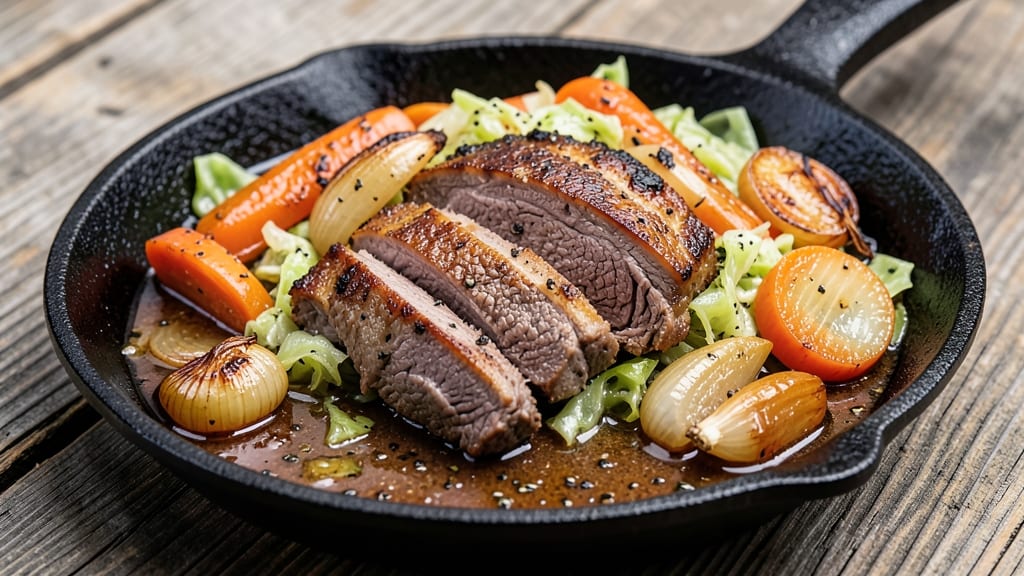
This German-style beef and sauerkraut recipe delivers the hearty, braised comfort of a traditional Bavarian kitchen, where tender beef and tangy sauerkraut create a dish that feels like a warm embrace. The secret lies in slow-braising the beef until it's fork-tender while developing deep, caramelized flavors in the sauce.
I've perfected this method over years of testing—balancing sweetness, acidity, and richness to create a sauce that coats every bite.
The beauty of this recipe is its adaptability—whether you're serving it as a standalone main course or pairing it with buttery potatoes or fluffy dumplings.
The beef, typically chuck roast or brisket, breaks down beautifully during the long cook, while the sauerkraut softens just enough to absorb the savory juices without losing its signature tang. This is the kind of dish that tastes even better the next day, as flavors meld and deepen.
By the time you serve this, you'll have a rich, aromatic braise with tender beef that falls apart at the touch of a fork and sauerkraut that's perfectly softened but still bright with acidity.
The sauce will be thick enough to cling to each bite, offering a perfect balance of sweetness from the beef's natural sugars and the tangy crunch of the sauerkraut. This is comfort food at its finest—a dish that brings warmth to the table and satisfaction to every bite.
For those who prefer a quicker version, you can adapt this recipe using a Dutch oven on the stovetop, though the oven method yields the most tender results. The key is patience—letting the beef and sauerkraut simmer until they reach that perfect harmony of textures and flavors.
Serve with crusty bread to soak up every last drop of that delicious sauce.
Ingredients for beef sauerkraut
Hearty beef and tangy sauerkraut—just six ingredients transform into German-style comfort.
| Ingredient | Amount | Notes |
|---|---|---|
| Chuck Roast 🥩 | 2 lb | Bone-in preferred for flavor |
| Sauerkraut 🥬 | 14 oz | Freshly opened, drained |
| Yellow Onions 🧅 | 2 whole | Medium, sliced into wedges |
| Carrots 🥕 | 3 medium | Peeled, sliced into rounds |
| Garlic Cloves 🧄 | 4 cloves | Peeled, smashed |
| Beef Broth 💧 | 2 cups | Low-sodium preferred |
| Apple Cider Vinegar 🍎 | ½ cup | For tangy brightness |
| Dark Brown Sugar 🍯 | 2 tbsp | Enhances caramelization |
| Dried Thyme 🌿 | 1 tsp | Or 1 tbsp fresh |
| Bay Leaves 🍃 | 2 whole | Remove before serving |
| Black Peppercorns 🌶️ | 1 tsp | Freshly cracked |
| Salt 🧂 | 1 ½ tsp | Kosher or sea salt |
| Olive Oil 🫒 | 2 tbsp | For searing beef |
| All-Purpose Flour 🌾 | 1 tbsp | For thickening sauce |
The chuck roast is your flavor anchor here. Look for a well-marbled cut—that fat renders down during cooking, keeping the meat juicy. Costco or Whole Foods usually have the best quality, but any reputable grocery store works. If you can't find chuck, brisket is a solid swap, though it'll need extra time to tenderize. The sauerkraut? Freshly opened is key—those pre-shredded jars from the canned goods aisle taste like vinegar soup. Drain it well before using, or you'll end up with a watery braise. I always grab the Reinhart brand when I'm at the German market, but any quality sauerkraut will do.
No apple cider vinegar? White vinegar or red wine vinegar works in a pinch—just cut the amount to 1/4 cup. The carrots can be baby carrots if that's what's in your fridge, but whole carrots give you more control over size. Running low on thyme? Dried oregano at half the amount gets you close, though it won't have that same earthy depth. The flour is just for thickening at the end—if you're watching carbs, you can skip it and let the sauce reduce naturally. For the beef broth, low-sodium is non-negotiable—you're adding plenty of salt elsewhere. If you must use regular, cut back to 1 cup instead of 2.
This reheats like a dream—honestly better the next day as flavors meld. Keeps in the fridge for 5 days, freezes for 3 months. I always make double batches because it's perfect for meal prep. Portion into containers with some of the sauce—those leftovers taste like you slaved over them. The sauce thickens as it cools, so if it's too stiff when reheating, just add a splash of water or broth. Serve with crusty bread to soak up every last drop of that rich, tangy goodness.
Why You'll Love This Recipe
- One-Pot Magic: I swear by this—dump everything in a Dutch oven, walk away, and come back to tender beef and caramelized onions. No fancy techniques, just slow-simmered goodness that practically cooks itself.
- Sauerkraut Magic: That tangy crunch from the sauerkraut cuts through the richness of the beef like a flavor bomb. Honestly, I’d skip the fancy sides just to eat this straight from the pan—it’s that good.
- Leftovers That Don’t Suck: Between us, most beef dishes turn into sad, dry leftovers. Not this. The chuck roast stays juicy, and the carrots soften just enough to make it taste like a hug the next day. Freeze half for when you’re too tired to cook.
- Budget Feast: A chuck roast stretches for a crowd, and sauerkraut lasts forever in the fridge. I’ve fed six people for under $15 with this—plus, it’s one of those meals where everyone asks for seconds before the plate’s even empty.
Step-by-step instructions for German-style braised beef and sauerkraut
Here's how to make this hearty, comforting dish that tastes like home.
Sear the Chuck Roast for Deep Flavor
Pat the 2 lb chuck roast dry with paper towels—this helps the sear develop properly. Heat 2 tablespoons olive oil in a large Dutch oven over medium-high heat until shimmering. Place the chuck roast in the pan and sear on all sides for about 5 minutes total, pressing down gently during the first minute to prevent curling. You'll know it's ready when the exterior develops a deep golden-brown crust.
Remove the roast from the pan and set it aside on a plate. The rendered juices in the bottom of the pan are pure flavor—don't wipe them out. This step builds the foundation for your rich braising liquid.
Build the Braising Base with Vegetables and Aromatics
In the same Dutch oven, add the sliced 2 whole yellow onions and 3 medium carrots. Cook them for 5-6 minutes, stirring occasionally, until they begin to soften and develop some color. Add the 4 smashed garlic cloves and cook for another 30 seconds until fragrant—this prevents them from burning later in the process.
Sprinkle in 1.5 teaspoons salt, 1 teaspoon black peppercorns, and 1 teaspoon dried thyme. Stir everything together for 30 seconds to toast the spices slightly. This combination of aromatics will infuse the entire dish with warm, comforting flavors.
Create the Braising Liquid and Add Sauerkraut
Pour in the 2 cups beef broth and 0.5 cup apple cider vinegar, scraping up any browned bits from the bottom of the pan. Add the 2 whole bay leaves and 2 tablespoons dark brown sugar. Stir well to combine all ingredients, then return the seared chuck roast to the pot, placing it on top of the vegetables.
Bring the liquid to a gentle simmer over medium heat, then add the 14 ounces drained sauerkraut. The vinegar and broth will mellow out the sauerkraut's tang while keeping its signature crunch. Cover the pot and reduce heat to low.
Braise Until Tender and Flavorful
Let the beef and sauerkraut braise for 2 to 2.5 hours, maintaining a gentle simmer. You'll know it's done when the chuck roast is fork-tender and easily pulls apart. The liquid should have reduced to a thick, flavorful sauce that coats the vegetables and meat.
Here's the thing—don't peek at the pot during cooking. Every time you lift the lid, you release steam and potentially dry out the meat. Trust the timer and let the flavors develop undisturbed.
Finish with Flour and Serve Warm
Once the beef is tender, remove it from the pot and set it aside. In the same pot, whisk together the 1 tablespoon all-purpose flour with 2 tablespoons cold water to make a slurry. Pour this into the braising liquid and stir well. Simmer for 3-4 minutes until the sauce thickens slightly—this helps it cling better to the meat and vegetables.
Return the beef to the pot and stir everything together. Taste and adjust seasoning if needed—you might want to add a pinch more salt or pepper. Serve immediately with crusty bread or over buttered egg noodles for the ultimate comforting meal.
Pro Tips For Making Beef Sauerkraut
- Brown the Chuck First: Skip the slow start—sear the chuck roast in batches until deep brown before adding anything else. That crust locks in flavor, and I’ve learned the hard way that skipping this step means bland, gray meat no matter how long you cook it later.
- Drain and Rinse Kraut: Sauerkraut’s liquid is salty and can make your dish taste like a pickle bomb. Drain it in a colander, then rinse under cold water to cut the acidity while keeping the texture intact—trust me, your taste buds will notice the difference.
- Don’t Overcrowd the Pot: If you dump everything in at once, the onions and carrots will steam instead of caramelize. Cook the onions and garlic first until soft but not brown, then add the rest in stages—this guarantees real flavor development, not just mushy veggies.
- Use a Meat Thermometer: Chuck roast is forgiving, but guessing leads to either dry meat or undercooked slices. Aim for 203°F (95°C) internal temp—it’ll pull back to perfect tenderness. No thermometer? Cut into the thickest piece; if it’s fork-tender but still pink, it’s ready.
Wine and beer pairings for beef sauerkraut
German Riesling
This dish practically begs for a crisp, dry German Riesling like the Dr. Loosen Blue Slate from the Mosel region. The wine's bright acidity cuts through the richness of the beef while complementing the sauerkraut's tang.
Serve it slightly chilled (50-55°F) to enhance its refreshing qualities. The mineral notes in Riesling also pair beautifully with the earthy thyme and caramelized onions in the braise. 🍷
Dark Lager Pairing
For beer lovers, a malty dark lager like Ayinger Altbairisch Dunkel provides a perfect match. The roasted malt flavors in the beer enhance the caramelized notes from the braising process, while its slight sweetness balances the sauerkraut's acidity.
I like to serve it at 45-50°F to let the beer's complexity shine without overpowering the dish. The carbonation also helps cleanse the palate between bites.
Spiced Red Wine
A spiced red wine like Château de Beaucastel Châteauneuf-du-Pape Blanc (yes, a white wine—trust me) works surprisingly well. The wine's blend of Grenache Blanc and Roussanne brings nutty, herbal notes that complement the thyme and beef.
The slight sweetness from the wine's residual sugar enhances the caramelized flavors in the sauce. Serve at 55-60°F to let its complexity develop alongside the dish.
Beer Pairing Shortcuts
Short on time? A Dortmunder Export like Radeberger is a reliable choice—its balanced maltiness and moderate hop bitterness won't overpower the dish. For a budget-friendly option, Stella Artois (a Belgian-style lager) offers a crisp, clean finish that works well with the tangy sauerkraut.
Keep it cold (40-45°F) to highlight its refreshing qualities.
Non-Alcoholic Options
For non-drinkers, a sparkling apple cider like Martinelli's Sparkling Apple Cider provides a similar refreshing contrast. The effervescence cleanses the palate, while the apple notes complement the apple cider vinegar in the recipe.
Serve it well-chilled (40°F) for the best experience. Alternatively, a ginger beer like Feani adds a spicy kick that pairs beautifully with the dish's rich flavors.
Nutrition facts
Frequently asked questions
Can I use ground beef instead of chuck roast for this recipe?
While you can technically use ground beef, it's not ideal for this braised dish. Ground beef lacks the meaty texture and rich flavor that chuck roast develops during slow cooking. If you must substitute, try ground beef with 10% fat content and brown it thoroughly before adding other ingredients. For best results, stick with chuck roast or brisket—they become fork-tender and develop deep, caramelized flavors that ground beef simply can't match.
How do I know when the beef is fully tender?
The beef should be fork-tender after 2 to 2.5 hours of braising. Insert a fork into the thickest part of the meat—it should slide in easily with very little resistance. You'll also notice the meat fibers separate cleanly when pulled apart. If you're unsure, cut into a small section to check the internal texture. Overcooking can make the beef mushy, so aim for just until it's tender.
Can I make this recipe in a slow cooker?
Transfer all ingredients to your slow cooker after searing the beef and browning the vegetables. Cook on low for 6-7 hours or high for 3-4 hours. The slow cooker's gentle heat will achieve the same tender results. Just remember to skip the flour slurry at the end—since the sauce won't reduce as much, it'll naturally thicken during the long cook. The texture will be slightly more saucy but still delicious.
What's the best way to reheat leftovers?
Reheat leftovers in a skillet over medium-low heat with a splash of beef broth or water to loosen the sauce. Cover and warm through for 5-7 minutes, stirring occasionally. Alternatively, reheat in the microwave for 2-3 minutes on medium power, then stir well. The flavors actually improve overnight as they meld together, making leftovers taste even better than the first serving!
How can I make this dish less tangy?
If you find the sauerkraut too sharp, reduce the amount to 10 ounces instead of 14. You can also add 1 extra tablespoon of brown sugar or 1/2 teaspoon of honey to the braising liquid to balance the acidity. For a milder flavor, try rinsing the sauerkraut before adding it to the pot—though this will remove some of its natural probiotics and texture. The vinegar in the recipe also contributes to the tang, so you could reduce that to 1/4 cup if needed.