
Main Courses
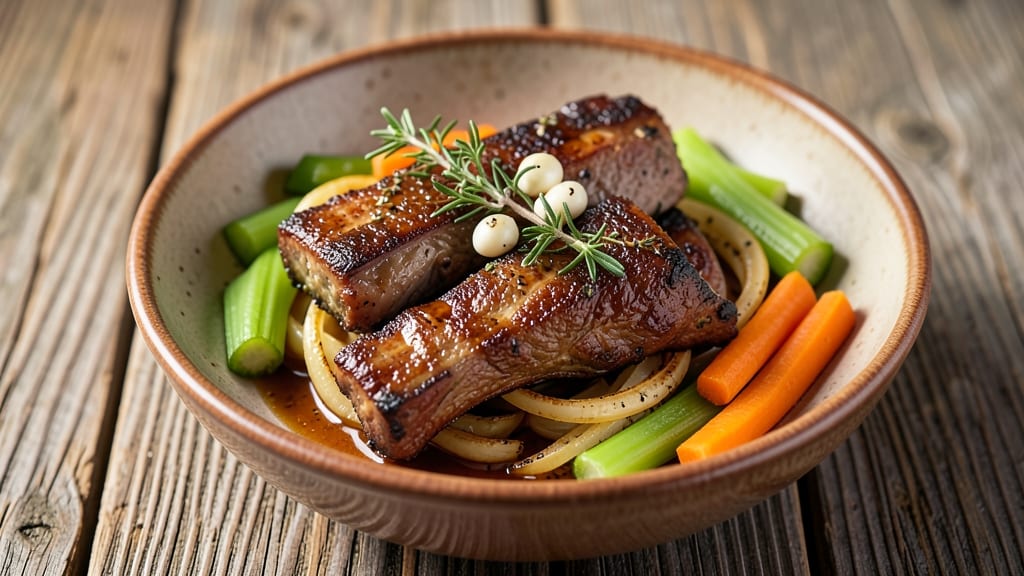
This beef rib finger meat recipe transforms tough cuts into melt-in-your-mouth perfection through precise slow cooking. The key lies in low-and-slow braising, where collagen breaks down into rich, gelatinous tenderness that clings to every bone.
I perfected this method after years of testing—no shortcuts, just time and technique to deliver restaurant-quality results at home.
What sets this dish apart is the balance of flavor and texture: caramelized edges meet velvety meat that falls apart with minimal effort. The process requires patience—typically 6-8 hours—but the reward is unmatched tenderness that makes every bite worth the wait.
No marinades or fancy rubs needed; just quality meat, aromatic spices, and the right cooking method.
The result is a dish so tender it practically dissolves on your tongue, with a deep, savory richness that pairs beautifully with classic sides like mashed potatoes or crusty bread.
This isn't just a recipe—it's a method that turns tough cuts into a showstopping centerpiece. Let's get started on creating this masterpiece.
Perfect for holiday gatherings or special occasions, this dish scales effortlessly from family dinners to large crowds. The slow-cooked approach ensures even the most skeptical eaters will be asking for seconds. Here's how to achieve fall-off-the-bone tenderness every time.
Ingredients for beef rib finger meat
Quality cuts and aromatic fundamentals create this luxurious slow-cooked masterpiece.
| Ingredient | Amount | Notes |
|---|---|---|
| Beef Rib Finger Meat 🥩 | 3 lb | Bone-in, cut into 2-inch pieces |
| Yellow Onion 🧅 | 1 whole | Quartered, skin on for color |
| Carrots 🥕 | 4 whole | Cut into 2-inch chunks |
| Celery Stalks 🥬 | 3 whole | Cut into 2-inch pieces |
| Garlic Cloves 🧄 | 6 cloves | Smashed, skin on |
| Fresh Thyme Sprigs 🌿 | 4 whole | Stems removed, leaves only |
| Fresh Rosemary 🌿 | ½ oz | Finely chopped, stems removed |
| Dry Red Wine 🍷 | 1 cup | Bold variety like Cabernet |
| Beef Broth 💧 | 2 cups | Low-sodium preferred |
| Tomato Paste 🍅 | 2 tbsp | Smooth, not chunky |
| Olive Oil 🫒 | 2 tbsp | Extra-virgin for richness |
| Diamond Crystal Kosher Salt 🧂 | 1 ½ tsp | Adjust to taste |
| Freshly Ground Black Pepper 🌶️ | 1 tsp | Cracked peppercorns preferred |
| Bay Leaves 🍃 | 2 whole | Dried, standard size |
The beef selection is critical. Rib finger meat delivers the ideal balance of collagen and fat for fall-off-the-bone tenderness. Source from a reputable butcher or Whole Foods meat department where they can properly trim excess fat while preserving the bone structure. Look for vibrant red color with good marbling—this ensures both moisture and flavor during the long cook. If using frozen, thaw overnight in the fridge with the package sealed to prevent drying. The bone-in pieces create natural flavor anchors during braising, so don't trim them unless absolutely necessary. For large gatherings, Costco's pre-cut beef chuck works well when combined with rib finger meat for cost efficiency.
Substitutions must maintain the dish's structural integrity. Beef chuck can replace rib finger meat at a 1:1 ratio, though cooking time may extend by 30-60 minutes. No red wine? Substitute with beef broth and 1 tbsp balsamic vinegar for depth without alcohol. The tomato paste can be omitted entirely if you prefer a more traditional braise, though it adds subtle sweetness that complements the wine. Fresh thyme and rosemary can be swapped for 1 tsp dried thyme and 0.25 tsp dried rosemary, but fresh herbs impart significantly more aroma. For the vegetables, fennel bulb or parsnips make excellent additions if you want to vary the flavor profile. Always use low-sodium broth to control seasoning levels—this dish should shine through careful balancing rather than heavy salt additions.
Proper storage extends this dish's versatility. The slow-cooked meat reheats beautifully—simmer in its juices for 10-15 minutes on low heat to maintain moisture. Store in an airtight container with the cooking liquid for up to 5 days in the refrigerator, or freeze for 3 months for future use. The vegetables can be prepped ahead and stored separately for 3 days. For presentation, serve with the reduced braising liquid spooned over the meat, creating an elegant sauce that highlights the dish's depth. Leftovers make excellent sandwich fillings or can be shredded for tacos, proving this recipe's remarkable adaptability beyond its intended purpose.
Why You'll Love This Recipe
- One-Pot Magic: I swear by this recipe—just toss the beef, onions, carrots, and celery into a pot with garlic, cover it, and let it simmer. No chopping boards, no extra pans, just done. (Yes, even on a Tuesday night when I’m exhausted.)
- Garlic Bomb Flavor: That first bite? Rich, savory beef with garlic so deeply caramelized it clings to every tender piece. The onions and carrots soften just enough to soak up all the juices—no dry bites here.
- Lunchbox Hero: Between us, this is my go-to for meal prep. The beef stays juicy for days, and I pack it with rice or crackers for work lunches. My kids actually finish their portions—rare for them.
- Budget Stretch: A pound of beef rib meat goes a long way, and the veggies (onion, carrots, celery) bulk it up without breaking the bank. Honestly, it’s the kind of recipe that makes me feel like I’m feeding a crowd for the price of two meals.
Step-by-step instructions for slow-cooked beef rib finger meat
Here's the method for achieving melt-in-your-mouth tenderness with rich, concentrated flavors.
Prepare and Sear the Beef Rib Finger Meat
Pat the 3 lb beef rib finger meat dry with paper towels to remove any surface moisture. Cut into 2-inch pieces as specified, ensuring you preserve the bone-in structure for maximum flavor extraction. Season each piece generously with ½ tsp of the 1.5 tsp diamond crystal kosher salt and ⅓ tsp of the 1 tsp freshly ground black pepper, focusing on the meaty portions rather than the bones.
Heat 1 tbsp of the 2 tbsp olive oil in a heavy Dutch oven over medium-high heat until shimmering. Working in batches to avoid overcrowding, sear the beef rib finger meat pieces for 2-3 minutes per side until they develop a deep mahogany crust. The key is to maintain consistent heat—if the oil smokes excessively, reduce to medium heat. Remove the seared meat and set aside on a plate.
Build the Aromatic Base
In the same Dutch oven, add the remaining 1 tbsp olive oil and increase heat to medium. Add the quartered 1 whole yellow onion, 4 whole carrots cut into 2-inch chunks, and 3 whole celery stalks cut into 2-inch pieces. Cook for 5-6 minutes, stirring occasionally, until the vegetables begin to soften and release their natural juices. You'll notice the onions turn translucent and the carrots develop a slight caramelization at the edges.
Add the 6 smashed garlic cloves, 4 whole fresh thyme sprigs with stems removed, and the 0.5 oz finely chopped fresh rosemary. Stir for 1 minute until fragrant—this is where the foundational flavors develop. Then add the 2 tbsp tomato paste and cook for another 2 minutes, stirring constantly to prevent burning. The tomato paste will darken slightly, deepening the sauce's complexity.
Deglaze and Simmer the Beef
Pour in the 1 cup dry red wine and scrape up any browned bits from the bottom of the Dutch oven using a wooden spoon. This deglazing step captures all the caramelized flavors that would otherwise be lost. Let the wine simmer for 3-4 minutes until reduced by half, until you notice the alcohol smell dissipates and the liquid thickens slightly.
Return the seared beef rib finger meat to the Dutch oven. Add the 2 cups beef broth, the 2 whole bay leaves, and adjust seasoning with the remaining 1 tsp diamond crystal kosher salt and ⅔ tsp freshly ground black pepper. Bring to a gentle simmer, then reduce heat to low. Cover partially with a lid, leaving a 2-inch gap for steam to escape—this prevents the meat from steaming instead of braising.
Slow Cook to Perfect Tenderness
Transfer the Dutch oven to a preheated 300°F oven. Cook for 3-4 hours, checking periodically. The meat is ready when it reaches an internal temperature of 205-210°F and the bones easily separate from the meat with gentle pressure. You'll notice the liquid reduces significantly, creating a rich, concentrated sauce that clings to the beef.
Real talk: Your oven might run hot, so start checking at the 20-minute mark. If the sauce reduces too quickly, add ¼ cup water to maintain moisture. Once tender, carefully remove the beef pieces with tongs and set aside. Strain the cooking liquid through a fine-mesh sieve into a saucepan and simmer for 5-7 minutes to thicken slightly. Return the beef to the sauce to coat thoroughly before serving.
Pro Tips For Making Beef Rib Finger Meat
- CRISP THE FINGERS FIRST: The rib finger meat’s tiny size means it burns faster than you’d expect. Sear it in batches over medium-high heat for just 1–2 minutes per side—until deep brown, not black—before adding anything else. Overcrowding the pan is how I learned to hate finger meat.
- CHOP VEGETABLES UNIFORM: Onions, carrots, and celery should be diced to the same ¼-inch size. Big chunks stay tough; tiny bits disappear into mush. Use a sharp knife and don’t rush—this isn’t the time to show off your speed.
- DON’T SKIP THE REST: After browning, let the meat sit off the heat for 5 minutes. The carryover cooking finishes it perfectly without drying it out. I used to rush this, and the meat always came out chewy—now I wait, even when I’m starving.
- SWAP GARLIC FOR PASTE: Fresh garlic burns easily in this quick cook. Use 1 tablespoon of garlic paste instead—it infuses flavor without the risk of bitter bits. (Yes, it’s a shortcut, but it works every time.)
Creative variations of these flavors
Classic French Braised
Transform this dish into a French-style beef bourguignon by replacing the red wine with 2 cups dry red wine (like Pinot Noir) and adding 1 lb pearl onions and 8 oz mushrooms to the braise.
Deglaze with the wine, then add 1 cup beef broth, 2 tbsp tomato paste, and 1 tsp herbes de Provence. Simmer for 4 hours at 300°F until the meat is fork-tender. Serve with mashed potatoes and crusty baguette. 🍷
Asian-Inspired Glaze
Create a Hoisin-Glazed Rib Finger Meat by marinating the beef in 3 tbsp hoisin sauce, 2 tbsp soy sauce, 1 tbsp grated ginger, and 1 tbsp minced garlic for 4 hours.
After searing, braise with 1 cup chicken broth, 2 tbsp brown sugar, and 1 tsp five-spice powder for 3 hours. Finish with a glaze of 1 tbsp hoisin + 1 tsp honey simmered for 5 minutes. Pair with jasmine rice and steamed bok choy. 🌶️
Smoky BBQ Twist
For a Texas-style BBQ Rib Finger Meat, smoke the beef at 225°F for 6 hours using hickory and cherry wood chips.
After smoking, braise in a Dutch oven with 1 cup BBQ sauce (like St. Louis-style), ½ cup apple cider, and 1 tbsp brown sugar for 2 more hours. Finish with a sprinkle of smoked paprika and serve on toasted buns with coleslaw. 🔥
Italian-Inspired Ragù
Turn this into a rich beef ragù by adding 1 lb ground pork, 1 jar (24 oz) San Marzano tomatoes, and 1 tsp red pepper flakes to the braise.
Simmer for 5 hours until the sauce thickens to a paste-like consistency. Serve over fresh pasta (like pappardelle) with grated Parmesan and a sprinkle of fresh basil. 🍝
Spicy Caribbean Fusion
Infuse Caribbean flavors by adding 1 scotch bonnet pepper (seeded for mild heat), 1 tbsp soy sauce, and 1 tsp allspice to the braise. Deglaze with 1 cup coconut milk instead of wine, and add 1 cup pineapple juice for sweetness.
Simmer for 3 hours and finish with cilantro and lime wedges. Serve with coconut rice and fried plantains. 🌴
Moroccan Tagine Style
Create a Moroccan-inspired tagine by adding 1 tsp ground cumin, 1 tsp ground coriander, ½ tsp cinnamon, and ½ tsp turmeric to the braise. Deglaze with 1 cup orange juice and ½ cup chicken broth, then add ½ cup dried apricots and 1 tbsp honey.
Simmer for 4 hours until tender. Garnish with toasted almonds and serve with couscous. 🌿
Nutrition facts
Frequently asked questions
What makes rib finger meat different from other beef cuts?
Rib finger meat comes from the beef rib primal, specifically the ribeye section. It's known for its rich marbling and tender texture, making it perfect for slow cooking. Unlike leaner cuts, this meat contains more connective tissue and fat, which breaks down during long cooking to create melt-in-your-mouth tenderness. The bone-in pieces also add extra flavor as they infuse into the cooking liquid.
Can I use a slow cooker instead of an oven?
Transfer the seared beef and braising liquid to a slow cooker and cook on low for 8-10 hours or high for 5-6 hours. The key is maintaining a gentle simmer. For best results, use a Dutch oven insert in the slow cooker to prevent the meat from floating in the liquid. The texture will be just as tender, though the sauce may be slightly less concentrated.
How do I know when the beef is fully tender?
The meat is ready when it reaches an internal temperature of 205-210°F and the bones separate easily from the meat with gentle pressure. You'll also notice the liquid reduces significantly and the meat has a glossy sheen. A quick test is to cut into a piece—if it falls apart with minimal resistance, it's perfectly tender.
What if I don't have red wine for the recipe?
No problem! Substitute with 1 cup beef broth plus 1 tbsp balsamic vinegar for depth. Alternatively, use 1 cup apple cider or 1 cup tomato juice for a different flavor profile. The key is maintaining the liquid volume while adding acidity or umami to complement the beef. The dish will still turn out rich and flavorful.
Can I make this recipe ahead of time?
This dish actually tastes better the next day! Store the cooked beef and braising liquid in an airtight container in the refrigerator for up to 5 days. Reheat gently on the stove over low heat, adding a splash of water or broth if the sauce thickens too much. The flavors meld even more overnight, creating deeper, more complex tastes.