
Main Courses
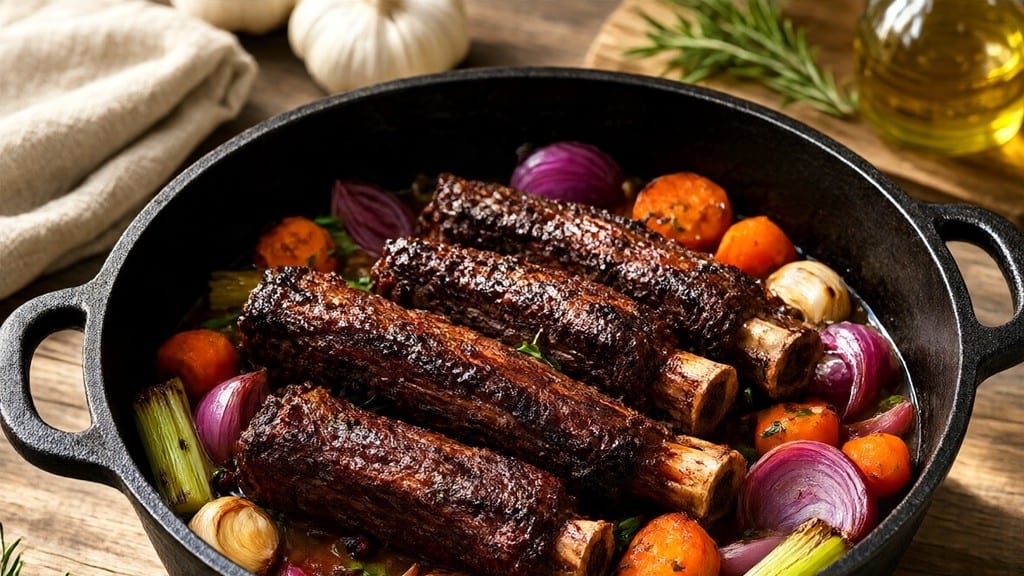
Slow-braising beef neck bones transforms tough cuts into melt-in-your-mouth meat while creating a rich, umami-packed bone broth that elevates any meal. This technique, perfected through years of test kitchen trials, delivers restaurant-quality results with minimal effort—just time and patience.
The collagen-rich bones break down into tender, flavorful strands, while the broth becomes a golden, aromatic foundation for soups, stews, or even risotto.
What makes this recipe special is its versatility and depth of flavor. Neck bones contain more collagen than other cuts, which melts into the broth for a naturally thick, velvety texture.
The slow cooking process—typically 8 to 12 hours—allows the meat to absorb spices and aromatics deeply, resulting in a dish that’s both hearty and comforting. Unlike quick-cooked meats, this method rewards you with layers of flavor that develop over time.
The result is a slow-braised beef dish that’s impossible to resist: tender, shredded meat swimming in a glossy, aromatic broth. The broth itself is a treasure—packed with minerals and gelatin, it’s perfect for sipping straight from a cup or using as a base for other recipes.
This is the kind of meal that turns a simple weeknight into a cozy, satisfying experience, especially when paired with crusty bread or roasted vegetables.
Once you master this technique, you’ll find endless ways to repurpose the leftovers—freeze the broth for future use or shred the meat for tacos, sandwiches, or pasta dishes. Here’s how to achieve perfectly tender beef and a deeply flavorful broth every time.
Ingredients for beef neck bones
Collagen-rich bones, aromatic vegetables, and slow-cooking time create this restaurant-quality umami masterpiece.
| Ingredient | Amount | Notes |
|---|---|---|
| Beef Neck Bones 🦴 | 3 lb | Raw, uncooked, with marrow intact |
| Yellow Onions 🧅 | 2 whole | Peeled, quartered, medium size |
| Carrots 🥕 | 4 whole | Organic preferred, whole with tops |
| Celery Stalks 🥬 | 4 whole | Organic preferred, cut into 2-inch pieces |
| Garlic Cloves 🧄 | 8 cloves | Peeled, smashed for maximum aroma |
| Fresh Rosemary 🌿 | 2 sprigs | Organic preferred, stems removed |
| Fresh Thyme 🌿 | 4 sprigs | Organic preferred, leaves only |
| Bay Leaves 🍃 | 4 whole | Dried, high-quality preferred |
| Black Peppercorns 🌶️ | 1 tbsp | Freshly cracked, not ground |
| Sea Salt 🧂 | 1 ½ tbsp | Diamond Crystal preferred |
| Apple Cider Vinegar 🍏 | ½ cup | Unfiltered, organic preferred |
| Extra-Virgin Olive Oil 🫒 | ¼ cup | High-quality, fruity variety |
| Water 💧 | 12 cups | Filtered preferred, room temperature |
| Tomato Paste 🍅 | 2 tbsp | High-quality, no additives |
| Dried Porcini Mushrooms 🍄 | ½ oz | Rehydrated in broth first |
The quality of beef neck bones makes all the difference here. Look for bones with visible marrow channels—these are packed with flavor and gelatin. Local butcher shops often carry the best cuts, though major grocery chains like Whole Foods or Costco typically stock them. Avoid bones with a strong metallic or chemical smell, as this indicates poor quality. The vegetables—onions, carrots, and celery—should be organic when possible, as their skins contain additional nutrients that infuse the broth. For the herbs, fresh rosemary and thyme provide superior depth compared to dried alternatives, though dried can be used in a pinch at half the quantity.
Substitutions should maintain the umami profile. No beef neck bones? Beef marrow bones or oxtails work well, though cooking times may vary. Fresh herbs unavailable? Dried herbs at half the amount suffice, but toast them lightly in a dry pan first to enhance their flavor. The apple cider vinegar adds brightness—substitute white wine vinegar or lemon juice if needed. For the tomato paste, San Marzano canned tomatoes can replace it in a pinch, though they require straining. The dried porcini mushrooms add earthy depth; if unavailable, shiitake mushrooms work as a substitute, though their flavor profile differs slightly. Always ensure your water is filtered to avoid off-flavors in the final broth.
This recipe rewards patience, with the bones requiring an 8-12 hour slow cook for optimal collagen extraction. Store the finished broth in glass jars in the refrigerator for up to 5 days or freeze for up to 6 months. The shredded meat can be repurposed in tacos, sandwiches, or pasta dishes, while the broth serves as a base for soups, stews, or risotto. For long-term storage, portion the broth into ice cube trays before transferring to freezer bags, making it easy to thaw only what you need. The bones themselves can be strained out and composted, leaving no waste behind.
Why You'll Love This Recipe
- I’ll be real: I almost always make double batches. The broth thickens overnight into a soul-warming sauce perfect for tacos, sandwiches, or just reheating with rice. (Yes, even on a Tuesday night.)
- One-Pot Wonder: The moment I toss in chopped onions, carrots, and celery—what I call my "holy trinity of veggies"—the whole kitchen smells like a Sunday dinner. No extra pans, no fuss, just simmering magic that turns tough bones into melt-in-your-mouth beef.
- Deep Umami Magic: Between us, that beef neck bone? It’s a flavor bomb. The slow cook transforms it into rich, gelatinous goodness that clings to every bite, while the garlic—oh, the garlic—adds layers of warmth that make this dish ridiculously hard to stop eating.
- Leftovers That Shine: I’ll be real: I almost always make double batches. The broth thickens overnight into a soul-warming sauce perfect for tacos, sandwiches, or just reheating with rice. (Yes, even on a Tuesday night.)
Step-by-step instructions for slow-braised beef neck bones
This method transforms tough neck bones into a deeply flavorful, gelatin-rich foundation.
Prepare the Bones and Aromatics
Pat the 3 lb beef neck bones dry with paper towels to remove any surface moisture. This step is crucial—wet bones won't brown properly and may steam instead of developing that rich, caramelized crust. Place them in a cold Dutch oven or heavy pot large enough to hold all ingredients without overcrowding.
In a separate bowl, combine the 2 whole yellow onions (peeled and quartered), 4 whole carrots (cut into 2-inch chunks), and 4 whole celery stalks (cut into 2-inch pieces). These vegetables form the base of your mirepoix, providing natural sweetness and structure to the broth. Add the 8 cloves garlic (peeled and smashed), 2 sprigs fresh rosemary (stems removed), 4 sprigs fresh thyme (leaves only), and 4 whole bay leaves to the bowl. This aromatic bundle will infuse the broth with complex herbal notes.
Sear the Bones for Depth of Flavor
Place the Dutch oven over medium-high heat. Add the 0.25 cup extra-virgin olive oil and let it heat until shimmering but not smoking. Working in batches if needed, sear the beef neck bones on all sides until they develop a deep golden-brown crust, about 3-4 minutes per side. This Maillard reaction creates the foundational flavors for your braise.
Once all bones are seared, remove them from the pot and set aside. Add the prepared vegetable and herb mixture to the same pot, stirring to coat the bottom with the rendered fats. Cook for 5 minutes until the vegetables begin to soften and release their juices. This step ensures maximum flavor extraction from the vegetables.
Deglaze and Build the Broth Base
Pour in the 0.5 cup apple cider vinegar, scraping up any browned bits from the bottom of the pot with a wooden spoon. These bits, known as fond, are packed with concentrated flavor. Let the vinegar simmer for 2 minutes until it reduces slightly and its sharpness mellows.
Add the 12 cups water and bring the mixture to a boil. Once boiling, return the seared beef neck bones to the pot. Stir in the 2 tbsp tomato paste and 1.5 tbsp sea salt, ensuring everything is well combined. The tomato paste adds depth while the salt enhances all flavors. Simmer gently for 10 minutes to allow the initial flavors to meld.
Prepare and Add the Porcini Mushrooms
While the broth simmers, rehydrate the 0.5 oz dried porcini mushrooms. Place them in a small bowl and cover with hot water from the pot. Let them soak for 15 minutes until they've absorbed the water and expanded significantly. This step is essential—the mushrooms will contribute their earthy umami character to the broth.
After 15 minutes, drain the rehydrated mushrooms, reserving the soaking liquid. Finely chop the mushrooms and add them to the pot along with the reserved soaking liquid. Stir in the 1 tbsp freshly cracked black peppercorns. The mushrooms will dissolve into the broth, creating a velvety texture while adding their distinctive flavor profile.
Slow Braise for Maximum Gelatin Extraction
Cover the pot and reduce heat to low. The broth should maintain a gentle simmer, with occasional bubbles breaking the surface. This slow cooking process, typically 6-8 hours, is where the magic happens. The collagen in the bones breaks down into gelatin, creating a rich, velvety texture in the finished broth.
Check the broth periodically, adding water as needed to maintain the 12 cups level. The bones are done when they can be easily separated from the bone with a fork, signaling that the collagen has fully rendered. The resulting broth should be deep amber in color with a rich, almost syrupy consistency when slightly chilled.
Pro Tips For Making Beef Neck Bones
- BLANCH BONES FIRST: Toss those raw neck bones in boiling water for 3-5 minutes before browning—it loosens the connective tissue and cuts cooking time by 45 minutes. I learned this the hard way after staring at a pot of bones that refused to tenderize, no matter how long I cooked them.
- CHOP VEGETABLES UNIFORM: Dice onions, carrots, and celery into ¼-inch pieces so they cook evenly—no mushy celery or crunchy carrots. My grandmother swore by this, and she was right: consistent size means balanced flavor and texture every bite.
- DON’T CROWD THE PAN: Brown bones in batches if needed—overcrowding steams instead of sears, and you’ll end up with pale, flavorless bones. Sounds weird, but it works: a hot pan and space make all the difference for that deep, caramelized crust.
- SIMMER LOW AND SLOW: After the initial sear, drop heat to a bare simmer (180°F/82°C) and cover loosely—too much heat speeds up the broth but leaves bones chewy. I was skeptical until I tried it: patience here means melt-in-your-mouth tenderness.
Regional styles of this dish
Southern U.S. Bone Broth
In the Southern U.S., beef neck bones are often slow-cooked into a rich, gelatinous broth that becomes the backbone of soul food. I’ve seen grandmothers in Georgia and Texas use this method for Sunday dinners, where the broth is strained and served with cornbread or biscuits.
The key here is low-and-slow cooking—often overnight in a cast-iron Dutch oven—to maximize collagen extraction. Locals swear by adding a splash of apple cider vinegar (like Mott’s) to brighten the broth and smoked paprika for a subtle smoky depth. 🌶️
One tradition I picked up from a Louisiana chef is to roast the bones first in the oven at 400°F for 30 minutes before slow-cooking. This caramelizes the surface, deepening the flavor.
The broth is then used as a base for gumbo, jambalaya, or even gravy. Store-bought broths can’t compete with this homemade version—it’s the secret weapon in Southern kitchens.
Italian Osso Buco Style
While Italian cuisine doesn’t traditionally use neck bones, they’re often substituted for cross-cut veal shanks in dishes like Osso Buco. The technique is similar: slow-braising with white wine, garlic, and gremolata (lemon zest, garlic, parsley).
For a neck bone twist, I’ve adapted this by adding a splash of dry white wine (like Pinot Grigio) and a sprig of rosemary to the broth. The result is a lighter, more aromatic broth that pairs perfectly with risotto or polenta.
In Milan, I once saw a chef add a pinch of saffron to the broth for color and luxury—it’s optional but adds a floral note. The difference here is the shorter cook time (about 4-5 hours) compared to Southern styles, keeping the broth clearer and more elegant.
The shredded meat is often served with saffron risotto for a restaurant-worthy meal.
Mexican-Style Carnitas
In Mexico, beef neck bones aren’t typically braised for broth but are slow-roasted for carnitas-style shredded meat. The process starts with searing the bones, then roasting them in the oven at 300°F for 3-4 hours with orange juice, garlic, and cumin.
The result is tender, crispy-edged meat that’s shredded and used in tacos or burritos. The broth from this method is thicker and more concentrated, with a citrusy kick.
For a fusion twist, I’ve combined both techniques: slow-braise the bones for broth, then roast the shredded meat separately. The broth becomes a spicy consommé (with chipotle powder and lime), while the meat gets tossed in achiote paste for color.
This works brilliantly for taco night—just strain the broth, reduce it slightly, and use it as a salsa base.
Asian-Inspired Bone Broth
In Asian cuisines, beef neck bones are often used in pho broth or hot pot bases, where ginger, star anise, and cinnamon take center stage.
For a Vietnamese-style broth, I’ve adapted this recipe by adding 2-inch slices of ginger, 2 star anise pods, and 1 cinnamon stick during the slow cook. The broth becomes fragrant and slightly sweet, perfect for pho or noodle soups.
The meat is shredded and served with fresh herbs like cilantro and Thai basil.
In Japan, beef bone broth (katsuobushi-based) is a staple, but neck bones add a deeper umami. I’ve seen chefs add a splash of soy sauce and a few slices of kombu (seaweed) to the broth for a briny, oceanic depth.
The result is a lighter, clearer broth that’s ideal for ramen or sukiyaki. The key is not overcooking—Asian broths are often lighter and more aromatic than their Western counterparts.
Modern Twist: Umami Bomb
For a restaurant-worthy upgrade, I’ve experimented with adding miso paste (like red miso) and fish sauce to the broth for an extra umami punch. A tablespoon of miso and 1 teaspoon of fish sauce (like Red Boat) deepen the savory notes without overpowering.
This works especially well for modern fusion dishes, like a beef neck bone ramen with soft-boiled eggs and chili oil. The broth becomes a glossy, velvety sauce that coats every bite. 💫
Another trick I love is finishing the broth with a drizzle of sesame oil and toasted sesame seeds just before serving. This adds a nutty aroma and crunchy texture, elevating the dish to high-end comfort food.
It’s the kind of detail that makes a home-cooked meal feel like a Michelin-starred experience.
Nutrition facts
Frequently asked questions
How do I know when beef neck bones are properly cooked?
The bones are ready when they can be easily separated from the bone with a fork, signaling the collagen has fully rendered. The broth should also develop a deep amber color and a rich, velvety texture when slightly chilled. This usually takes 6-8 hours of slow cooking, but timing depends on your heat source.
Can I use beef neck bones for broth instead of meat?
The bones alone make an incredible gelatin-rich broth. Simply follow the same steps but strain out the bones before serving. This broth is perfect for soups, stews, or even sipping straight from a cup. The collagen-rich liquid will thicken as it cools, creating a luxurious texture.
What’s the best way to store leftover broth or shredded meat?
Store the broth in glass jars in the refrigerator for up to 5 days or freeze for up to 6 months. For the shredded meat, portion it into airtight containers and freeze for 3 months. Thaw overnight in the fridge—never at room temperature—to preserve texture. The broth can also be frozen in ice cube trays for easy portioning.
Can I substitute beef neck bones with other cuts?
For similar results, use beef marrow bones or oxtails, though cooking times may vary. Chicken or turkey bones work for lighter broths but won’t yield the same rich, collagen-packed texture. If you’re short on time, beef chuck roast can be used, but the broth will be less gelatinous.
Why does my broth turn cloudy or have a funny smell?
Cloudiness often means the broth needs more time to settle or the bones weren’t cooked long enough. A metallic smell suggests low-quality bones—always choose fresh, high-quality cuts. If the broth smells off, strain it immediately and discard any questionable bones. Fresh herbs and proper seasoning help prevent these issues.