
Main Courses
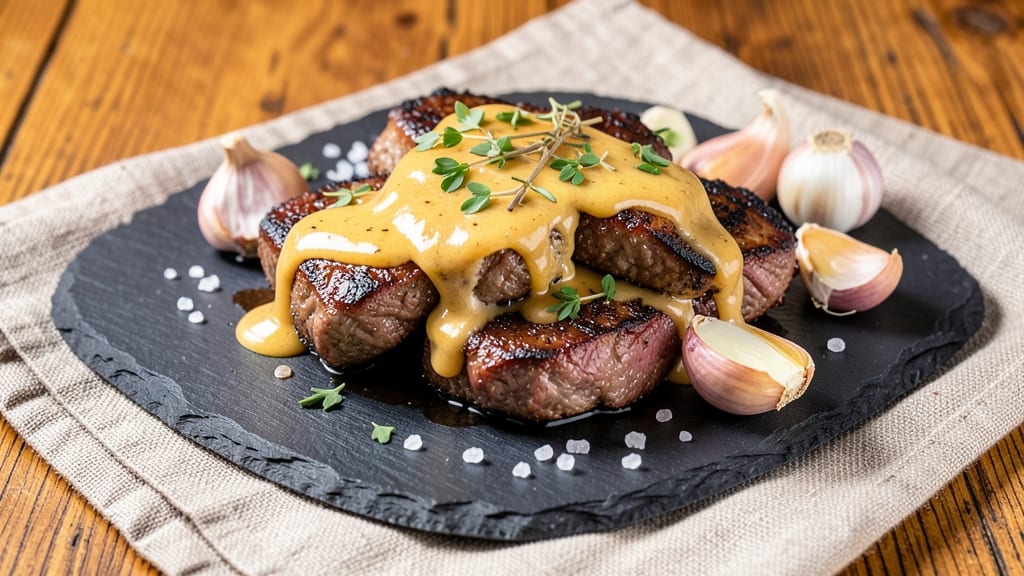
This beef kidneys recipe transforms one of the most intimidating offal cuts into a restaurant-worthy main course with crispy edges and rich, herbed butter. After years of perfecting the technique—including that crucial first step of cleaning and trimming—I've developed a method that delivers tender, flavorful kidneys every time.
The secret lies in proper preparation and high-heat searing, which caramelizes the exterior while keeping the interior succulent.
What sets this recipe apart is the balance of textures and flavors: the kidneys develop a golden-brown crust from pan-searing, while the herbed butter basting adds depth without overpowering the natural richness of the meat.
Unlike many offal preparations that rely on long braising times, this method delivers results in under 20 minutes, making it perfect for weeknight dinners when you want something special but don't have hours to spare.
The final dish features kidneys with perfectly crispy edges that give way to tender, juicy centers, all coated in a fragrant herb butter that ties together the earthy flavors. This isn't just another offal recipe—it's a transformative cooking experience that turns what many consider a challenge into a showstopping centerpiece.
Serve with roasted potatoes or a simple green salad for a complete meal that feels both elegant and approachable.
Safety is paramount when working with offal, so I've included detailed steps for proper handling and preparation in the full instructions. Trust me—once you master this technique, you'll never shy away from beef kidneys again. Let's get started with the full recipe.
Ingredients for beef kidneys
The essential ingredients for restaurant-quality beef kidneys with crispy edges and herbed butter richness.
| Ingredient | Amount | Notes |
|---|---|---|
| Beef Kidneys 🥩 | 1 ½ lb | Fresh, cleaned and trimmed |
| Unsalted Butter 🧈 | ½ cup | Cold, cubed for basting |
| Fresh Parsley 🌿 | ¼ cup | Finely chopped, flat-leaf preferred |
| Fresh Thyme 🌿 | 1 tbsp | Leaves only, finely chopped |
| Fresh Garlic 🧄 | 4 cloves | Minced, for herb butter |
| Diamond Crystal Kosher Salt 🧂 | 1 ½ tsp | For seasoning and curing |
| Black Peppercorns 🌶️ | 1 tsp | Freshly cracked, coarse |
| Extra-Virgin Olive Oil 🫒 | 2 tbsp | High smoke point for searing |
| Lemon Zest 🍋 | 1 tsp | From 1 organic lemon |
| Heavy Cream 🥛 | ¼ cup | For optional finishing sauce |
| Red Wine Vinegar 🍷 | 1 tbsp | For deglazing pan |
| Vegetable Oil 🫒 | ½ cup | For high-heat searing |
| Fresh Rosemary 🌿 | 1 tbsp | Needles only, finely chopped |
The beef kidneys are the star, so source them from a reputable butcher or specialty market—look for vibrant red color and firm texture. Costco and Whole Foods typically carry them pre-cleaned, but if trimming yourself, remove all connective tissue and fat caps. The unsalted butter should be cold and cubed—this ensures proper basting without premature melting. For the herbs, Penzeys Spices or local farmers' markets offer the freshest parsley, thyme, and rosemary, which are critical for that fragrant herb butter. If you can't find fresh rosemary, dried will work at half the quantity, but fresh delivers superior aroma. The Diamond Crystal kosher salt is preferred for its coarse texture, which clings better to the kidneys during searing.
No fresh thyme? Dried thyme at one-third the amount works, though fresh is ideal. Substitute fresh chives for parsley if needed, though parsley's bright flavor is essential. For the butter, European-style unsalted butter like Plugrá or President is superior, but any good-quality unsalted will suffice. The red wine vinegar can be swapped for balsamic vinegar if unavailable, though it will alter the acidity profile slightly. If you're avoiding dairy, replace the heavy cream with coconut cream for the finishing sauce, though the texture will differ. The extra-virgin olive oil must have a high smoke point—avoid delicate, peppery varieties that would burn during searing.
Store fresh kidneys in a sealed container in the coldest part of your fridge and use within 2 days for optimal texture. The herb butter mixture can be prepped ahead and stored in the refrigerator for up to 3 days, though it's best used immediately for maximum flavor. Leftover kidneys reheat beautifully in a skillet with a splash of water or broth—just 2-3 minutes over medium heat to restore crispiness. For a complete meal, pair with roasted potatoes or a simple arugula salad dressed with lemon vinaigrette, as mentioned in the introduction. The dish holds well for 2 days in the refrigerator, though the crispy edges soften slightly upon reheating.
Why You'll Love This Recipe
- One-Pan Magic: I swear by this recipe when I’m too tired to scrub a million dishes. Just sear the kidneys in butter, toss in garlic and herbs, and let them sizzle—no extra pans, no fuss. The butter pools into little golden pockets that make cleanup feel like a victory.
- Umami Bomb: That first bite? Rich, meaty, and packed with depth from the garlic and thyme. The parsley brightens it just enough to keep it from feeling heavy—like a hug from a chef who knows what they’re doing. (Yes, even if you don’t.)
- Weeknight to Dinner Party: Same recipe, totally different vibes. Serve it with crusty bread for a lazy Sunday or drizzle it over mashed potatoes for a fancy-ish weeknight meal. My in-laws think it’s "gourmet"—they’ve just never tried kidneys before.
- Budget Powerhouse: Kidneys are one of those ingredients that feel luxurious but won’t break the bank. A pound feeds four, and the leftovers? Even better reheated the next day with a sprinkle of fresh parsley. I call that a win for my wallet and my taste buds.
Step-by-step instructions for pan-seared beef kidneys
Master the technique for achieving perfectly crispy edges while keeping the interior tender and flavorful.
Prepare the Kidneys for Even Cooking
Begin by trimming any visible fat or connective tissue from the 1.5 lb beef kidneys using a sharp chef's knife. The kidneys should be clean and uniform in thickness—aim for about ½-inch thickness where possible. This ensures even cooking and prevents some pieces from overcooking while others remain underdone.
Place the cleaned kidneys in a bowl and season generously with 1.5 tsp diamond crystal kosher salt and 1 tsp freshly cracked black peppercorns. Use your hands to massage the seasoning into the surface, ensuring every inch is coated. Let them sit at room temperature for 20-30 minutes while you prepare the herb butter. This step guarantees maximum flavor penetration and helps develop the crispy exterior later.
Create the Herbed Butter and Sear the Kidneys
In a small bowl, combine 0.5 cup unsalted butter, 4 cloves minced fresh garlic, 1 tbsp finely chopped fresh thyme, 1 tbsp finely chopped fresh rosemary, 1 tsp lemon zest, and an additional ½ tsp diamond crystal kosher salt. Mix well until fully incorporated, then shape into a log and chill in the refrigerator for 15 minutes—this keeps it firm for easier handling during searing.
Heat 0.5 cup vegetable oil in a large skillet over medium-high heat until it shimmers—350-375°F on an instant-read thermometer. Working in batches if necessary, carefully add the seasoned kidneys to the oil. Press down gently on each piece with a spatula for 5-10 seconds to ensure full contact with the hot oil. This prevents curling and guarantees even browning.
Develop the Crispy Edges and Finish Cooking
Cook the kidneys undisturbed for 2-3 minutes per side until they develop a deep golden-brown crust—this is your crispy goal. You'll see the edges begin to caramelize and pull away from the pan slightly. If any pieces stick, gently lift and rotate them rather than scraping the pan.
Remove the kidneys from the skillet and set them aside on a wire rack. Immediately reduce the heat to medium and add 2 tbsp extra-virgin olive oil to the same skillet. Place the chilled herb butter log in the skillet and let it melt completely, about 1-2 minutes, while stirring occasionally to distribute the flavorful butter evenly across the pan's surface.
Deglaze and Create the Finishing Sauce
Pour in 1 tbsp red wine vinegar and scrape up any browned bits from the bottom of the pan using a wooden spoon. These bits contain concentrated flavor that enhances the sauce. Let the vinegar simmer for 1-2 minutes until it reduces by half and the alcohol smell dissipates.
Return the kidneys to the skillet and spoon the herbed butter sauce over them, basting for 30 seconds to coat evenly. For an optional richer finish, stir in 0.25 cup heavy cream and let it warm through for 30-45 seconds. The sauce should lightly coat the kidneys without making them soggy. Garnish with 0.25 cup finely chopped fresh parsley and serve immediately while the edges remain crisp.
Pro Tips For Making Beef Kidneys
- TRIM THE FAT PADS FIRST: Kidneys come with those little white fat pads—don’t just pull them off. Score the surface with a sharp knife first, then grip and twist to separate them cleanly. I used to yank them off raw and tear the kidneys; this method keeps everything intact and makes searing easier.
- SEAR IN BATCHES OR BURN THEM: Cast iron or stainless steel pan, high heat—no excuses. If you crowd the kidneys, they’ll steam instead of develop that deep crust. Work in a single layer, 2-3 minutes per side, and resist the urge to poke them. They’ll release their own juices when ready.
- SALT THE KIDNEYS BEFORE SEARING: Generous salt (about 1 tsp per pound) goes on before they hit the pan. This seasoning penetrates while they sear, not after like some recipes suggest. I learned this the hard way—dry-brined kidneys taste bland no matter how much butter you add later.
- USE COLD BUTTER FOR FINISHING: After searing, pull the pan off heat and add 2 tablespoons of cold unsalted butter. The sudden temperature drop makes it foam and coat the kidneys in a silky glaze. Hot butter burns—trust me, I’ve seen it happen. Toss in the garlic, thyme, and parsley at the end for freshness.
Essential equipment for beef kidneys
Essential Skillets
You'll need a large, heavy-bottomed skillet with at least 10-inch diameter—I swear by my All-Clad Stainless Steel for even heat distribution. The flat surface prevents hot spots that can burn the kidneys unevenly.
A cast-iron skillet like Lodge Pre-Seasoned works too, but preheat it longer to avoid temperature fluctuations. Avoid nonstick—it can't handle the high heat needed for crispy edges. 🔥
Temperature Tools
An instant-read thermometer is non-negotiable for monitoring oil temperature between 350-375°F. I use the ThermoWorks Thermapen One—it's fast and accurate. Without one, you risk oil that's too cool (soggy kidneys) or too hot (burned exteriors).
A candy thermometer works in a pinch, but it's slower to respond. Never guess with offal—precision matters.
Butter Chilling
Your herb butter needs to stay firm during searing, which is why I insist on chilling it for 15 minutes before using. A small glass bowl works best for shaping the butter log, but you can also use parchment paper to form a cylinder.
Store it in the fridge until ready—this prevents the butter from melting prematurely and losing its basting effectiveness. 🧈
Wire Rack Must-Have
After searing, transfer kidneys to a wire rack (not a plate) to maintain crispiness while resting. I use a stainless steel cooling rack that fits directly on my baking sheet.
This allows air circulation that keeps the edges crisp rather than steaming them. A collapsible silicone rack works too if you're short on counter space.
Spatula Selection
Use a heat-resistant silicone spatula or stainless steel turner with a thin, flexible edge. The silicone version prevents scratching your skillet while gently pressing kidneys during searing. Avoid wooden utensils—they can char at high heat. I keep a OXO Good Grips silicone spatula dedicated to offal cooking for hygiene reasons.
Vinegar Substitutes
If you're missing red wine vinegar, balsamic vinegar works in a pinch (though it's sweeter) or white wine for a more neutral acidity. For a non-alcoholic option, lemon juice in equal amounts adds brightness.
Just remember: acidity helps cut through the richness of the butter and kidneys, so don't skip it entirely. The 1 tbsp measurement is crucial for proper deglazing. 🍋
Nutrition facts
Frequently asked questions
How do I properly clean and prepare beef kidneys before cooking?
Start by trimming all visible fat and connective tissue with a sharp knife. Rinse under cold water and pat dry thoroughly. The most important step is removing the white membrane on the surface—this prevents bitterness. Soak in cold water for 10-15 minutes if they smell strong, then drain and pat dry again before seasoning.
Can I substitute lamb kidneys for beef in this recipe?
Yes, but expect slightly different texture and flavor. Lamb kidneys cook faster (about 1-2 minutes per side) and have a more delicate taste. Use the same technique but reduce cooking time by 30 seconds per side—they're ready when just barely pink inside. The herb butter works beautifully with either, though.
What's the best way to reheat leftover beef kidneys?
Reheat in a dry skillet over medium heat for 2-3 minutes per side until warmed through. Add a splash of water or broth to the pan to prevent drying. Microwaving will make them rubbery—always use a skillet for best results. The crispy edges won't return perfectly, but the texture stays tender.
Why did my kidneys turn out tough instead of tender?
Most likely they were overcooked or not properly trimmed. Kidneys should be cooked to 145°F internal temperature (just barely pink) for perfect tenderness. Also ensure you removed all connective tissue—this prevents toughness. Another common mistake is using too much oil (stick to ½ cup) which can dilute heat.
What's the best wine pairing for this dish?
A bold red like Cabernet Sauvignon or Syrah complements the rich, herbed flavors beautifully. For white wine lovers, try a full-bodied Chardonnay with good acidity. The red wine vinegar in the recipe also makes a Pinot Noir pairing work wonderfully.