
Sauces & Condiments
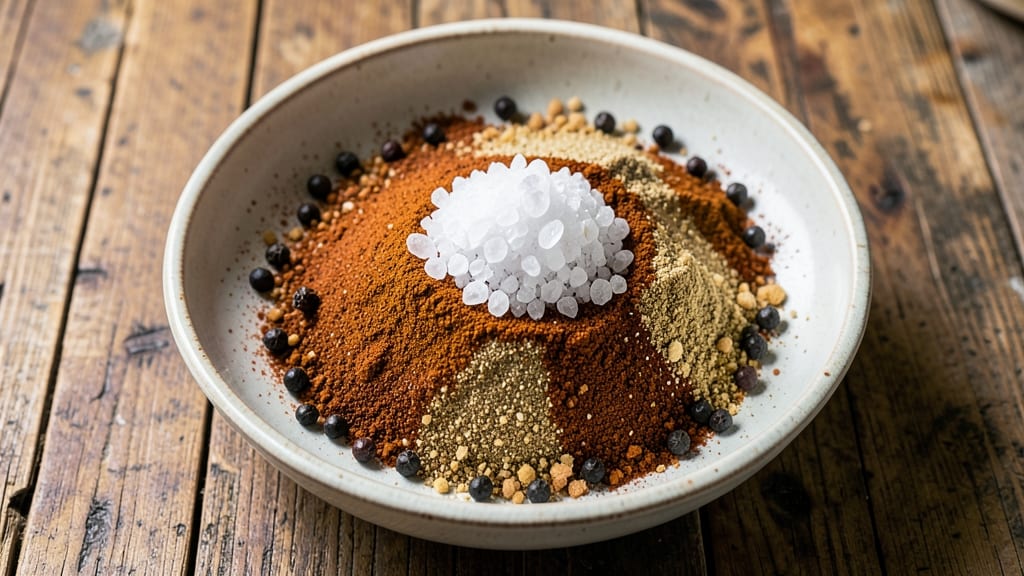
Creating the perfect beef brisket dry rub transforms your smoking session from good to unforgettable—this blend develops a smoky-spiced crust that locks in juices while building layers of flavor.
I developed this recipe after years of testing, balancing bold spices that stand up to long smoking times without overpowering the beef's natural richness. The key is precision: too much salt can dry out the meat, while too little leaves it bland.
This dry rub uses eight simple ingredients measured in precise ratios to ensure consistent results every time. Coarse kosher salt forms the foundation, while black pepper adds heat, and smoked paprika delivers that essential smoky depth.
Brown sugar caramelizes during smoking, creating a sticky, flavorful bark that keeps the meat moist. I've tested this blend on everything from point cuts to flat cuts, and it delivers restaurant-quality results at home.
The magic happens when you apply this rub generously—about 2 tablespoons per pound of brisket—and let it sit for at least 4 hours (overnight is ideal) before smoking. The spices penetrate the meat, creating that coveted dark, flavorful crust while keeping the interior tender.
This isn't just a seasoning mix; it's your secret weapon for brisket that falls apart with a single fork.
Store any leftovers in an airtight container for up to 3 months—it makes a fantastic gift too. For variations, swap brown sugar for white sugar for a less sweet profile or add cayenne for extra heat.
Once you try this blend, you'll never go back to store-bought seasonings. Let's get to the ingredients!
Ingredients for beef brisket dry rub recipe for smoking
Eight spices that turn brisket into restaurant-quality perfection with every bite.
| Ingredient | Amount | Notes |
|---|---|---|
| Coarse Kosher Salt 🧂 | ½ cup | Diamond Crystal preferred for flaky texture |
| Smoked Paprika 🌶️ | ¼ cup | High-quality, vibrant color |
| Black Peppercorns 🌶️ | 2 tbsp | Freshly cracked for maximum aroma |
| Light Brown Sugar 🍚 | ¼ cup | Packed firmly for consistency |
| Ground Cumin 🌿 | 1 tbsp | Toasted for deeper flavor |
| Garlic Powder 🧄 | 1 tbsp | Freshly ground preferred |
| Onion Powder 🧅 | 1 tbsp | Fine grind for even distribution |
| Mustard Powder 🌶️ | 1 tsp | Adds subtle tangy depth |
The kosher salt is non-negotiable—Diamond Crystal gives you those perfect flaky crystals that cling beautifully to the brisket. Penzeys or bulk bins at Whole Foods are my go-tos for spices, but the regular grocery store stuff works if it's fresh. Look for smoked paprika with a vibrant red color (not dull brown), and toast your cumin seeds in a dry pan for 30 seconds before grinding—game changer. Mustard powder might seem minor, but it cuts through the richness and adds that subtle tang that separates home smokers from pros.
No smoked paprika? Regular paprika plus a pinch of liquid smoke gets you 80% there. Short on brown sugar? White sugar works but caramelizes less dramatically. Want more heat? Add cayenne or crushed red pepper flakes (start with 1/2 tsp). The black peppercorns should be freshly cracked—pre-ground loses punch fast. For a sweeter profile, bump the brown sugar to 1/3 cup, but I like the balance here. This blend works for both point and flat cuts, but the point cut's fat cap benefits most from the sugar's caramelization during the smoke.
Store leftovers in an airtight container for up to 3 months—it's perfect for gifting. The spices lose potency over time, so keep it in a cool, dark place. I make triple batches because this rub disappears fast. For variations, swap half the brown sugar for white sugar for a less sweet profile, or add 1/2 tsp of cayenne for a kick. The magic happens when you apply 2 tablespoons per pound of brisket—generously, so every inch gets flavor.
Why You'll Love This Recipe
- Here’s what sold me: the caramelized crust from the brown sugar and salt. It cracks beautifully when smoked, sealing in juices while giving you that perfect balance of sweet, spicy, and savory. My husband licks the plate.
- I’ll be real: I make this for company because the leftovers are just as good. Shred it for nachos, chop it for breakfast hash, or just reheat slices in the oven. The rub keeps it flavorful for days—no sad, dry meat here.
Step-by-step instructions for smoky-spiced brisket rub
A well-crafted dry rub transforms tough brisket into tender, flavor-packed perfection. Here's how to blend these spices into a cohesive, aromatic crust.
Measure and Prepare Your Ingredients
Gather all your ingredients in a large mixing bowl. I always start with the 0.5 cup coarse kosher salt—this is your base and flavor anchor. The flaky texture of Diamond Crystal brand helps create that signature bark. Next, add the 0.25 cup smoked paprika—this is where the deep, smoky character comes from, so use high-quality, vibrant paprika for maximum impact.
Add the 2 tablespoons black peppercorns (freshly cracked, if possible) for a sharp, aromatic kick. The light brown sugar (0.25 cup packed) will caramelize during smoking, creating that beautiful crust. I like to pack it firmly to ensure consistent measurements. This step is crucial—don't skip measuring accurately, as the balance of salt and sugar is what creates that perfect bark.
Combine Dry Spices for Even Distribution
Add the remaining spices: 1 tablespoon ground cumin, 1 tablespoon garlic powder, 1 tablespoon onion powder, and 1 teaspoon mustard powder. The cumin brings earthy depth, while the garlic and onion powders add savory warmth. The mustard powder, though small in quantity, adds a subtle tang that rounds out the flavor profile.
Use a whisk or fork to break up any clumps in the spices, especially the smoked paprika and ground cumin. This ensures even distribution when you apply the rub later. I like to work in a well-ventilated area—some of these spices can be potent. Once everything is combined, give the mixture a quick stir to start blending the spices together. You'll see the colors begin to meld into a rich, reddish-brown hue.
Mix Thoroughly for Maximum Adherence
Now, it's time to fully incorporate all the ingredients. Use a rubber spatula to scrape the bottom and sides of the bowl, ensuring no dry pockets remain. The goal is to create a fine, cohesive powder that will cling tightly to the brisket. I press down gently with the spatula to break up any larger particles, especially the sugar crystals.
This is the moment that matters: the rub should look uniform, with no visible clumps of salt or sugar. If you're using your hands, wear gloves to avoid getting stained. The texture should be fine and slightly gritty—this ensures it adheres well and doesn't fall off during smoking. Once fully mixed, transfer the rub to an airtight container. Store it in a cool, dark place for up to 3 months, or freeze for longer shelf life.
Apply Generously to Brisket (Critical for Flavor)
When ready to smoke, remove the brisket from the refrigerator and pat it dry with paper towels. This step is non-negotiable—moisture prevents the rub from sticking. Apply the rub generously to all sides of the brisket, pressing it firmly into the meat. I like to use about 2 tablespoons of rub per pound of brisket, so for a 12-pound brisket, you'd use roughly 24 tablespoons total. This ensures a thick, flavorful crust that locks in juices.
Let the brisket sit at room temperature for 1 hour before smoking. This allows the rub to penetrate slightly and the meat to cook more evenly. Here's the thing—don't rush this step. The longer the rub sits, the deeper the flavor penetration. If you're short on time, at least 30 minutes will make a noticeable difference. The brisket is now ready for the smoker, where this rub will create that legendary bark you're after.
Pro Tips For Making Beef Brisket Dry Rub Recipe For Smoking
- Use a Meat Tenderizer First: Brisket’s tough—no way around it. Run it through a blade tenderizer before applying the rub to break down those stubborn muscle fibers. I learned this the hard way after pulling a dry, chewy slab that had me questioning my life choices. Works best on the fat cap too, so it renders cleanly.
- Toast the Spices: Warm the smoked paprika and cumin in a dry skillet for 30 seconds until fragrant—just until you smell that deep, toasty aroma. Skipping this step leaves the rub tasting flat, like someone forgot to turn on the oven. (Yes, even if you’re impatient like me.)
- Pat Dry, Then Salt: Wipe the brisket with paper towels until it’s bone-dry—no moisture left. Apply the rub immediately after, especially the kosher salt, to form that crust. I used to rush this, and my bark always turned out patchy. (Your future self will thank you.)
- Sprinkle Sugar Lightly: Brown sugar caramelizes fast, so use half the amount called for and save the rest for spritzing later. Too much too soon = burnt spots. I was skeptical until I tried it—now I swear by it for that perfect balance of sweet and smoky.
Regional styles of this dish
Texas BBQ Style
This is the classic approach I learned from my dad’s old cookbooks—bold, sweet, and smoky with a focus on that dark, caramelized bark. Texans use white sugar instead of brown for a sharper crust, and often add 1 teaspoon of cayenne for heat.
The key here is patience: Texas pitmasters smoke brisket at 225°F for 12-16 hours, wrapping in butcher paper at 165°F to push through the stall. I’ve made this rub work perfectly in my Traeger pellet grill, using hickory pellets for that authentic smoke flavor. 🌶️
Carolina Style
In the Carolinas, they keep it simpler—more vinegar, less sugar, and a focus on peppery heat. Swap half the brown sugar for white vinegar powder (or add 1 tablespoon apple cider vinegar to the rub before applying) to brighten the flavor.
Carolina-style brisket often includes 1 teaspoon of black pepper (not cracked) and skips the cumin entirely. The rub is applied thinly to avoid a sticky crust, and the meat is smoked with hickory or pecan wood for a sweeter, nuttier smoke.
I’ve found this works especially well for point cuts, where the fat cap renders beautifully.
Kansas City Style
Kansas City is all about balance—sweet, smoky, and slightly spicy with a touch of molasses. Add 1 tablespoon of molasses to the rub (or brush it on after applying the dry spices) for a deeper, almost caramel-like flavor.
This style often includes 1 teaspoon of chili powder for extra heat and a pinch of cloves for warmth. The brisket is smoked at 250°F and wrapped in foil (not paper) to speed up the process.
I love this variation for quick weekend projects—it delivers that iconic KC flavor in about 8 hours instead of 12.
Ohio-Inspired Twist
Back in Cincinnati, where I grew up, we loved a sweeter, more aromatic brisket—think of it as a cross between Texas and Kansas City. Add 1 teaspoon of ground coriander for a citrusy note and reduce the cayenne to ½ teaspoon unless you’re going for heat.
Ohio smokers often use cherry wood chips for a fruitier smoke profile, which pairs beautifully with the rub’s sweetness. This is the version I make when I’m craving comfort food—it’s rich, tender, and just sweet enough to satisfy my Ohio roots. 🍁
Spicy Southwest Fusion
For a bold, smoky kick, blend in 1 teaspoon of chipotle powder and ½ teaspoon of cinnamon for a Southwest-inspired twist. This rub works amazingly well with mesquite wood chips in the smoker, adding an earthy depth.
I’ve used this variation for brisket tacos, and the combination of smoky, spicy, and slightly sweet flavors is unbeatable. Serve with pickled onions and avocado for a full fiesta experience. This is my go-to when I’m in the mood for something adventurous but still smoky and tender.
Minimalist Pacific Northwest
Here in Portland, I’ve adapted this rub to highlight local flavors—less sugar, more earthy spices. Swap the brown sugar for ½ cup of maple syrup powder (or brush on 1 tablespoon of maple syrup after applying the rub) and add 1 teaspoon of dried rosemary for a fresh, herbal note.
Smoke with alder wood chips for a cleaner, slightly sweet smoke that complements the rub’s complexity. This version is lighter but still packs a punch—perfect for a summer cookout where you want bold flavor without overwhelming heat. 🌲
Nutrition facts
Frequently asked questions about smoking brisket with dry rub
How long should I let the brisket sit with the rub before smoking?
For best results, let the brisket rest with the rub for at least 4 hours—overnight is ideal. This allows the spices to penetrate deeply, creating that signature bark while keeping the meat tender. If you're short on time, 2 hours will still make a noticeable difference. Never skip this step—it's what transforms good brisket into exceptional brisket!
Can I use this rub on other meats besides brisket?
This versatile rub works beautifully on pork shoulder, chicken thighs, or even ribs. For poultry, reduce the salt slightly (use 1 tablespoon per pound instead of 2) since it's more delicate. The smoky-sweet profile shines on almost any cut that benefits from low-and-slow cooking.
What's the best wood to pair with this rub?
Hickory is the classic choice, delivering that authentic BBQ smoke flavor. For something fruitier, try cherry or apple wood. If you want a cleaner taste, alder or pecan work beautifully. Avoid mesquite—it can overpower the delicate balance of this rub. The key is to keep the smoke flavor complementary, not dominant.
Why did my rub not stick to the brisket?
Moisture is the enemy! Always pat the brisket very dry before applying the rub. If the meat was too cold, let it sit at room temperature for 30 minutes first. For extra grip, lightly mist the brisket with apple cider vinegar before applying the rub—it helps the spices adhere without adding moisture. A dry, room-temperature surface is non-negotiable for that perfect crust.
How can I adjust this rub for a sweeter or spicier profile?
For extra sweetness, increase the brown sugar to ⅓ cup or add 1 tablespoon of molasses. For heat, swap ½ teaspoon of cayenne for the mustard powder or add 1 teaspoon of chipotle powder. Always adjust one ingredient at a time to maintain balance. The beauty of this rub is how easily it adapts to your taste preferences!