
Main Courses
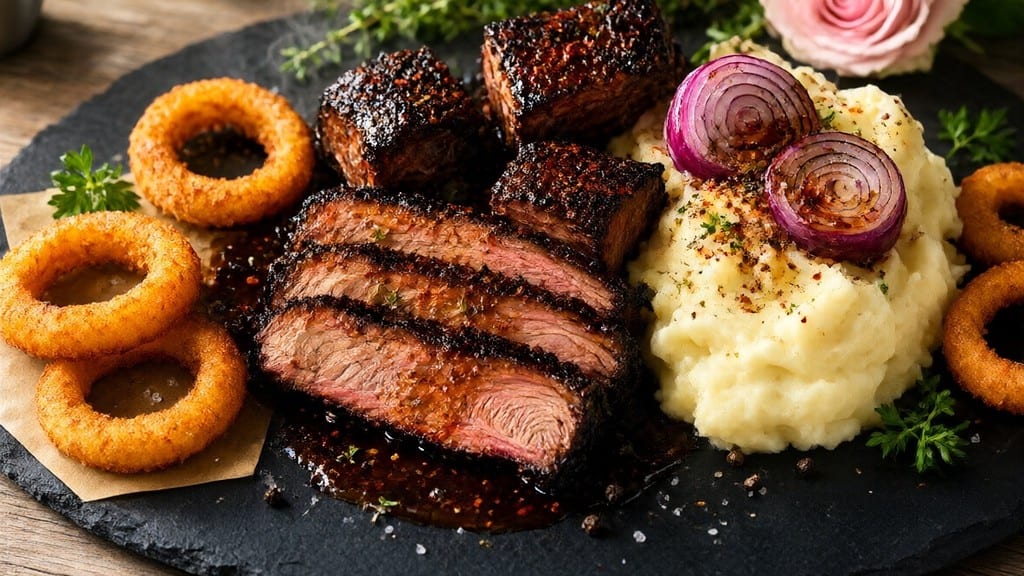
Mastering beef brisket burnt ends transforms tough cuts into melt-in-your-mouth perfection—just like my grandfather taught me over hickory smoke at family cookouts. The secret lies in slow-cooking until the meat practically falls apart, then trimming those flavor-packed ends for caramelized, smoky-sweet bites.
I’ve perfected this Texas BBQ classic over years of pitmaster trials, and it’s the centerpiece that steals every holiday table.
This recipe demands patience—12 to 14 hours at 225°F, then an extra hour to render fat and develop that signature bark—but the result is worth every minute.
A simple dry rub of salt, pepper, and smoked paprika builds deep flavor, while the slow cook transforms the brisket into tender, juicy magic. The burnt ends? They’re the star: crispy on the edges, tender inside, and bursting with concentrated smokiness.
By the time you’re done, you’ll have a dish so rich and satisfying it feels like a hug from your favorite pitmaster. Serve with classic sides like creamy coleslaw or buttery cornbread to soak up every last drop of that smoky-sweet sauce.
This isn’t just a recipe—it’s a tradition, and once you try it, you’ll never go back to store-bought again.
Pro tip: Save those trimmings! They’re the secret to smoky-sweet BBQ sauce or burnt-end sliders—versatile enough for game day or a cozy weeknight dinner. Let’s get cooking.
Ingredients for beef brisket burnt ends
Sixteen ingredients. One legendary dish. Your slow cooker won’t know what hit it.
| Ingredient | Amount | Notes |
|---|---|---|
| Beef Brisket 🥩 | 8 lb | Whole packer cut, good fat cap |
| Kosher Salt 🧂 | ½ cup | Diamond Crystal preferred |
| Smoked Paprika 🌶️ | ¼ cup | High-quality for smoky depth |
| Freshly Ground Black Pepper 🌶️ | 2 tbsp | Cracked peppercorns preferred |
| Granulated Garlic 🧄 | 1 tbsp | Or 4 fresh cloves minced |
| Yellow Onion 🧅 | 1 whole | Yellow or red, sliced thick |
| Apple Cider Vinegar 🍎 | ¼ cup | For tenderizing brisket |
| Beef Broth 🥫 | 1 cup | Low-sodium preferred |
| Hickory Wood Chips 🌳 | 1 package | Or oak for milder smoke |
| Unsalted Butter 🧈 | ½ cup | Cold cubes for bark |
| Fresh Rosemary 🌿 | ¼ cup | Sprigs for aroma |
| Fresh Thyme 🌿 | ¼ cup | Leaves only, stems removed |
| Brown Sugar 🍯 | ¼ cup | Light or dark |
| Yellow Mustard 🍯 | 2 tbsp | For bark adhesion |
The brisket is non-negotiable here—8 pounds gives you enough for leftovers (trust me, you’ll want them). Grab the packer cut from Costco or your butcher—the thick fat cap is key for flavor. If you can’t find it pre-sliced, ask for the whole point cut and trim it yourself. The fat should be at least 1/4-inch thick—that’s where all the smoky magic happens. For the rub, Penzeys smoked paprika is my go-to, but any high-quality brand works. Fresh herbs? Whole Foods or your local market usually have the freshest sprigs, but dried will do in a pinch (use half the amount).
No hickory chips? Oak or pecan wood works just fine—just soak them first. Short on beef broth? Water plus 1 tbsp soy sauce gets you close. The apple cider vinegar might seem odd, but it breaks down collagen for that melt-in-your-mouth texture. For the bark, cold butter cubes are a must—don’t skip this step. The mustard helps the sugar stick to the meat, so don’t substitute with mayo. And if you’re feeling fancy, add a pinch of cayenne to the rub for a little kick (but don’t tell my grandpa I said that).
This isn’t a meal you’ll want to reheat—it’s best served fresh off the smoker. But if you must, warm in a 300°F oven for 20 minutes, covered with foil. The burnt ends keep for 5 days in the fridge, but honestly? They’re even better the next day as the flavors meld. Freeze any leftovers for up to 3 months—just thaw overnight in the fridge. Pro move: Save those trimmings! They’re perfect for burnt-end BBQ sauce or sliders. And if you’re planning ahead, double the rub—you’ll want it for future smoky projects.
Why You'll Love This Recipe
- Four-Course Magic: The burnt ends transform tough brisket into melt-in-your-mouth cubes with zero fuss—just trim the fat, toss with salt and garlic, and let the oven do the work. Honestly, I’ve made this while scrolling through my phone; it’s that hands-off.
- Smoky Garlic Kiss: That crispy, caramelized edge with the tender inside? The smoked paprika and fresh garlic powder work together like a dream team. Between us, it’s the kind of flavor that makes people ask, “What’s in this?”—then beg for the recipe.
- Budget Beef Boom: A single brisket stretches into weeks of meals, and the ingredients cost less than takeout. I’ll be real: this is my go-to when I need hearty, satisfying food without breaking the bank or spending hours in the kitchen.
Step-by-step instructions for smoky-sweet brisket burnt ends
Here's where the magic happens—transforming tough brisket into melt-in-your-mouth perfection.
Prepare and Season the Brisket
Begin by removing the brisket from its packaging and patting it dry with paper towels. I like to work with a brisket that's at room temperature, so let it sit uncovered on the counter for 30 minutes before proceeding. This ensures even cooking and better bark formation.
In a small bowl, combine the 0.5 cup kosher salt, 0.25 cup smoked paprika, 2 tablespoons freshly ground black pepper, 1 tablespoon granulated garlic, 0.25 cup brown sugar, and 2 tablespoons yellow mustard. Mix well to create a coarse, flavorful dry rub. Generously coat the brisket with this mixture, pressing it into the meat so it adheres well. Pay special attention to the fat cap—this is where the best flavor will develop.
Place the seasoned brisket on a wire rack set over a baking sheet and refrigerate uncovered for 12-24 hours. This dry-brining step is crucial—it tenderizes the meat, enhances flavor penetration, and creates that coveted bark. Don't skip it; this is the foundation of your burnt ends.
Smoke the Brisket Low and Slow
Prepare your smoker by adding the 1 package hickory wood chips and preheating to 225°F. I prefer using a water pan in the smoker to maintain moisture and prevent the bark from drying out. Let the smoker stabilize for 15-20 minutes before adding the brisket.
Place the brisket fat-side up on the smoker grates. Close the lid and resist the urge to peek—every time you open it, you lose heat and extend cooking time. Smoke the brisket for 6-8 hours, maintaining a temperature between 225-250°F. You're looking for a dark mahogany bark to develop, and the internal temperature to reach 165-170°F. This is when you'll hit "the stall," where the meat's temperature plateaus as moisture evaporates.
Here's the thing—when the brisket hits 165-170°F, it's time to wrap it. Remove the brisket from the smoker and wrap it tightly in butcher paper (not foil). Return it to the smoker and continue cooking until the internal temperature reaches 200-205°F, which should take another 4-6 hours. The butcher paper allows the bark to breathe while helping you push through the stall.
Create the Burnt Ends
Once the brisket reaches 200-205°F, remove it from the smoker and let it rest for 1 hour before handling. This resting period allows the juices to redistribute, ensuring tender, flavorful meat. While it rests, prepare a large Dutch oven by melting the 0.5 cup unsalted butter over medium heat. Add the 1 whole yellow onion, sliced thick, and cook until caramelized and golden, about 15-20 minutes. Remove the onions and set aside.
In the same Dutch oven, add the 0.25 cup apple cider vinegar and 1 cup beef broth, scraping up any browned bits from the bottom. Bring to a simmer and let it reduce by half. Stir in the 0.25 cup fresh rosemary and 0.25 cup fresh thyme leaves, then return the caramelized onions to the pot. Keep this mixture warm over low heat.
Now, it's time to cut the brisket. Using a sharp knife, slice the brisket against the grain into 1-inch cubes. Add these to the Dutch oven with the warm liquid and simmer gently for 30-45 minutes, stirring occasionally. The cubes should be coated in the smoky-sweet sauce and fall apart easily. If the sauce thickens too much, add a splash of water or beef broth to maintain the desired consistency.
Serve with Confidence
Transfer the burnt ends to a serving dish and spoon the flavorful sauce over the top. Garnish with additional fresh rosemary and thyme leaves if desired. Serve immediately while still warm, accompanied by crusty bread or over mashed potatoes to soak up every last bit of that delicious sauce.
Here's what you're aiming for: tender, melt-in-your-mouth cubes with a dark, smoky bark and a sweet, tangy sauce that clings to every bite. The burnt ends should be so tender they practically disintegrate at the touch. If you've followed these steps, you'll have a dish that's sure to impress anyone who tastes it—no burnt ends left behind, just pure, smoky-sweet magic.
Pro Tips For Making Beef Brisket Burnt Ends
- Trim the Fat First: Burnt ends are all about that rich, fatty goodness—so don’t waste it. Trim the brisket after cooking, not before, to lock in moisture while searing. I used to cut it raw, and the edges dried out faster than I could say "smoky flavor." Save those trimmings for rendering into fat for later batches.
- Salt in Stages: Kosher salt isn’t just for the end. Start with a heavy dry rub (about 2 tablespoons per pound) before searing, then re-season after browning. The first layer penetrates deeper, while the second builds that crust. I learned this the hard way—over-salting too late made the exterior bitter.
- Sear in Batches: Crowding the pan steams the meat instead of browning it. Work in single-layer batches over medium-high heat, giving each side 3-4 minutes until deeply caramelized. Yes, it takes longer, but burnt ends need that Maillard reaction to shine. (Your future self will thank you.)
- Deglaze with Garlic: After searing, scrape up those browned bits with a splash of water or broth and a teaspoon of granulated garlic. The garlic burns fast—watch it like a hawk—but it adds a smoky depth that dry rub alone can’t match. I was skeptical until I tried it; now it’s non-negotiable.
Storing and reheating your beef brisket burnt ends
Fridge Storage Secrets
Store your burnt ends in an airtight container with the sauce—this preserves moisture and flavor. I use glass Pyrex with snap-on lids because they stack neatly in my fridge. Keep them at 40°F or below for up to 5 days, but honestly?
They taste even better the next day as the flavors meld. The sauce thickens slightly when chilled, so add a splash of water when reheating. 🥫
Freezer Magic
For long-term storage, freeze burnt ends in quart-size freezer bags with 1 inch headspace—this prevents freezer burn. Label with the date and freeze for up to 3 months. When ready to eat, thaw overnight in the fridge for even reheating.
I like to portion them into individual servings so I can grab just what I need without thawing the whole batch.
Oven Reheating
My preferred method is reheating in a 300°F oven for 20-25 minutes, covered with foil. This keeps the burnt ends tender and the sauce clinging to each bite.
Add 1-2 tablespoons beef broth to the container before reheating to prevent drying. The internal temperature should reach 165°F—use a meat thermometer to check. 🔥
Microwave Shortcut
For quick meals, microwave individual portions on 50% power for 2-3 minutes, stirring halfway. Cover with a damp paper towel to retain moisture. If the sauce looks thick, add 1 teaspoon water or broth and stir.
This method works best for single servings—it’s not ideal for reheating the whole batch due to uneven heating.
Grill or Smoker Revival
Want to add extra smoky flavor? Reheat burnt ends on a grill or smoker at 250°F for 10-15 minutes, basting occasionally with a mix of apple cider vinegar and beef broth.
This method is perfect for game day or when you’re craving that fresh-off-the-smoker taste. Just be sure to bring them to 165°F internally for food safety. 🍖
Leftovers Reinvented
Save those extra burnt ends for creative meals! Chop them into burnt-end sliders with brioche buns and smoked gouda, or blend them into BBQ sauce for next-level flavor. I also love tossing them into breakfast hash with potatoes and eggs—trust me, it’s a game-changer.
The possibilities are endless once you’ve got that smoky-sweet magic in your fridge. 💡
Nutrition facts
Frequently asked questions
Why do burnt ends need such a long cook time?
The 12-14 hour cook transforms tough brisket into melt-in-your-mouth perfection through collagen breakdown. At 225°F, the low-and-slow method ensures even moisture distribution and deep flavor penetration, while the final 4-6 hours wrapped push through "the stall" for tender, juicy results. Patience is key for that signature fall-apart texture!
Can I make burnt ends without a smoker?
Use an oven at 225°F with a water pan for moisture, or a slow cooker on low for 8-10 hours. For smoky flavor, add hickory wood chips to aluminum foil packets and place them near the meat. The butcher paper wrap technique works the same way in any heat source.
What's the best way to cut burnt ends for maximum flavor?
Slice against the grain into 1-inch cubes, focusing on the flat, well-smoked areas where fat rendered down. These "burnt ends" are the most flavorful—save the leaner sections for other dishes. Use a sharp knife and work quickly to avoid tearing the tender meat.
How do I fix burnt ends that turned out too dry?
If your cubes lack moisture, simmer them in 1 cup beef broth with 1 tbsp apple cider vinegar and 1 tbsp brown sugar for 15-20 minutes on low heat. The acid and sugar will rehydrate the meat while adding back that smoky-sweet balance. For extra richness, stir in 2 tbsp cold butter at the end.
Can I use this method for other brisket cuts?
This recipe works best with the packer cut (whole point cut), but you can adapt it for flat cuts by adjusting cook time (8-10 hours total). For leaner cuts, add 1/2 cup beef broth to the Dutch oven during the final simmer. The burnt end technique focuses on the flavorful, fatty sections—always prioritize those for best results.