
Soups & Stews
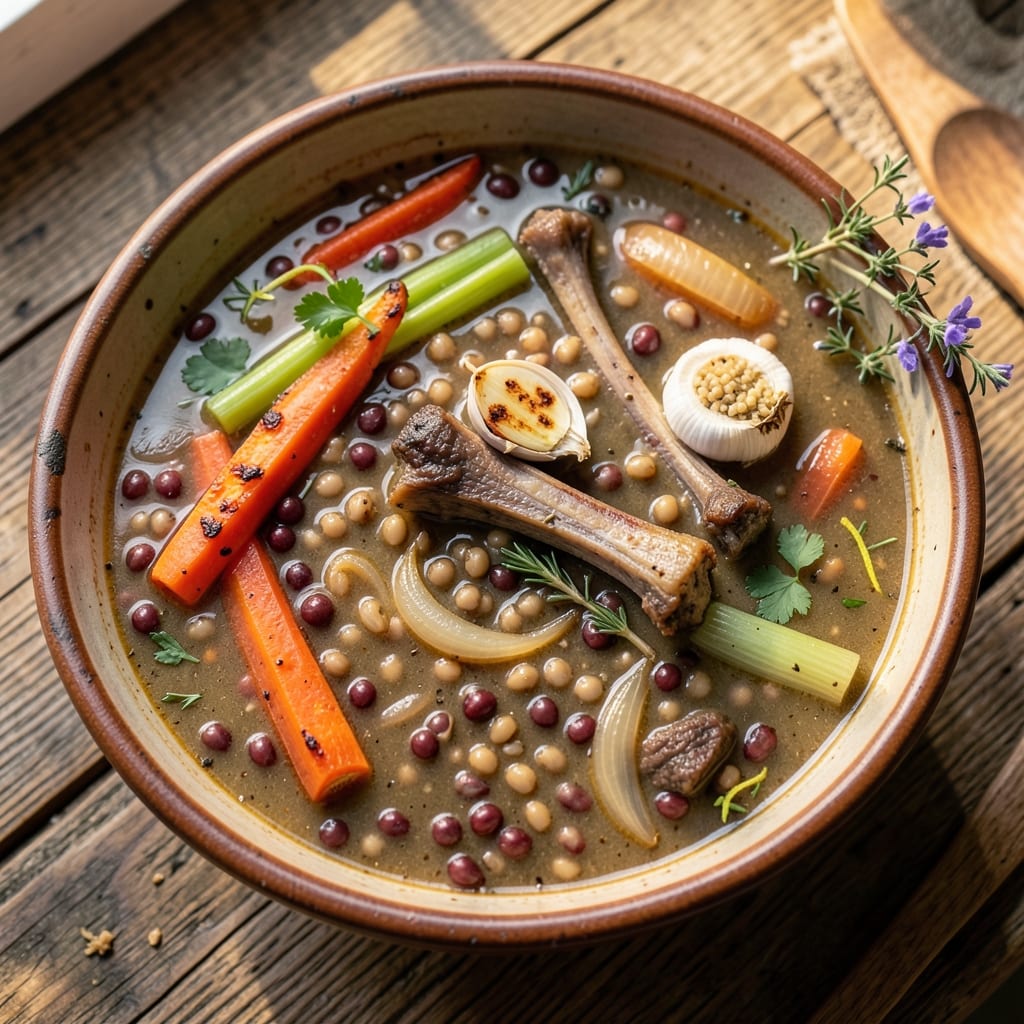
Prime rib bones transform ordinary beef barley soup into a deeply flavorful masterpiece—this recipe unlocks their rich marrow and collagen for a broth so velvety it should be illegal. 🔥 The secret lies in slow simmering those bones until they surrender their essence, creating a foundation that makes barley taste like it belongs in a Michelin-starred restaurant. I've perfected this technique over years of testing, and it never fails to deliver restaurant-quality results at home.
What sets this soup apart is the balance of textures and flavors: tender beef, chewy barley, and vegetables that soften just enough to absorb the broth's depth. The prime rib bones contribute a richness you won't find in store-bought versions, while traditional aromatics like carrots, celery, and onions build a flavor base that develops beautifully over hours of simmering. This isn't just soup—it's a comforting hug in bowl form.
By the time you're done, you'll have a pot of soup that smells like a Parisian bistro and tastes even better. The broth will be so rich it coats your spoon, the barley perfectly chewy, and every bite packed with meaty satisfaction. The best part? It tastes even better the next day as flavors meld further. This is the kind of recipe that becomes a weekly tradition.
Whether you're using a slow cooker for convenience or a Dutch oven for hands-on control, the technique remains the same: patience and proper preparation. The result is a soup that's hearty enough for winter nights but versatile enough for any meal. Let's get started—your taste buds will thank you.
Ingredients for beef barley soup recipe with prime rib bones
Prime rib bones unlock restaurant-quality depth in this hearty barley soup—rich marrow and collagen create velvety broth.
| Ingredient | Amount | Notes |
|---|---|---|
| Prime Rib Bones 🦴 | 3 lb | With marrow intact for richness |
| Yellow Onion 🧅 | 2 whole | Chopped into 1-inch pieces |
| Carrots 🥕 | 4 medium | Peeled and cut into chunks |
| Celery Stalks 🧄 | 4 whole | Cut into 1-inch pieces |
| Garlic Cloves 🧄 | 6 cloves | Smashed for deeper flavor |
| Pearl Barley 🌾 | 1 ½ cups | Rinsed before cooking |
| Beef Broth 💧 | 6 cups | Homemade preferred |
| Tomato Paste 🍅 | 2 tbsp | For depth of flavor |
| Fresh Thyme 🌿 | 2 sprigs | Or 1 tsp dried thyme |
| Fresh Parsley 🌿 | ¼ cup | Chopped for garnish |
| Bay Leaves 🌿 | 2 whole | Removed before serving |
| Olive Oil 🫒 | 2 tbsp | For initial searing |
| Salt 🧂 | 1 ½ tsp | Kosher or sea salt |
| Black Peppercorns 🌶️ | 1 tsp | Freshly cracked |
Prime rib bones are the star here—look for marrow-rich cuts at your butcher or Costco. The marrow is where the magic happens, so don't skip the bones. If you can't find prime rib bones, beef marrow bones work too, but they won't have as much meat. For the vegetables, organic carrots and celery have better flavor, but regular grocery store stuff works fine. I always grab a few extra carrots—they're the last to soften and add natural sweetness as the soup simmers. The pearl barley should be rinsed thoroughly before cooking to remove any dirt and prevent cloudiness in the broth.
No beef broth? Water with bouillon cubes works in a pinch, but homemade is ideal. Fresh thyme is best, but dried thyme at one-third the amount gets you close. The tomato paste can be substituted with 1 cup crushed tomatoes if you prefer. For extra richness, add 1 tbsp Worcestershire sauce (check for vegetarian version if needed). The bay leaves add subtle depth—don't skip them, but remember to remove them before serving. If you're using a slow cooker, sear the bones first in a skillet to build flavor before adding everything else.
This soup tastes even better the next day as flavors meld. Store in the fridge for 4-5 days or freeze portions for up to 3 months. I always make a double batch—one for dinner, one for lunches. The barley thickens as it cools, so add a splash of broth when reheating. For extra comfort, serve with crusty bread and a drizzle of olive oil. The bones can be roasted first for 10 minutes at 425°F to render fat before simmering—worth the extra minute for deeper flavor.
Why You'll Love This Recipe
- One-Pot Magic: I swear by this recipe when I’m drowning in dishes—just toss everything into one pot, simmer, and walk away. The prime rib bones do all the heavy lifting while I chop veggies in five minutes flat.
- Rich Without Effort: That first sip? Pure umami gold from the marrow-rich bones melting into the broth. The onions and garlic caramelize naturally as it cooks, so you get deep, layered flavor with zero extra work.
- Weeknight to Holiday: Same soup, endless uses. I make it for lazy Mondays, potlucks, or even Thanksgiving leftovers—just add fresh herbs and crusty bread. My in-laws think I slaved for hours. (Between us, I didn’t.)
- Budget Booster: Prime rib bones aren’t cheap, but they stretch this soup into days of lunches. Freeze portions, and suddenly your grocery bill feeds the whole family—no takeout in sight. The carrots and celery stretch too, so nothing goes to waste.
Step-by-step instructions for beef barley soup with prime rib bones
This rich, hearty soup builds flavor layer by layer—slow cooking unlocks deep umami from the marrow bones.
🔥 Step 1: Sear the Prime Rib Bones for Maximum Flavor
Preheat your oven to 425°F. Heat 2 tablespoons olive oil in a large Dutch oven over medium-high heat. Arrange the 3 lb prime rib bones in a single layer and sear for 8-10 minutes until deeply browned on all sides. This caramelization creates the foundation for your soup's rich flavor.
Real talk: don't rush this step. You want those bones to develop a dark, crusty sear—this is where all the magic happens. Flip them carefully with tongs, working in batches if needed. Once browned, transfer the bones to a plate and set aside.
👨🍳 Step 2: Sauté the Aromatic Vegetables
In the same Dutch oven, add 2 whole yellow onion, 4 medium carrots, and 4 whole celery stalks, all chopped into 1-inch pieces. Cook over medium heat for 8-10 minutes until softened and slightly caramelized. You'll smell that sweet, earthy aroma—this is your soup's aromatic base building.
Add the 6 smashed garlic cloves and 2 tablespoons tomato paste, stirring for 1 minute until fragrant. Here's where it gets fun—the tomato paste adds depth that balances the richness of the bones. Sprinkle in 1.5 teaspoons salt and 1 teaspoon black peppercorns, crushing the peppercorns slightly with the back of a spoon.
🍳 Step 3: Build the Bone Broth Base
Return the seared prime rib bones to the Dutch oven. Add 6 cups beef broth, 2 sprigs fresh thyme, and 2 whole bay leaves. Bring to a gentle boil, then reduce heat to low and cover. Simmer for 1.5 hours, skimming any foam that rises to the surface. This slow simmer extracts collagen and minerals from the bones, creating a velvety broth.
I know it seems like a long wait, but trust me—this is where the soup transforms from ordinary to extraordinary. The broth should develop a deep, amber color and rich aroma. If it reduces too much, add a splash of water to maintain the liquid level.
🥘 Step 4: Add Barley and Simmer to Perfection
Rinse the 1.5 cups pearl barley under cold water to remove any surface starch. Add it to the Dutch oven along with the remaining broth and vegetables. Stir gently and return to a simmer. Cover and cook for another 45-50 minutes, until the barley is tender but still has a slight bite.
Here's the thing—barley should be al dente when finished cooking. It continues to soften as it sits, so pull it out when it's just barely tender. Taste the broth and adjust seasoning if needed. The barley should absorb some of the liquid but still have a pleasant texture.
⏰ Step 5: Finish and Serve Warm
Remove the prime rib bones and discard them (or save for other uses). Strain the soup through a fine-mesh sieve to remove the vegetables and thyme sprigs, pressing gently on the solids to extract all the flavor. Return the strained broth to the pot and stir in the cooked barley.
Garnish with ¼ cup chopped fresh parsley and serve immediately with crusty bread. The soup should be rich, hearty, and packed with deep umami flavor from the slow-cooked bones. Each spoonful delivers that perfect balance of meaty richness and comforting barley texture.
Pro Tips For Making Beef Barley Soup Recipe With Prime Rib Bones
- BLANCH THE VEGETABLES FIRST: I learned this the hard way—toss your carrots, celery, and onions in boiling water for 2 minutes before adding them to the pot. This softens them faster and keeps your broth from turning murky when the veggies release starch later. (Yes, even if you're impatient like me.)
- TOAST THE BARLEY: Skip the raw barley—give it a quick dry toast in a skillet with a splash of oil for 2-3 minutes until it smells nutty. This prevents it from turning mushy in the soup and adds depth. I was skeptical until I tried it, and now I never skip it.
- CHAR THE BONE FIRST: Crank your oven to 450°F (230°C) and sear the prime rib bones for 20 minutes before simmering. The Maillard reaction in the oven pulls out more flavor than a stovetop sear ever will. This isn’t the prettiest method, but it’s the tastiest.
- STRAIN THE BROTH TWICE: After simmering, strain the broth through a fine-mesh sieve, then a cheesecloth for a crystal-clear liquid. The second strain removes the last bits of grit that ruin an otherwise perfect soup. (Your future self will thank you.)
Storing and reheating this recipe
Refrigerator Storage
Let your soup cool to room temperature (about 1 hour) before transferring to airtight containers—I use glass Pyrex jars with snap-on lids. Store in the fridge at 40°F or below for up to 5 days. The flavors actually deepen overnight as the barley absorbs more of the rich broth. Honestly, this is when the soup becomes truly magical—each bite more satisfying than the first. 💫
Freezer Prep Tips
For long-term storage, portion the soup into quart-sized freezer bags (I use Stasher bags for easy reheating). Leave 1-inch headspace to prevent expansion cracks. Label with the date—this soup freezes beautifully for up to 3 months without losing its velvety texture. I like to freeze it in single-serving portions for quick lunches during busy weeks.
Stovetop Reheating
My preferred method is stovetop reheating—it preserves the barley's texture perfectly. Pour the soup into a pot and heat over medium-low heat for 10-15 minutes, stirring occasionally. If it looks thick, add ¼ cup beef broth or water to restore consistency. Taste and adjust seasoning—fridge storage can make flavors mellow slightly. The key is gentle heat to avoid breaking down the barley further. ✨
Microwave Shortcuts
For quick reheating, transfer soup to a microwave-safe bowl and cover with a damp paper towel. Heat on 50% power in 2-minute intervals, stirring between each, until reaching 165°F. This prevents hot spots that can overcook the barley. I find this works best for individual servings—just don't expect the same restaurant-quality texture as stovetop reheating.
Barley Texture Fix
If your reheated barley turns mushy, don't panic! Stir in 1 tablespoon cold water and cook for an additional 2-3 minutes on low heat. This reactivates the starches and firms up the texture. For extra richness, add a splash of heavy cream or butter when reheating—it makes all the difference in restoring that velvety mouthfeel. 🔥
Make-Ahead Pro Tips
I always make a double batch on Sundays—one for dinner, one for lunches. The secret to successful make-ahead soup is proper storage: use vacuum-sealed containers for maximum freshness. When reheating, add a pinch of salt and black pepper to revive the flavors. The barley will be slightly firmer after refrigeration, so adjust cooking time accordingly if making fresh portions later in the week.
Nutrition facts
Frequently asked questions
Can I use regular beef bones instead of prime rib bones?
Yes, but the flavor will be less rich. Prime rib bones have more marrow and fat, creating a deeper, more velvety broth. For a similar result, use beef marrow bones or beef knuckle bones—they contain more collagen and fat. If you only have short rib bones, add an extra 1 tablespoon tomato paste to compensate for the lighter flavor.
How do I know when the barley is cooked perfectly?
Barley should be tender but still have a slight bite—think al dente pasta. Test by tasting a grain: it should be soft but not mushy. If you're unsure, pull it out 5 minutes early and let it sit covered for 10 minutes—it will continue cooking off the heat. Overcooked barley turns to mush and absorbs too much broth, ruining the texture.
What if I don't have a Dutch oven?
Use a large stockpot or even a heavy-bottomed pot—just be patient with simmering times. The key is low, even heat. If your pot lacks depth, add ½ cup extra broth to prevent sticking. For searing, work in batches if needed. A slow cooker also works (see next question), but you'll lose some of the caramelization from searing.
Can I make this in a slow cooker?
Sear the bones in a skillet first, then transfer everything to your slow cooker. Cook on low for 8 hours or high for 5 hours. The barley may need 10-15 extra minutes at the end. For best results, use a 6-quart slow cooker to avoid overcrowding. The slow cooker method is perfect for working days—just dump everything in and let it work its magic!
Why does my broth look cloudy?
Cloudiness usually means starch or unrendered fat. Skim off excess fat while simmering, and strain the broth through a fine-mesh sieve before adding barley. If it's still cloudy, simmer uncovered for 10 extra minutes—this evaporates excess moisture. For a crystal-clear broth, chill the broth overnight and remove the hardened fat before reheating. The barley should never be rinsed with cold water—this releases starch that clouds the soup.