
Soups & Stews
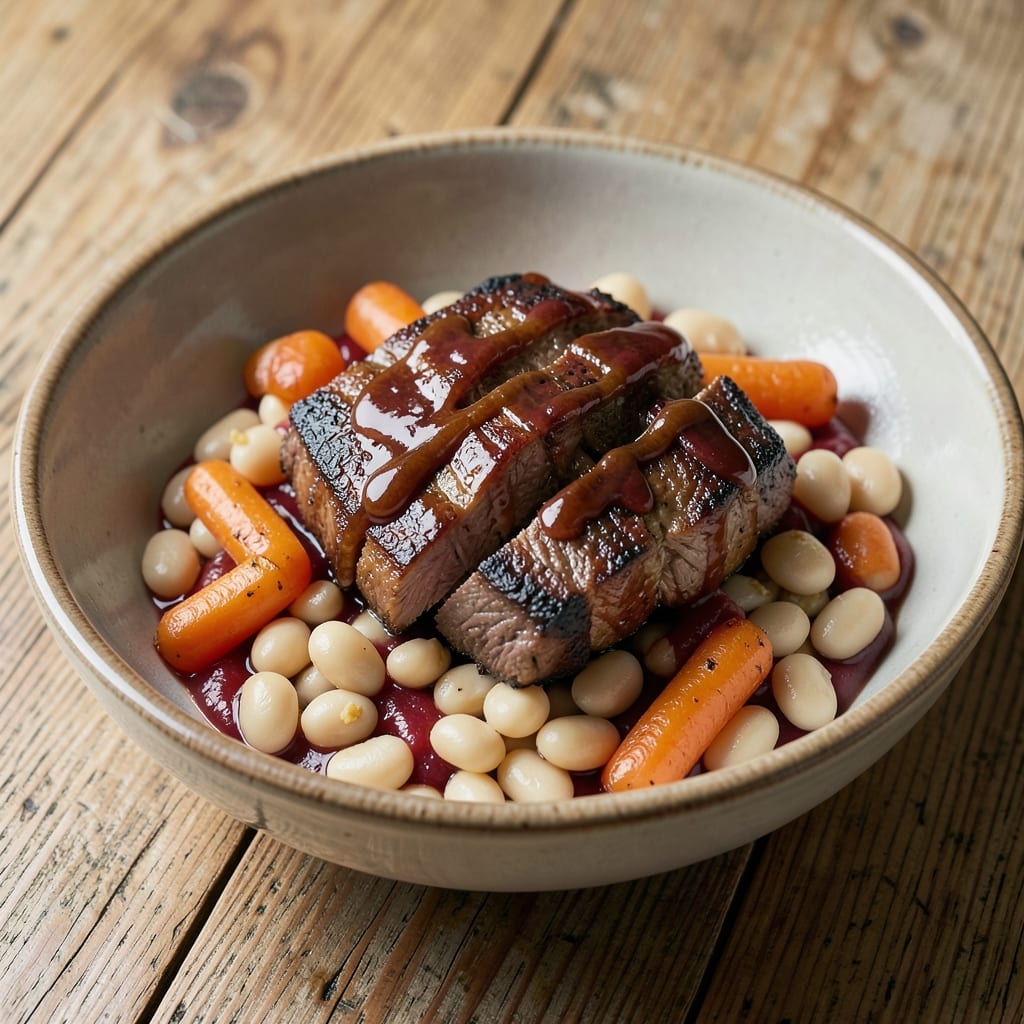
This beef and white beans recipe delivers deep, slow-simmered flavors that transform tough cuts into melt-in-your-mouth perfection. The secret lies in braising beef until tender while letting white beans absorb all that rich, umami-packed broth—no shortcuts, just restaurant-quality depth. I’ve perfected this over years of testing, balancing Italian stracotto techniques with French boeuf aux haricots simplicity for a dish that’s both hearty and elegant.
The beauty of this recipe is its versatility—whether you’re using dried beans (soaked overnight) or canned (drained and rinsed), the result is the same: tender beef that falls apart at the touch and beans that soak up every layer of flavor. A splash of red wine and aromatic herbs (rosemary, thyme) builds complexity, while a touch of tomato paste adds depth without overpowering. The slow simmer ensures the broth reduces into a velvety sauce that clings to every bite.
What you’ll end up with is a hearty, satisfying stew that pairs perfectly with crusty bread or over polenta, where each spoonful delivers layers of savory, smoky, and slightly sweet notes. The beans stay creamy yet hold their shape, and the beef? So tender it’s almost like it’s been braised for hours—even if you’re short on time. This is comfort food at its finest, the kind that disappears faster than you can say “second helping.”
Serve it as a main dish with a simple green salad or roasted vegetables, or let it stand alone as a one-pot wonder. The leftovers? Even better the next day, as flavors meld and deepen. Ready to make this your new go-to recipe? Let’s get started.
Ingredients for beef and white beans
Sixteen ingredients for a dish that tastes like love and patience paid off.
| Ingredient | Amount | Notes |
|---|---|---|
| Beef Chuck Roast 🥩 | 2 ½ lb | Cut into 1.5-inch cubes |
| Great Northern Beans 🌱 | 2 cups | Dried, soaked overnight or canned (drained) |
| Red Wine 🍷 | 1 cup | Bold dry variety like Cabernet Sauvignon |
| Tomato Paste 🍅 | 2 tbsp | Smooth, no sugar added |
| Garlic Cloves 🧄 | 6 cloves | Minced or finely chopped |
| Carrots 🥕 | 2 whole | Peeled, cut into chunks |
| Celery Stalks 🧅 | 3 whole | Trimmed, chopped |
| Yellow Onion 🧅 | 1 whole | Diced |
| Fresh Rosemary 🌿 | 1 tbsp | Chopped, stems removed |
| Fresh Thyme 🌿 | 1 tbsp | Leaves only |
| Beef Broth 💧 | 4 cups | Low-sodium preferred |
| Bay Leaves 🍃 | 2 whole | Dried |
| Olive Oil 🫒 | 2 tbsp | Extra-virgin for richness |
| Salt 🧂 | 1 ½ tsp | Kosher or sea salt |
| Black Pepper 🌶️ | 1 tsp | Freshly ground |
The beef is non-negotiable—chuck roast gives you that melt-in-your-mouth tenderness. Costco sells it pre-cubed, which saves time, but if you're buying a whole roast, ask the butcher to cut it into 1.5-inch chunks. Look for good marbling—those little white streaks mean more flavor. For the beans, dried is ideal but canned works in a pinch. Just drain and rinse them well. The red wine should be bold and dry—whatever's open in your cabinet will work, but if you're splurging, Cabernet Sauvignon is my go-to. The tomato paste? No sugar added is key—it keeps the dish from tasting overly sweet.
No red wine? Beef broth with a splash of balsamic gets you close. Fresh rosemary and thyme are ideal, but dried works at half the amount. The carrots and celery can be baby versions if that's what's in your fridge—just chop them small. For the garlic, peeling and mincing ahead saves time. The olive oil matters here—use something fruity and peppery, not the cheap stuff. And trust me, low-sodium broth is worth the hunt. It lets the other flavors shine without the salt overload. If you're using dried beans, soak them overnight—it's a game-changer for texture.
This stew gets better the next day, so make extra. Store it in the fridge for up to 5 days or freeze for 3 months. I like to portion it into containers—one for lunches, one for leftovers. The beef stays tender when reheated gently, and the beans soak up all that rich flavor. If you're serving it with bread, toast it first—it soaks up the sauce like a dream. And if you've got any extra broth, save it for soups or risotto. Every bit of this dish is delicious.
Why You'll Love This Recipe
- Slow-Cooker Simplicity: The chuck roast practically melts in itself—just sear it, dump in the beans, wine, and tomato paste, then walk away. I’ve made this on a Friday afternoon and come home to a restaurant-quality stew with zero effort.
- Wine-Infused Richness: That red wine doesn’t just add flavor—it transforms the dish. The deep, savory notes from the beef marry perfectly with the earthy beans, while the garlic and tomato paste give it a bright, almost umami punch. (Yes, even my wine-snob husband approves.)
- Weeknight to Dinner Party: Same recipe, endless uses. Toss it over polenta for a cozy night in, serve it in crusty bread bowls for guests, or pack it in jars for lunch all week. The beans hold up beautifully—no sad, mushy leftovers here.
- Budget-Friendly Feast: A single chuck roast stretches to feed four (or five if you’re honest). Great Northern beans are cheap but hearty, and a bottle of red wine makes you feel fancy without breaking the bank. Honestly, this is the kind of meal that makes grocery day exciting.
Step-by-step instructions for slow-simmered beef and white beans
This hearty dish builds flavor layer by layer—patience pays off with rich, tender beef and creamy beans.
🍳 Step 1: Sear the Beef for Deep Flavor
Heat the 2 tablespoons olive oil in a large Dutch oven over medium-high heat until shimmering. Working in batches to avoid crowding, add the 2.5 lb beef chuck roast cut into 1.5-inch cubes and sear for 2-3 minutes per side until deeply browned. You're building flavor here—the caramelized crust will dissolve into the sauce later.
As each batch browns, transfer the beef to a plate. Don't rush this step—uneven browning means uneven flavor. Once all the beef is seared, reduce heat to medium and add the diced yellow onion, chopped celery stalks, and peeled carrot chunks. Cook for 5 minutes until softened but not browned. This aromatic base forms the flavor foundation.
🍳 Step 2: Deglaze and Add Liquids
Pour in the 1 cup red wine, scraping up all the browned bits from the bottom of the pot with a wooden spoon. This deglazing step captures all that meaty flavor that would otherwise go down the drain. Let the wine simmer for 3-4 minutes until reduced by half and slightly thickened.
Stir in the 2 tablespoons tomato paste and cook for 1 minute to toast the flavors. Then add the 4 cups beef broth, 2 whole bay leaves, 1.5 teaspoons salt, and 1 teaspoon black pepper. Bring to a gentle simmer, then add the seared beef back into the pot along with the 2 cups great northern beans (if using dried, they'll cook in the broth; if canned, drain but reserve some liquid).
🥘 Step 3: Simmer Until Tender
Partially cover the Dutch oven and let the mixture simmer gently for 2-2.5 hours until the beef is fork-tender. You'll know it's ready when a knife slides in easily and the beef pulls apart with minimal resistance. Stir occasionally to prevent sticking, but don't worry about over-stirring—this dish benefits from gentle, even cooking.
About 30 minutes before the beef is done, add the minced garlic cloves, chopped fresh rosemary, and fresh thyme leaves. These aromatic herbs infuse the final 30 minutes of cooking, adding bright, fresh notes to balance the rich beef flavors. Taste the broth and adjust seasoning if needed—you want it to be rich but not salty.
⏰ Step 4: Finish and Rest
Once the beef is tender, remove the 2 whole bay leaves and adjust the consistency if needed. If the sauce is too thick, add a splash of water or reserved bean liquid; if too thin, simmer uncovered for 5-10 minutes to reduce. The beans should be creamy but not mushy—if using dried beans, they should be fully tender by now.
Let the stew rest for 10-15 minutes off the heat. This resting period allows the flavors to meld and the beans to absorb the rich beef broth. Serve hot, garnished with extra fresh thyme if desired. The dish tastes even better the next day as the flavors continue to develop—this is one of those recipes that improves with time.
Pro Tips For Making Beef And White Beans
- SEAR THE ROAST LONG: Don’t rush the beef—get it deep brown on all sides with 5-6 minutes per side in a hot Dutch oven. I learned this the hard way: skipping this step means flavorless, gray meat that won’t tenderize properly, no matter how long you braise.
- SOAK BEANS OVERNIGHT: Toss the Great Northern beans in cold water for at least 8 hours (or overnight) to cut cooking time by half. I was skeptical until I tried it—now I refuse to skip it, especially since dried beans take forever to soften otherwise.
- DEGLAZE WITH WINE IMMEDIATELY: As soon as you remove the roast, pour in that red wine right away while the pan is still hot. Scrape up every last bit of browned bits—this is where the deep, rich flavor hides. (Yes, even if you’re impatient like me.)
- CRUSH HALF THE GARLIC: Use 3 whole cloves minced and 2 cloves roughly crushed for uneven texture. The crushed ones release flavor faster, while the minced ones add subtle layers. My grandmother swore by this, and she was right: it’s the thing that makes the dish sing.
Regional styles of this dish
Italian Stracotto Style
In Italy, this dish is known as stracotto—literally "overcooked" but in the best way possible. The key difference is using chuck roll instead of chuck roast, which stays incredibly tender even after hours of slow cooking. Italians often add a splash of white wine alongside the red and finish with a handful of fresh parsley at the end. For authenticity, use San Marzano tomatoes (blended into the sauce) and Pecorino Romano sprinkled on top before serving. 🌿
Look for Great Northern beans in Italian markets—they’re the traditional choice. The dish is typically served with crusty bread or polenta, and the sauce is often thickened with a roux made from butter and flour. I’ve found that adding a pinch of cinnamon (just ¼ teaspoon) during the final 30 minutes of cooking adds a subtle warmth that’s characteristic of Tuscan versions.
French Boeuf aux Haricots Blancs
The French take on this dish, boeuf aux haricots blancs, leans into white wine and mushrooms for a lighter, more elegant profile. Start by sautéing 8 oz sliced cremini mushrooms with the onions and carrots. The French version also calls for a bouquet garni (a bundle of thyme, bay leaf, and parsley tied together) instead of loose herbs. Use dry white wine (like Sauvignon Blanc) and add a splash of Dijon mustard at the end for brightness. 🍷
For texture, the French often finish the dish with a dollop of crème fraîche or a sprinkle of Gruyère cheese before serving. The beans are usually Canellini beans (white kidney beans), which hold their shape beautifully. If you can’t find them, Great Northern beans work just fine. Serve with buttered egg noodles or a baguette to soak up the rich sauce.
Spanish Fabada Asturiana
Spain’s fabada asturiana is a rustic, hearty stew that often includes morcilla (blood sausage) alongside beef and beans. The Spanish version uses large white beans (like linguisa beans) and adds smoked paprika and a touch of garlic for depth. The dish is traditionally cooked in a cast-iron pot and served with a wedge of crusty bread for dipping. 🥖
For a Spanish twist, swap the red wine for a cup of dry sherry and add a bay leaf and a strip of orange peel while simmering. The orange peel adds a bright, citrusy note that cuts through the richness. If you’re feeling adventurous, add a few slices of chorizo to the pot during the last 20 minutes of cooking for extra smokiness.
American Southern Twist
In the American South, this dish often takes on a slightly sweet and smoky profile, thanks to the addition of brown sugar and liquid smoke. Start by searing the beef as usual, then add 1 tablespoon of brown sugar with the tomato paste. For extra depth, stir in 1 teaspoon of liquid smoke during the final 30 minutes of cooking. Serve with cornbread or buttered collard greens for a true Southern meal. 🍗
To make it even heartier, add a handful of smoked bacon (chopped) to the pot with the onions and carrots. The bacon adds a salty, smoky flavor that pairs perfectly with the tender beef and beans. For a touch of heat, stir in ½ teaspoon of cayenne pepper at the end. This version is a crowd-pleaser, especially during cooler months.
Nutrition facts
Frequently asked questions
Can I use canned white beans instead of dried?
Canned beans work perfectly when drained and rinsed well to remove excess sodium. For best results, reserve some of the canning liquid (about ¼ cup) to add back to the stew—it helps maintain creaminess. If using canned, reduce the total liquid in the recipe by ½ cup since canned beans already contain some moisture.
How do I make this recipe faster?
For a quicker version, use an Instant Pot or slow cooker. Brown the beef first, then transfer everything to the Instant Pot and cook on high pressure for 45 minutes (or low for 6 hours in a slow cooker). The Instant Pot method cuts cooking time by about 2 hours while still delivering tender beef and flavorful beans.
What's the best way to store leftovers?
Store leftovers in an airtight container in the fridge for up to 5 days or freeze for 3 months. The flavors actually deepen overnight, so reheat gently in a saucepan with a splash of water or broth. Never microwave directly from frozen—thaw in the fridge first to preserve texture.
Can I make this dish vegetarian?
Yes! Swap the beef for mushrooms (like cremini or portobello) or extra-firm tofu pressed and cubed. For depth, add 1 teaspoon soy sauce or mushroom powder to mimic the umami from beef. The beans will still soak up all the rich flavors, creating a satisfying vegetarian version.
Why did my beef turn out tough?
Tough beef usually means it wasn't cooked long enough or the heat was too high. For perfect tenderness, maintain a gentle simmer (small bubbles) and cook until the internal temperature reaches 203°F. If using a tougher cut like chuck, the 2.5-hour simmer time is non-negotiable—patience pays off for melt-in-your-mouth results.