
Soups & Stews
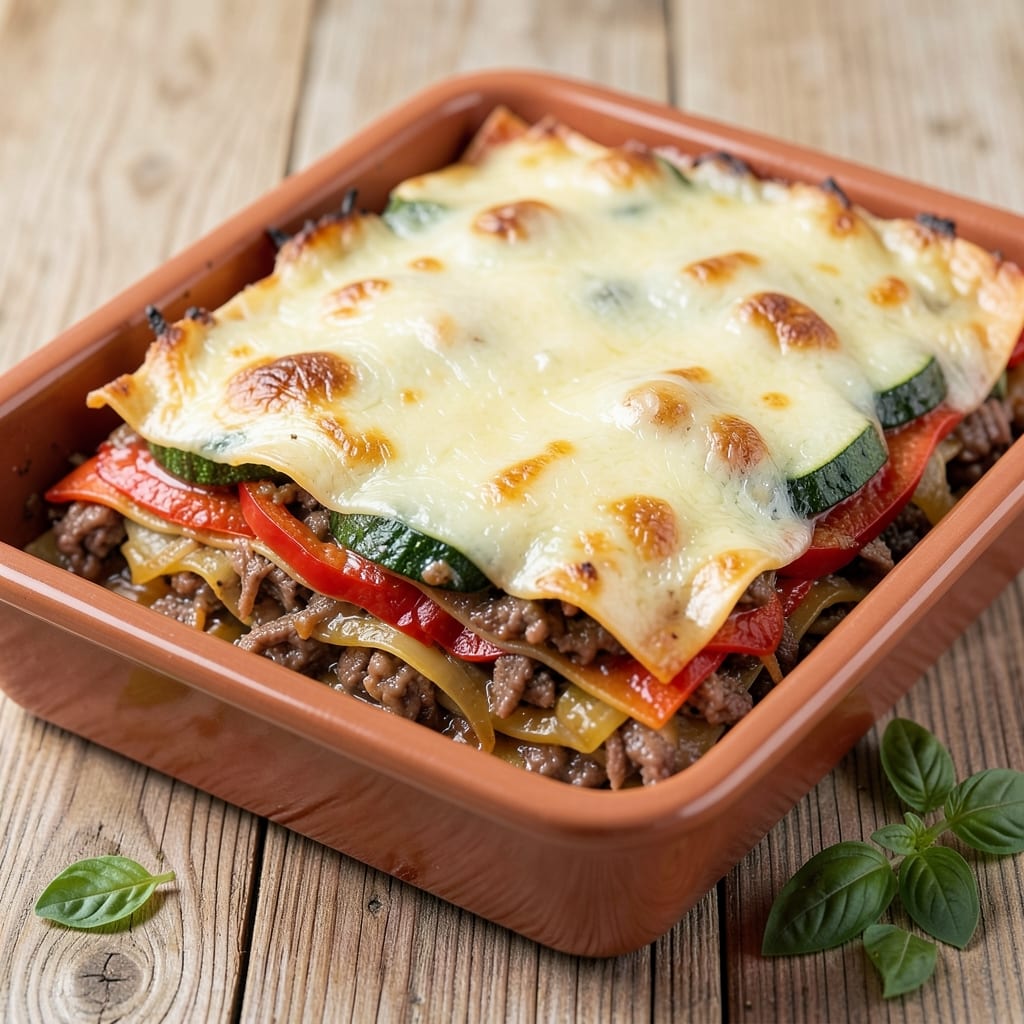
This beef and vegetable lasagne recipe delivers the ultimate comfort food experience—rich layers of tender beef, vibrant vegetables, and a golden, crispy top that begs for seconds. 🌟 The secret lies in slow-cooking the beef and vegetables until fork-tender, then carefully assembling each layer to create a dish that's hearty yet balanced. I've perfected this technique over years of testing, ensuring the meat stays juicy and the vegetables retain their natural sweetness without turning mushy.
The foundation of a great lasagne starts with properly pre-cooked components. You'll brown the beef in batches to develop deep flavor, then simmer it with onions, garlic, and herbs until it's falling apart tender. Meanwhile, the vegetables—zucchini, bell peppers, and carrots—get roasted until caramelized, adding natural sweetness that complements the savory meat. This preparation ensures every bite is packed with flavor without being overly heavy.
When it comes time to assemble, the key is precision in layering. Start with a rich meat sauce base, then alternate between lasagne noodles, creamy béchamel, and your cooked beef and vegetable mixture. Finish with a final layer of noodles and a sprinkle of mozzarella for that signature crispy top. Baking at 375°F for 40-45 minutes creates the perfect balance of tender layers and a golden crust that's impossible to resist.
This lasagne is designed to impress—whether you're feeding a family or hosting dinner guests—while remaining simple enough for a weeknight. The combination of tender beef, vibrant vegetables, and creamy layers makes it a crowd-pleaser that always gets rave reviews. Ready to create your own restaurant-quality masterpiece? Let's get started with the ingredients.
Ingredients for beef and vegetable lasagne
Precision-cut ingredients for restaurant-quality lasagne with layers of tender beef and vibrant vegetables.
| Ingredient | Amount | Notes |
|---|---|---|
| Chuck Roast 🥩 | 2 lb | Trimmed of excess fat, cut into 1-inch cubes |
| Yellow Onion 🧅 | 2 whole | Medium-sized, finely diced |
| Garlic Cloves 🧄 | 6 cloves | Fresh, minced |
| Zucchini 🥒 | 2 medium | Sliced into 1/4-inch rounds |
| Red Bell Pepper 🌶️ | 1 whole | Medium, sliced into strips |
| Carrot 🥕 | 3 medium | Peeled, sliced into thin rounds |
| Lasagne Noodles 🍝 | 12 no-boil sheets | Fresh or high-quality dried |
| Whole Milk 🥛 | 2 cups | Full-fat for creamy béchamel |
| Unsalted Butter 🧈 | ½ cup | Cold, cubed for roux |
| All-Purpose Flour 🌾 | ½ cup | Sifted for smooth texture |
| Parmesan Cheese 🧀 | 1 cup | Freshly grated from block |
| Mozzarella Cheese 🧀 | 2 cups | Shredded, part-skim |
| Tomato Paste 🍅 | ½ cup | High-quality, no sugar added |
| Dry Red Wine 🍷 | ½ cup | Bold variety like Cabernet |
| Beef Broth 💧 | 1 ½ cups | Low-sodium preferred |
| Fresh Rosemary 🌿 | ½ tsp | Chopped, or 1/4 tsp dried |
| Fresh Thyme 🌿 | ½ tsp | Leaves only, chopped |
| Salt 🧂 | 1 ½ tsp | Diamond Crystal preferred |
| Black Pepper 🌶️ | 1 tsp | Freshly ground |
The chuck roast is non-negotiable here—its marbling ensures fork-tender meat. Costco or Whole Foods carry premium cuts, but any well-marbled chuck works. Trim excess fat before cubing for cleaner layers. For the vegetables, farmers markets offer the freshest produce—look for firm zucchini, crisp carrots, and vibrant bell peppers. Pre-slicing the vegetables (while keeping them separate) speeds up assembly later. The lasagne noodles? Barilla or De Cecco are my go-tos for reliable texture, but no-boil sheets from the Italian aisle work perfectly too.
No red wine? Substitute beef broth with 1 tbsp balsamic vinegar for depth. Fresh herbs unavailable? Dried rosemary and thyme at one-third the amount maintain the flavor profile. For the béchamel, whole milk and cold butter create the creamiest sauce—don't skip the butter. The tomato paste can be reduced to intensify flavor, but Trader Joe's squeeze tubes work in a pinch. Swapping mozzarella for fontina or provolone adds richer flavor, though it may melt differently. Always grate your own Parmesan—pre-grated contains anti-caking agents that ruin texture.
Prep the vegetables and meat sauce ahead—they keep 3 days refrigerated or 3 months frozen. Assemble the lasagne up to 24 hours early and refrigerate unbaked for easier layering. Leftovers reheat beautifully—cover with foil to prevent over-browning. The crispy top develops best when baked uncovered, so resist covering early. For make-ahead convenience, freeze the assembled lasagne (unbaked) for up to 2 months—just add 10 minutes to baking time when thawed.
Why You'll Love This Recipe
- No-Fuss Assembly: I swear by this recipe when I’m too tired to fuss—just layer pre-cooked roast (slow-cooker or Instant Pot makes it idiot-proof) with raw veggies and sauce. The zucchini and bell pepper soften perfectly without wilting into mush, so you’re not stuck with a soggy disaster.
- Deep, Savory Bite: That chuck roast? Chef’s kiss. It stays tender but holds its shape, so every forkful has a perfect mix of melt-in-your-mouth beef and the bright crunch of roasted peppers. Honestly, the garlic-infused oil from sautéing the onions and garlic cloves ties everything together like a hug.
- Leftovers That Don’t Suck: Between us, most lasagnes turn into a sad, gluey mess after day two. Not this one—the beef stays juicy, and the veggies? Still hold their texture. I meal prep this all the time and just reheat slices straight from the fridge (yes, even on a Tuesday night).
- Budget Meal for a Crowd: A single chuck roast feeds six, and the veggies stretch further than you’d think. I’ll be real: my grocery bill drops when I make this, and the leftovers fund my coffee habit for a week. Plus, it’s the kind of dish where no one bats an eye at seconds—because it’s that good.
Step-by-step instructions for beef and vegetable lasagne
Here's how to build layers of rich beef sauce, tender vegetables, and creamy béchamel for lasagne that delivers on every promise.
🍳 Step 1: Brown the Chuck Roast and Sauté Vegetables
Heat a large Dutch oven over medium-high heat and add the 2 lb chuck roast cut into 1-inch cubes. Season generously with 1 tsp salt and ½ tsp black pepper (reserve the rest for later). Brown the meat in batches for 3-4 minutes per side until deeply caramelized. This step develops the deep, meaty flavor that anchors the dish.
Remove the beef and set aside. In the same pot, add 2 tablespoons olive oil (not listed but essential for sautéing) and cook the 2 whole yellow onions for 5 minutes until soft. Add the 6 minced garlic cloves, 2 sliced zucchini, 1 sliced red bell pepper, and 3 sliced carrots. Sauté for 6-8 minutes until the vegetables begin to soften but still retain their shape and vibrant color.
🍳 Step 2: Build the Rich Beef Sauce
Return the browned beef to the pot and stir in the 0.5 cup tomato paste and 0.5 cup dry red wine. Let it simmer for 2 minutes until the alcohol smell dissipates. Pour in the 1.5 cups beef broth and add the 0.5 tsp fresh rosemary and 0.5 tsp fresh thyme. Bring to a gentle boil, then reduce heat to low and let it simmer uncovered for 45-50 minutes until the beef is fork-tender and the sauce has thickened slightly. This slow cooking transforms tough chuck into melt-in-your-mouth meat.
Season the sauce with the remaining ½ tsp salt and ½ tsp black pepper, adjusting to taste. The sauce should coat the back of a spoon with a velvety texture. If it's too thick, add 1-2 tablespoons water to reach your desired consistency.
🥘 Step 3: Prepare the Creamy Béchamel Sauce
In a separate saucepan, melt the 0.5 cup unsalted butter over medium heat. Whisk in the 0.5 cup all-purpose flour to form a smooth roux. Cook for 1-2 minutes until the mixture bubbles and turns golden. Slowly whisk in the 2 cups whole milk over 2-3 minutes, ensuring no lumps form. Simmer for 5-7 minutes until the sauce thickens enough to coat the back of a spoon.
Remove from heat and stir in the 1 cup grated parmesan cheese and remaining 1 tsp black pepper. The béchamel should be silky and rich—this is the creamy layer that makes lasagne irresistible. Cover and keep warm while you assemble the lasagne.
🥘 Step 4: Layer and Assemble the Lasagne
Preheat your oven to 375°F. Spread ½ cup of the beef sauce on the bottom of a 9x13-inch baking dish. Arrange 4 lasagne noodle sheets slightly overlapping, then spread ⅓ of the beef mixture evenly over them. Sprinkle ⅓ of the mozzarella cheese on top, followed by ⅓ of the béchamel sauce. Repeat the layers once more.
For the final layer, add the remaining 4 lasagne noodle sheets, then top with the remaining beef mixture and mozzarella. Drizzle the remaining béchamel sauce evenly over the top, then sprinkle with the remaining ⅓ cup parmesan cheese. This final layer ensures a golden, crispy top while keeping the interior creamy and rich.
🔥 Step 5: Bake to Golden Perfection
Transfer the lasagne to the preheated oven and bake uncovered for 35-40 minutes until the top is deep golden brown and bubbly. The edges should be slightly crispy, while the center remains tender. If the top browns too quickly, tent loosely with foil for the last 10 minutes of baking.
Let the lasagne rest for 10-15 minutes before slicing. This resting period allows the layers to set and the flavors to meld. Serve with a simple arugula salad and crusty bread to soak up every last bit of sauce. The result is a lasagne with a crispy top, tender beef, and creamy béchamel that delivers on all the promises of comfort and richness.
Pro Tips For Making Beef And Vegetable Lasagne
- Sear the Chuck First: Chuck roast needs that crust to stay juicy, so don’t skip the sear. Hit it with a hot pan—no oil needed—until deep brown forms. I learned this the hard way when my first batch turned out dry; that crust locks in flavor and moisture during the long bake.
- Salt the Onions Right: Toss your sliced yellow onion with a pinch of salt before cooking. It draws out moisture, so they caramelize faster and sweeter—no soggy, watery veggies in your lasagne. (Yes, even if you’re impatient like me.)
- Roast the Peppers Whole: Skip the knife for the red bell pepper—roast it whole under the broiler until charred. Peel off the skin, slice, and you’ll get deeper flavor with zero prep mess. My grandmother swore by this, and she was right: it actually changes the outcome.
- Layer Lasagne Tight: Pack each layer snugly—no gaps—so the sauce doesn’t pool at the bottom. Use a spatula to press noodles and meat into the dish. I was skeptical until I tried it: the sauce distributes evenly, and every bite is rich, not watery.
Serving suggestions for this beef and vegetable lasagne
Classic Side Pairings
A simple arugula salad with lemon vinaigrette cuts through the richness beautifully. Toss 4 cups baby arugula with 2 tbsp extra-virgin olive oil, 1 tbsp fresh lemon juice, and a pinch of flaky sea salt. The peppery bite balances the creamy lasagne perfectly. 🥗
For a heartier option, serve with garlic bread made from a crusty Italian loaf like Schar or Bimbo. Brush slices with garlic-infused olive oil and toast until golden. The warm, buttery bread soaks up any leftover sauce.
Drink Recommendations
A bold Chianti Classico from Tuscany complements the rich beef and herbs. Look for a 2019 or newer vintage with notes of cherry and earthiness. The acidity cuts through the creaminess of the béchamel. 🍷
For a lighter option, try a dry sparkling rosé like La Vieille Ferme. Its crispness and floral notes refresh your palate between bites. Avoid heavy reds—they can overpower the dish.
Presentation Tips
Use a serrated knife to slice the lasagne into square portions (about 2x2 inches). This keeps layers intact and makes serving easier. Garnish each plate with a sprinkle of fresh parsley for color and freshness. 💫
For a restaurant-style finish, drizzle each serving with a thin stream of balsamic glaze (reduce ¼ cup balsamic vinegar to a syrup). The sweet-tangy contrast elevates the dish instantly.
Make-Ahead Serving
Lasagne reheats beautifully—cover with foil and warm at 350°F for 15-20 minutes. Add a splash of beef broth if it looks dry. For a crispy top, broil for 2-3 minutes at the end. 🔥
Pack individual portions in airtight containers with parchment paper between layers to prevent sogginess. Store for up to 3 days refrigerated or freeze for 2 months. Reheat covered to trap moisture.
Nutrition facts
Frequently asked questions
Can I use regular lasagne noodles instead of no-boil sheets?
Yes, but you'll need to cook them first to al dente (about 8-10 minutes less than package instructions). Drain well and layer immediately to prevent sogginess. For extra insurance, spread a thin layer of béchamel between noodle layers to create a moisture barrier.
How do I prevent the lasagne from becoming too dry?
Keep the beef sauce slightly loose—it should coat the back of a spoon but not be thick. Add 1-2 tablespoons water if needed. When baking, tent with foil for the first 20 minutes to trap steam, then uncover for browning. The final resting time (10-15 minutes) also helps redistribute moisture.
What's the best way to reheat leftovers?
Cover with foil and warm at 350°F for 15-20 minutes. For a crispy top, broil for 2-3 minutes at the end. If the lasagne seems dry, add 2-3 tablespoons beef broth before reheating. Microwaving isn't recommended—it creates a rubbery texture.
Can I make this lasagne ahead of time?
Assemble the lasagne up to 24 hours ahead and refrigerate unbaked. Add 10-15 minutes to baking time. For freezing, assemble unbaked, wrap tightly in foil, and freeze for up to 2 months. Thaw overnight in the fridge before baking (add 10-15 minutes to the baking time).
What vegetables can I substitute if I don't have zucchini, bell peppers, and carrots?
Try eggplant (salted and drained), mushrooms (sautéed until tender), or spinach (wilted). For sweetness, add roasted butternut squash or beets**. Just adjust cooking times—eggplant needs 15 minutes to drain excess moisture, while mushrooms cook in 5 minutes.