
Main Courses
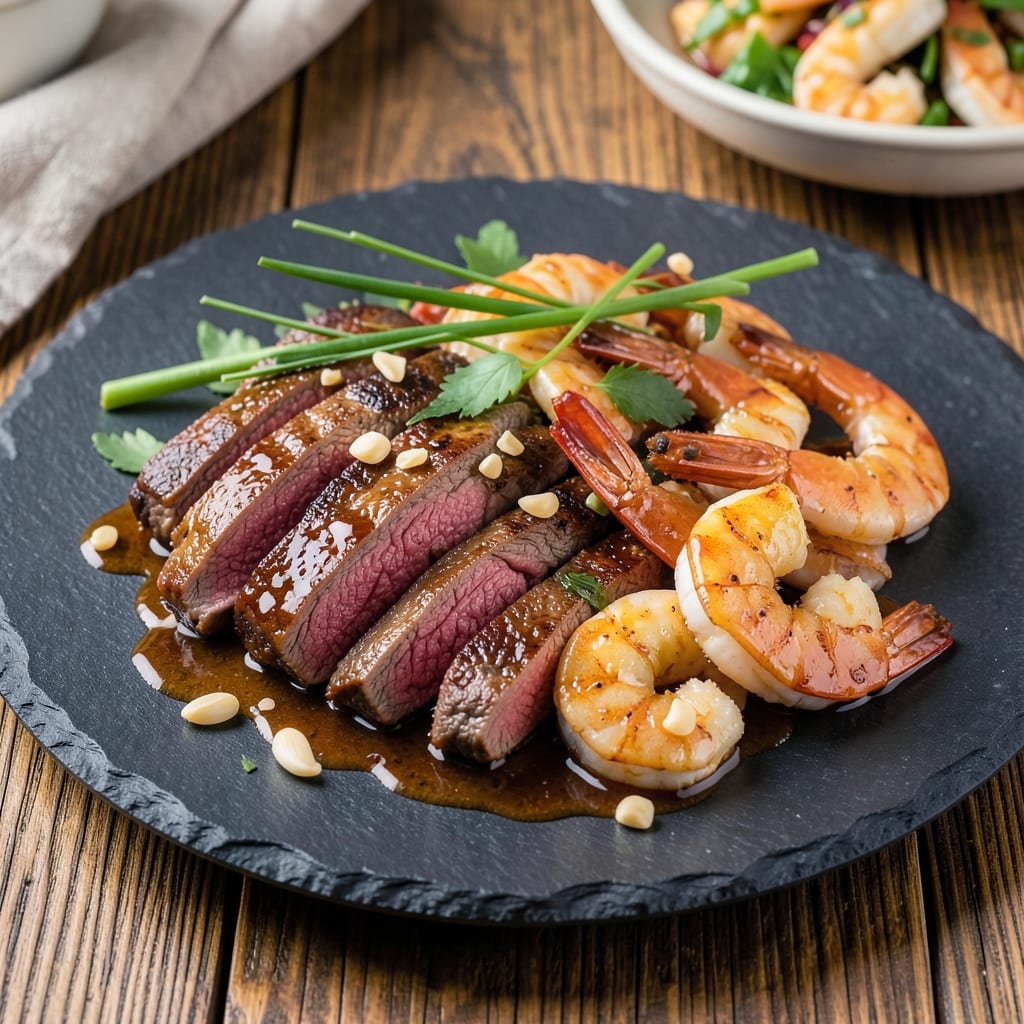
This beef and shrimp teriyaki recipe delivers restaurant-quality wok-hei crispiness with a perfectly balanced sweet-savory glaze that coats every bite. 🔥 The secret lies in high-heat searing for that signature char while keeping the shrimp tender and juicy—no more rubbery seafood or dry meat. I’ve perfected this technique over countless weeknight dinners, and it’s now my go-to for feeding a crowd or treating myself to a special meal without the fuss.
The magic starts with marinating the beef and shrimp separately to prevent cross-contamination, then searing them in batches to maintain perfect doneness. A homemade teriyaki glaze—rich with soy, mirin, and a touch of honey—adds depth and stickiness that clings beautifully to both proteins. The glaze isn’t just sweet; it’s got a subtle umami kick from garlic and ginger that elevates the dish beyond basic takeout flavors.
By the time you plate this, you’ll have perfectly crispy edges on the beef and shrimp, glistening with that glossy teriyaki glaze that’s just sweet enough to balance the savory notes. Serve it over steamed jasmine rice to soak up every last drop of sauce, or pair it with stir-fried bok choy for a complete, well-rounded meal. The aroma alone will have everyone gathering around the table.
This recipe is designed for efficiency—minimal prep, maximum flavor—and it’s foolproof for home cooks. The key is high heat and quick cooking to lock in juices, so don’t skip the searing step. Whether you’re feeding a family or just craving a satisfying weeknight dinner, this dish delivers restaurant-quality results with a fraction of the effort.
Ingredients for beef and shrimp teriyaki
Restaurant-quality teriyaki starts with these 14 ingredients—crispy beef, juicy shrimp, and a sticky glaze that’s sweet, savory, and packed with wok-hei flavor.
| Ingredient | Amount | Notes |
|---|---|---|
| Flank Steak 🥩 | 1 lb | Thinly sliced against grain |
| Large Shrimp 🦐 | 1 ½ lb | Peeled, deveined, tails on |
| Soy Sauce 🍶 | ½ cup | High-quality, like Kikkoman |
| Mirin 🍶 | ¼ cup | Sweet rice wine, not imitation |
| Honey 🍯 | ¼ cup | Pure, preferably local |
| Garlic Cloves 🧄 | 6 cloves | Minced, fresh preferred |
| Fresh Ginger 🌿 | 2 tbsp | Grated, peeled, fresh |
| Sesame Oil 🫒 | 1 tbsp | Toasted, for aroma |
| Neutral Oil 🫒 | 2 tbsp | Avocado or vegetable oil |
| Jasmine Rice 🌾 | 1 ½ cups | Uncooked, long-grain |
| Green Onions 🧅 | 4 whole | Thinly sliced, for garnish |
| Sesame Seeds 🌾 | 1 tbsp | Toasted, for garnish |
| Salt 🧂 | 1 ½ tsp | Kosher or sea salt |
| Black Pepper 🌶️ | ½ tsp | Freshly ground |
The beef and shrimp are stars here, so quality matters. Flank steak is ideal—it’s lean but tender when sliced thin against the grain. For shrimp, frozen works in a pinch, but fresh is best. Look for wild-caught if possible, and always buy peeled and deveined to save time. Costco or Trader Joe’s have great prices for both. The garlic and ginger? Fresh is non-negotiable—they add that bright, aromatic punch that jarred versions can’t match. Toast your sesame seeds in a dry pan for 30 seconds before adding to the glaze—they’ll pop with flavor.
No mirin? Dry sherry plus 1 tsp sugar works in a bind, but mirin’s sweetness is key for that authentic teriyaki balance. Short on honey? Maple syrup or agave does the trick, though the flavor shifts slightly. The soy sauce should be light-colored—dark soy adds too much color. For the oil, avocado oil has the highest smoke point, so it’s perfect for searing. If you’re feeding a crowd, double the shrimp and beef—just keep the rice at 1:1.5 ratio (rice to protein). The glaze thickens as it cooks, so start with the full amount and adjust at the end if needed.
Prep ahead to save time: marinate the beef and shrimp separately for up to 4 hours in the fridge. The glaze keeps for 5 days in the fridge, so make extra and freeze it in ice cube trays for quick meals. Store cooked shrimp and beef separately in airtight containers for 3 days—reheat gently in a skillet with a splash of water to keep them moist. The rice reheats best in a steamer basket over simmering water. Garnish with toasted sesame seeds right before serving—they add that final crunchy texture that makes it feel special.
Why You'll Love This Recipe
- One-Pan Magic: The flank steak and shrimp hit the pan together—no juggling pots here. Just sear, deglaze with that sticky-sweet teriyaki mix (soy, mirin, honey), and let the residual heat finish everything. Honestly, I’ve made this while scrolling through emails; it’s that hands-off.
- Umami Bomb: That combo of soy and mirin? It’s the secret weapon. The honey cuts through the salt, and the shrimp soak up the glaze like little flavor sponges. Between us, the first bite makes me pause—it’s that good.
- Lunchbox Hero: Double the batch, halve the effort. The teriyaki sauce clings to everything, so leftovers reheat beautifully in a skillet or microwave. Pack it in bento boxes for work or toss cold noodles on top—suddenly, boring lunches get a glow-up.
- Budget Flex: Flank steak stretches further than you’d think, and shrimp add luxury without breaking the bank. I’ll be real: this feeds four for under $25, and the leftovers taste just as good the next day. Not the fanciest meal, but it delivers every time.
Step-by-step instructions for beef and shrimp teriyaki with wok-hei crispiness
Here's how to achieve that perfect wok-hei crispy texture with tender beef and juicy shrimp.
🍳 Step 1: Cook the Jasmine Rice to Fluffy Perfection
Rinse the 1.5 cups jasmine rice thoroughly under cold water until the water runs clear. This removes excess starch that can make the rice gummy. Drain well in a fine-mesh strainer.
In a medium saucepan, combine the rinsed rice with 2.5 cups water (yes, it's less than 1:2 ratio—this makes fluffier rice). Bring to a boil over high heat, then immediately reduce to low heat, cover with a tight-fitting lid, and simmer for 15 minutes. Turn off the heat and let it steam, covered, for another 10 minutes. The rice should be perfectly tender with no liquid remaining—if there's extra water, drain it off.
👨🍳 Step 2: Marinate the Flank Steak and Shrimp Separately
Slice the 1 lb flank steak thinly against the grain into ¼-inch thick strips. In a bowl, combine 0.25 cup soy sauce, 0.125 cup mirin, 0.125 cup honey, 3 cloves minced garlic, 1 tbsp grated ginger, and 0.5 tsp black pepper. Add half the steak strips and toss to coat evenly. Let marinate for 20 minutes at room temperature.
In another bowl, combine the 1.5 lb large shrimp with remaining marinade ingredients (0.25 cup soy sauce, 0.125 cup mirin, 0.125 cup honey, 3 cloves minced garlic, 1 tbsp grated ginger, and 0.5 tsp black pepper). Gently toss to coat—don't overmix or the shrimp will toughen. Marinate for 15 minutes while you prep the wok.
🔥 Step 3: Build the Teriyaki Sauce and Sear the Proteins
Heat a wok or large skillet over high heat until smoking hot. Add 1 tbsp neutral oil and swirl to coat. Working in batches (don't overcrowd), add the marinated steak strips and sear for 1-2 minutes per side until deep golden brown with visible grill marks. Transfer to a plate and set aside.
Add another 1 tbsp neutral oil to the wok. Add the shrimp in batches and cook for 30-45 seconds per side until pink and opaque—they'll finish cooking in the sauce. Remove and set aside with the steak. Pour out any excess oil, leaving just the browned bits in the wok.
🥘 Step 4: Finish the Sauce and Combine Everything
Return the wok to medium-high heat. Add 1 tbsp sesame oil and swirl to coat the browned bits. Pour in the remaining marinade from both bowls and scrape up all those flavorful bits with a wooden spoon. Bring to a simmer and cook for 3-4 minutes until the sauce thickens slightly and coats the back of a spoon.
Add the cooked steak and shrimp back to the wok, tossing gently to coat everything in the glossy sauce. Cook for 1-2 minutes until everything is heated through and the sauce clings beautifully. Taste and adjust seasoning—you might want to add a splash more soy sauce or honey depending on your preference.
🍽️ Step 5: Plate Like a Pro with Garnishes
Spoon the fluffy jasmine rice onto plates, creating a base. Arrange the beef and shrimp on top, letting the sauce pool attractively around them. Drizzle any remaining sauce from the wok over the top for extra flavor.
Garnish with thinly sliced green onions and toasted sesame seeds for that restaurant-quality finish. The contrast of crispy wok-hei proteins with tender rice and glossy sauce makes every bite irresistible. Serve immediately while everything is hot and the shrimp is still juicy!
Pro Tips For Making Beef And Shrimp Teriyaki
- SEAR THE STEAK FIRST: Get that cast-iron screaming hot and walk away for 30 seconds—your steak needs time to develop that caramelized crust before the sauce even touches it. I used to rush this, and my beef ended up steamed instead of seared. High heat, 2-3 minutes per side max, then pull it out while it’s still bright red inside.
- PEEL SHRIMP LAST MINUTE: Leave those shrimp tails on until you’re ready to plate—it keeps them from curling up like little question marks in the pan. Shells off? Toss them in ice water for 10 seconds first to stop cooking, then pat dry with paper towels. Wet shrimp = steam, not sear.
- SIMMER SAUCE LOW AND SLOW: Reduce that teriyaki sauce on medium-low, not boiling—you’re making a glaze, not soup. Stir occasionally and let it bubble gently for 8-10 minutes. I learned this the hard way when my sauce turned bitter and syrupy. If it’s too thick, add a splash of water, not more soy.
- USE COLD SHRIMP IN HOT PAN: Toss your shrimp in the pan after the steak’s out—cold protein hits hot metal and cooks faster without falling apart. Crowd the pan at first, but give them space to sear, not steam. Three minutes max, or they’ll turn rubbery. Flip once, then let the residual heat finish them.
Creative variations of this beef and shrimp teriyaki
Spicy Teriyaki Twist
For a bold kick, add 1 tbsp gochujang (Korean chili paste) or 1 tsp sriracha to your teriyaki glaze. I like to mix it in during the final simmer so the heat doesn’t overpower the sweetness. If you’re sensitive to spice, start with ½ tsp and adjust to taste. Pair with cooling sides like cucumber salad or extra jasmine rice to balance the heat. 🌶️
Asian-Inspired Fusion
Transform this dish into a Thai-inspired teriyaki by swapping mirin for 2 tbsp coconut aminos and adding 1 tbsp fish sauce to the glaze. Stir in 1 tsp lemongrass paste (or 2 tbsp minced lemongrass) and ½ tsp red curry paste for depth. Serve with jasmine rice and steamed bok choy for an authentic Thai-Asian fusion. The shrimp will soak up these flavors beautifully.
Slow-Cooker Adaptation
For a hands-off version, marinate the beef and shrimp as directed, then transfer everything (including the glaze) to a 6-quart slow cooker. Cook on LOW for 4-5 hours or HIGH for 2-3 hours, stirring occasionally. The slow cooker keeps the shrimp tender and the beef fork-tender without overcooking. Finish by searing the proteins in a hot pan for 2 minutes to achieve that wok-hei crispiness. Perfect for busy weeknights!
Vegetarian Swap
Replace the beef with extra-firm tofu (pressed and cubed) or mushroom stems (sliced into strips). Marinate the tofu for 30 minutes in the same teriyaki mixture, then pan-fry until golden. For mushrooms, use shiitake or oyster mushrooms and cook them for 4-5 minutes until tender. The shrimp can stay as-is for a vegetarian-friendly protein duo that’s still packed with flavor. 🌱
Gluten-Free Adaptation
Swap the soy sauce for tamari or coconut aminos to keep this dish gluten-free while maintaining that umami punch. Use 1 cup tamari (instead of soy sauce) and reduce the honey slightly to ¼ cup if you prefer a less sweet profile. The teriyaki glaze will still cling beautifully to the beef and shrimp, and the dish remains just as satisfying. Always check labels—some mirin brands contain wheat, so opt for gluten-free mirin if needed.
Nutrition facts
Frequently asked questions
Can I use frozen shrimp instead of fresh?
Yes, but thaw them properly first! Place frozen shrimp in a sealed bag and submerge in cold water for 10-15 minutes until pliable. Pat completely dry before marinating—any moisture will prevent proper searing. For best results, use wild-caught frozen shrimp (like those from Costco) as they hold up better than farmed varieties. Never thaw at room temperature or the shrimp will turn rubbery.
Why does my teriyaki sauce turn out too thin?
This usually happens from one of three things: not enough simmering time, too much liquid in the marinade, or overcrowding the wok. For perfect thickness, reduce the sauce uncovered on medium-high heat for 3-5 extra minutes until it coats the back of a spoon. If it's still too runny, mix 1 tsp cornstarch with 1 tbsp water and stir in at the end. Always cook proteins in batches to prevent steaming instead of searing.
How do I prevent cross-contamination between beef and shrimp?
Use separate cutting boards, knives, and bowls for each protein—shrimp and beef should never touch raw surfaces together. After handling beef, wash all tools with hot soapy water before prepping shrimp. For extra safety, marinate them in different areas of your kitchen (like opposite countertops) or use disposable containers. This is especially important since shrimp cook faster than beef and can become unsafe if contaminated.
Can I make this dish ahead of time?
The best approach is to prep components separately: marinate the proteins (up to 4 hours ahead), make the sauce (stores 5 days refrigerated), and cook the rice (reheats beautifully). Cook the proteins fresh and assemble just before serving to maintain crispy texture. If reheating, warm shrimp and beef gently in a skillet with a splash of water for 1-2 minutes—microwaving makes them rubbery. The sauce can be reheated on the stovetop.
What's the best way to reheat leftovers?
For restaurant-quality results, reheat in a hot skillet with 1 tsp neutral oil over medium heat for 2-3 minutes until everything is piping hot. Add a splash of water or broth to keep the shrimp moist. Microwaving works in a pinch (use 30-second intervals on high), but you'll lose that wok-hei crispiness. Store leftovers in airtight containers for up to 3 days—the sauce actually improves as flavors meld!