
Soups & Stews
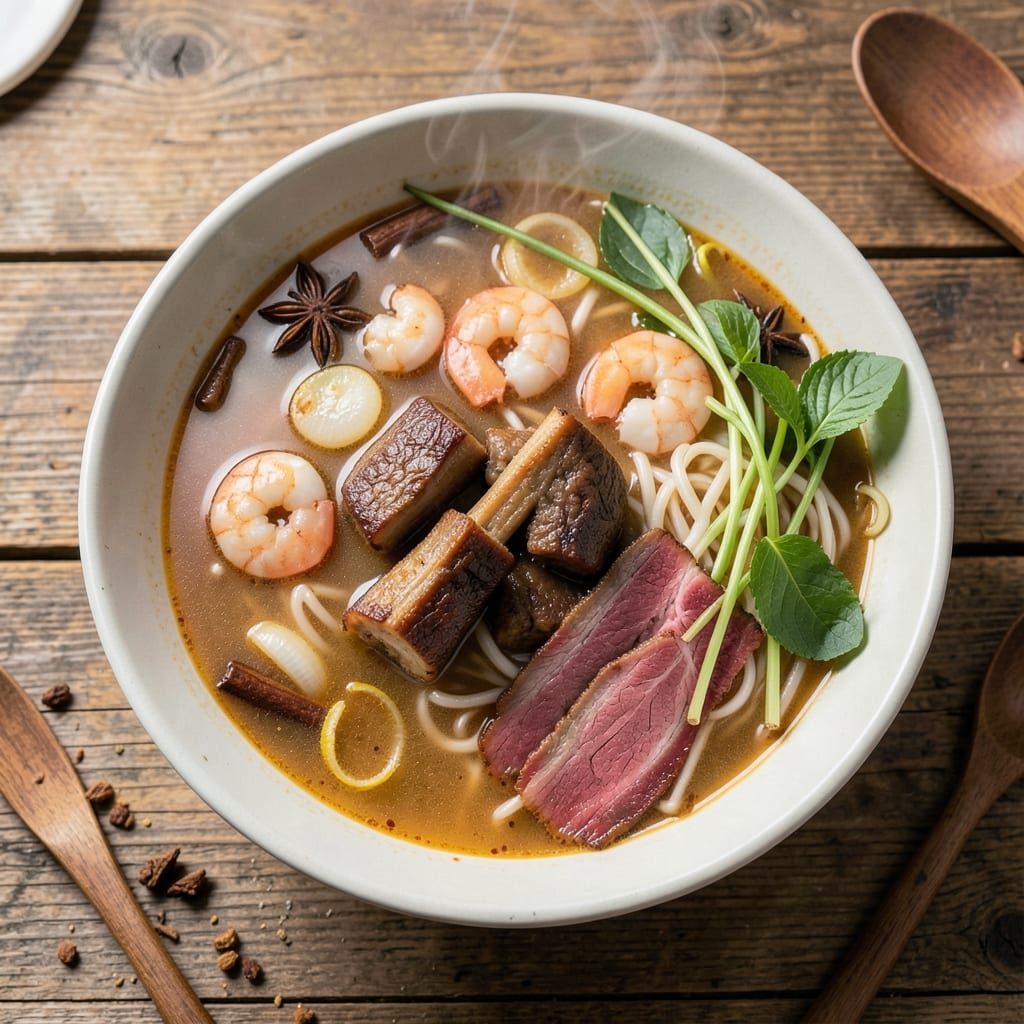
This beef and shrimp pho recipe delivers the fragrant, silky perfection of Vietnamese street food right to your kitchen. The secret lies in a slow-simmered star anise broth that builds deep, aromatic layers—think warm spices, tender beef, and delicate shrimp all harmonizing in one bowl. I've perfected this version to balance traditional techniques with modern shortcuts, so you get restaurant-quality results without spending hours in the kitchen.
The foundation is a rich, golden broth made with beef bones, ginger, and star anise that simmers for hours to extract maximum flavor. While the broth works its magic, you'll sear thinly sliced beef and shrimp separately to maintain perfect texture—tender beef and just-cooked shrimp that stay firm. Rice noodles soak up the aromatic broth beautifully, creating that signature silky texture we all crave.
What makes this recipe truly special is the balance of techniques: traditional slow-cooked broth meets quick-searing proteins, all finished with fresh herbs and lime for brightness. Each bowl delivers a symphony of flavors—spicy, sweet, savory, and umami—with every spoonful. The broth's depth comes from patience, while the proteins stay perfectly cooked through precise timing.
Serve this pho with a side of fresh herbs, bean sprouts, and lime wedges for that authentic street-food experience at home. The recipe scales easily, so you can feed a crowd or save leftovers for another day. Let's create this comforting, flavorful bowl of Vietnamese tradition.
Ingredients for beef and shrimp pho
Fragrant spices, tender beef, and delicate shrimp—this pho brings Vietnamese street food to your kitchen.
| Ingredient | Amount | Notes |
|---|---|---|
| Beef Bones (Chuck or Marrow) 🦴 | 4 lb | Raw, split for surface area |
| Yellow Onions 🧅 | 2 whole | Charred for depth of flavor |
| Fresh Ginger 🧄 | 4 oz | Peeled, sliced into thick rounds |
| Star Anise Pods 🌟 | 4 whole | Whole pods for infusion |
| Cinnamon Sticks 🍃 | 2 whole | 2-inch lengths for aroma |
| Cardamom Pods 🌿 | 4 whole | Lightly crushed for release |
| Cloves 🌶️ | 6 whole | Whole, lightly crushed |
| Garlic Cloves 🧄 | 8 cloves | Peeled, smashed lightly |
| Thinly Sliced Beef 🥩 | 1 ½ lb | Flank or sirloin, 1/8-inch slices |
| Large Shrimp 🦐 | 1 ½ lb | Peeled, deveined, tails on |
| Rice Noodles 🍜 | 12 oz | Flat, medium-width, soaked |
| Fish Sauce 🐟 | 2 tbsp | Red Boat preferred |
| Sugar 🍬 | 1 tbsp | White granulated |
| Lime Wedges 🍋 | 4 whole | Fresh, for serving |
| Fresh Thai Basil 🌿 | ½ cup | Chopped, for garnish |
| Bean Sprouts 🌱 | 1 cup | Fresh, for topping |
| Jalapeño Slices 🌶️ | 2 whole | Thin, for heat |
| Hoisin Sauce 🍶 | 2 tbsp | For serving |
The star anise and cinnamon are non-negotiable for that signature pho aroma. Whole pods infuse the broth beautifully—no need to crush them. I grab mine from Asian markets where they're fresh and potent, but the grocery store spices work too. Look for Red Boat fish sauce if you're splurging, but any reputable brand will do. For the beef bones, chuck or marrow gives the richest flavor—ask your butcher to split them for maximum surface area. The ginger should be fresh, never powdered, and the charred onions add a smoky depth that's essential for authentic flavor.
No star anise? Anise seeds at double the amount work in a pinch, but the flavor won't be identical. Shrimp too expensive? Mushrooms or tofu mimic the texture beautifully. The rice noodles must be fresh—banh pho from Asian markets is ideal, but any flat rice noodles will work. For the proteins, slice the beef thinly against the grain for tenderness, and pat the shrimp dry before searing to avoid splattering. The fish sauce and sugar balance the broth's depth—don't skip either, even if you're not sensitive to salt.
Broth keeps 5 days in the fridge and freezes for 3 months—make extra! Store proteins separately in airtight containers. The noodles should be soaked in hot water for 5-10 minutes before serving, not boiled. For serving, keep the herbs, lime, and jalapeños in a separate bowl so everyone can customize their heat and freshness. This dish tastes even better the next day as the flavors meld—perfect for meal prep.
Why You'll Love This Recipe
- One-Pot Magic: I swear by this recipe for lazy nights—the beef bones and aromatics simmer together in one pot, so you’re not juggling a million pans. Just toss in the onions, ginger, and spices, let it work its flavor while you prep the shrimp and noodles.
- Deep Umami Bomb: That marrow bone? Absolute game-changer. It melts into the broth, giving you a rich, slow-cooked depth that store-bought stock can’t touch. Star anise and cinnamon add warmth, but the beef’s natural collagen turns this broth into liquid gold.
- Weeknight to Dinner Party: Same broth, endless uses. Use it for quick weeknight bowls with leftover rice, or dress it up with fresh herbs and lime for guests. The shrimp cooks in minutes, so it’s ready when the conversation is—no one will guess it’s the same recipe.
- Budget Broth Wins: Beef bones are cheaper than you think, and they stretch into days of flavorful broth. Freeze extras for future meals—this recipe pays for itself. Plus, shrimp adds luxury without breaking the bank. My wallet and taste buds both thank me.
Step-by-step instructions for beef and shrimp pho
This aromatic broth builds layer by layer—let's create a pho that balances rich beef flavor with bright, silky noodles.
Prepare the Beef Bones and Aromatics
Split the 4 lb beef bones (Chuck or Marrow) into 2-inch pieces using a heavy cleaver. This increases surface area for maximum flavor extraction. Rinse the bones thoroughly under cold water to remove any blood or impurities, then drain well.
In a large stockpot, combine the beef bones with 2 whole yellow onions (cut into quarters), 4 oz peeled ginger (sliced into thick rounds), 4 whole star anise pods, 2 whole cinnamon sticks, 4 whole cardamom pods, 6 whole cloves, and 8 cloves garlic (smashed lightly). The aromatics should be whole or lightly crushed—this prevents bitterness and allows for gradual infusion. Add 12 cups cold water and bring to a boil over high heat. Once boiling, reduce to a gentle simmer and skim off any foam that rises to the surface for the first 10 minutes. This ensures a clear, clean broth.
Simmer the Broth for Deep Flavor
Simmer the broth uncovered for 3 hours at a steady simmer (small bubbles breaking the surface). You'll know it's developing properly when the bones turn a deep amber color and the aroma fills your kitchen with warm, spiced notes. The broth should reduce to about 8 cups—this concentrated flavor is what makes pho so rich.
After 3 hours, strain the broth through a fine-mesh sieve into a clean stockpot, pressing gently on the solids to extract every last drop of flavor. Discard the solids. Return the strained broth to the pot and stir in 2 tbsp fish sauce and 1 tbsp sugar. Taste the broth—it should be deeply savory with a hint of sweetness. If needed, adjust with an additional ½ tbsp fish sauce or ½ tbsp sugar to balance the flavors. Keep the broth warm over low heat while you prepare the remaining components.
Cook the Beef and Shrimp
In a separate skillet, sear the 1.5 lb thinly sliced beef (Flank or sirloin) over high heat for 1-2 minutes per side until just cooked through. The slices should remain tender, not tough. Remove the beef and set aside.
In the same skillet, add a splash of water and scrape up any browned bits from the bottom. Add the 1.5 lb large shrimp (peeled, deveined, tails on) and cook over medium-high heat for 1-2 minutes per side until they turn opaque and pink. The shrimp should cook quickly—overcooking will make them rubbery. Remove the shrimp and set aside with the beef.
Assemble the Pho Bowls
Soak the 12 oz rice noodles in warm water for 10-15 minutes until pliable but still firm. Drain and divide the noodles evenly among 4 bowls. Ladle 2 cups of hot broth into each bowl, ensuring the noodles are fully submerged and heated through.
Arrange the thinly sliced beef and shrimp on top of the noodles in each bowl. The beef should be distributed evenly, with a few shrimp pieces per serving. Drizzle each bowl with ½ tbsp hoisin sauce and add 2 lime wedges, 2 jalapeño slices, ¼ cup bean sprouts, and 2 tbsp chopped fresh Thai basil. The combination of bright, fresh herbs and spicy jalapeños balances the rich broth perfectly.
Serve Immediately for Maximum Freshness
Serve the pho bowls immediately while the noodles are hot and the broth is steaming. Each bowl should be a harmonious blend of silky noodles, tender beef, plump shrimp, and aromatic broth. Encourage everyone to adjust the heat and freshness to their taste by adding more jalapeños, lime, or herbs as desired.
The key to great pho is balance—savory broth, tender proteins, fresh herbs, and a touch of spice. This method ensures every element comes together for a bowl that's both comforting and vibrant. Enjoy your homemade pho!
Pro Tips For Making Beef And Shrimp Pho
- BLISTER THE ONIONS FIRST: Slice those yellow onions into thick wedges and sear them directly over high heat until the edges turn deep black—almost burnt. This caramelizes the sugars and gives pho that unmistakable, smoky depth. I used to skip this step and wondered why my broth always tasted "flat" compared to the versions I’d had in Saigon.
- CHAR THE SPICES LOW AND SLOW: Once you add star anise, cinnamon, and ginger to the pot, resist the urge to crank the heat. Let them sit at a gentle simmer for 10 minutes first—this toasts the spices without burning them, so they infuse the broth with aroma instead of bitterness. After burning three batches, I finally figured out that patience here makes all the difference.
- SKIP THE PRE-SOAK FOR BONES: Forget the hours-long soak for beef bones—just rinse them quickly under cold water and pat them dry. The marrow bones will render their fat and collagen faster when dry, and the broth will clarify naturally as it simmers. (Yes, even if you’re impatient like me.)
- STRAIN TWICE FOR CLARITY: After simmering the bones, strain the broth through a fine-mesh sieve, then immediately pour it through a cheesecloth-lined colander. This catches the last bits of sediment that would otherwise cloud your broth. It’s not the prettiest method, but it’s the tastiest—trust me, your pho will look and taste restaurant-quality.
Best sauces and condiments for this beef and shrimp pho
Hoisin Sauce
This thick, sweet-savory sauce is essential for adding depth to your pho. I recommend using Red Boat hoisin sauce for its authentic flavor profile—it balances the rich broth with a touch of sweetness and umami. For each bowl, drizzle ½ tablespoon directly onto the noodles before adding the beef and shrimp. The sauce should coat the noodles lightly, enhancing their texture while complementing the broth's complexity. 🍶
Fish Sauce
The 2 tablespoons Red Boat fish sauce in the broth is non-negotiable—it provides that signature umami punch that defines pho. If you're sensitive to salt, taste the broth before serving and adjust with an extra ½ tablespoon if needed. Fish sauce also acts as a natural preservative, helping the broth stay fresh longer. Never substitute with soy sauce—it lacks the depth of authentic fish sauce. 🐟
Lime and Chili
Fresh lime wedges and jalapeño slices are your secret weapons for brightness and heat. Squeeze lime directly into the bowl to cut through the richness of the broth, and add jalapeños for a spicy kick. I like to serve these on the side so everyone can customize their bowl. For extra heat, try adding ½ teaspoon of chili garlic sauce or a dash of Sriracha to the broth when serving. 🌶️
Fresh Herbs
The ½ cup chopped Thai basil and 1 cup bean sprouts add a fresh, peppery contrast to the rich broth. Thai basil is key—its anise-like flavor complements the star anise in the broth beautifully. For a milder option, substitute with regular basil or cilantro. Toss the bean sprouts in a little sesame oil before adding them to the bowl for extra crunch and flavor. 🌿
Extra Flavor Boosters
Want to take your pho to the next level? Add a dollop of sriracha or chili oil for heat, or a drizzle of hoisin sauce for extra sweetness. For a smoky touch, sprinkle toasted sesame seeds on top. I also love adding a few shredded carrots or scallions for color and texture. These toppings turn a good bowl of pho into an extraordinary one. ✨
Nutrition facts
Frequently asked questions
Can I make the pho broth ahead of time?
The broth actually tastes better the next day as the flavors meld. Store it in an airtight container in the fridge for 5 days or freeze for 3 months. When reheating, warm it gently on low heat—never boil—to preserve those delicate aromatic oils. The proteins should be cooked fresh before assembling bowls.
How do I get the beef slices perfectly tender?
Slice the beef thinly against the grain (about 1/8-inch thick) and sear for just 1-2 minutes per side over high heat. The key is high heat for quick cooking—this prevents toughness. For extra tenderness, marinate the beef in 1 tbsp fish sauce and 1 tsp sugar for 20 minutes before cooking.
What if I don't have star anise?
Use double the amount of anise seeds (about 8 seeds) as a substitute, but the flavor won't be identical. For a closer match, combine ½ tsp ground fennel seeds and ½ tsp ground coriander. The broth will still be aromatic, just with a slightly different spice profile. The cinnamon and cardamom remain essential for that classic pho warmth.
How do I prevent the shrimp from turning rubbery?
Cook shrimp for only 1-2 minutes per side until just opaque and pink—overcooking is the enemy! Pat them dry before searing, and use medium-high heat with a splash of water in the pan to create steam. Remove them immediately when done and set aside—they'll continue cooking from residual heat.
Can I use dried shrimp instead of fresh?
Yes, but soak 1 cup dried shrimp in warm water for 30 minutes to rehydrate first. They'll add a deeper umami flavor to the broth, but adjust the fish sauce to 1 tbsp since dried shrimp are already salty. For the proteins, use 1 lb dried shrimp instead of fresh. The texture will be slightly different but still delicious!