
Soups & Stews
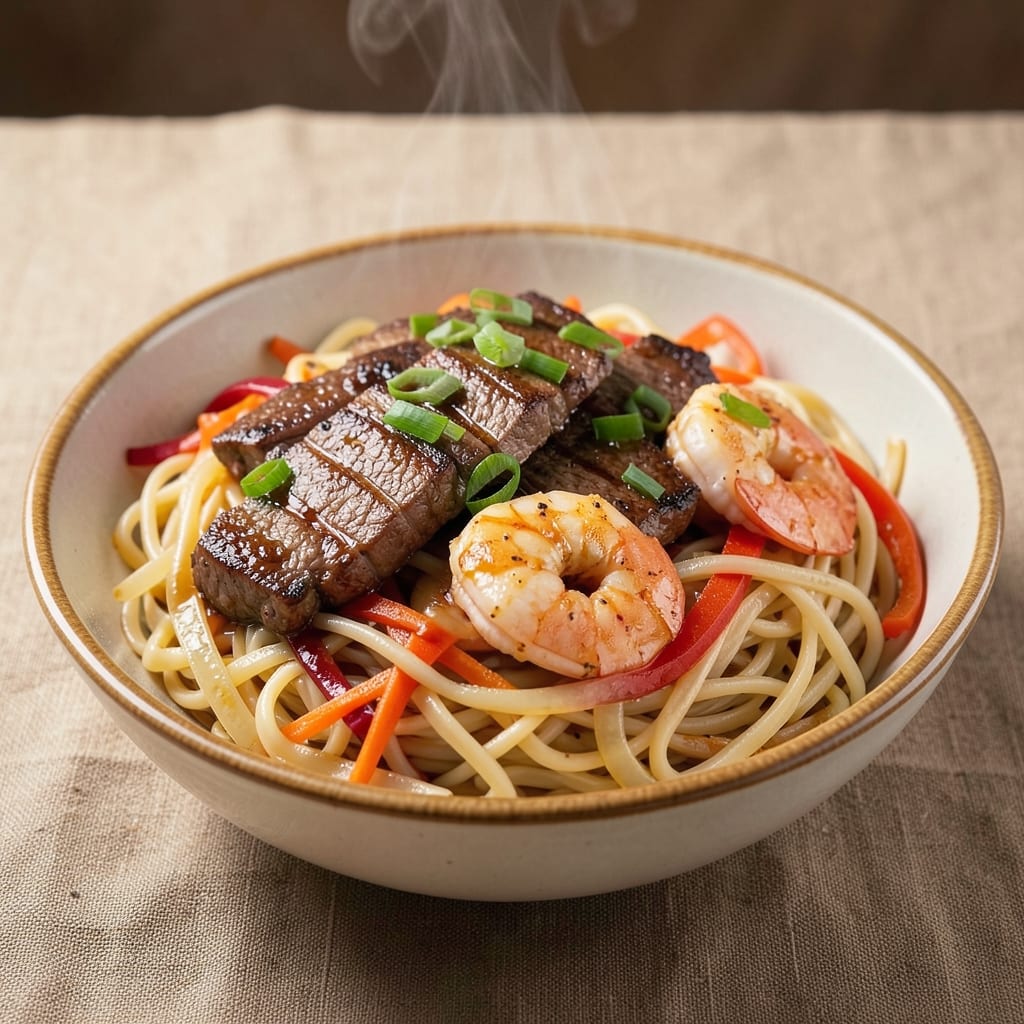
This beef and shrimp lo mein recipe delivers the perfect balance of crispy beef, silky shrimp, and chewy noodles in every bite. The secret lies in proper wok heating and quick stir-frying to lock in flavors while keeping ingredients tender. I've refined this recipe over countless weeknight dinners, ensuring it's restaurant-quality without requiring professional equipment.
The foundation begins with a homemade sauce that combines soy sauce, oyster sauce, and a touch of sesame oil for depth. Thinly sliced beef and shrimp are marinated briefly to enhance flavor, then stir-fried in batches to achieve that signature wok-heated texture. Fresh vegetables add crunch and freshness, while wide lo mein noodles soak up the savory sauce beautifully.
What sets this recipe apart is the two-stage cooking process: first searing the beef until crispy edges form, then adding shrimp that cook just until opaque. The noodles are tossed in the sauce at the very end to prevent mushiness, ensuring each bite delivers perfect texture. The result is a dish that's rich, aromatic, and satisfying—ideal for feeding a family or impressing dinner guests.
Serve immediately with extra sesame seeds and sliced green onions for garnish. The leftovers reheat beautifully, making this an excellent meal prep option for busy weeks. Let's create this restaurant-worthy lo mein at home!
Ingredients for beef and shrimp lo mein
Restaurant-quality lo mein starts with these carefully chosen ingredients for perfect texture and flavor balance.
| Ingredient | Amount | Notes |
|---|---|---|
| Flank Steak 🥩 | 1 lb | Thinly sliced against grain |
| Large Shrimp 🦐 | 1 lb | Peeled, deveined, tails on |
| Lo Mein Noodles 🍜 | 12 oz | Fresh or dried, wide variety |
| Yellow Onion 🧅 | 1 whole | Thinly sliced |
| Carrot 🥕 | 2 whole | Julienned, small dice |
| Bell Pepper 🌶️ | 1 whole | Red or green, thinly sliced |
| Garlic Cloves 🧄 | 6 cloves | Minced, fresh preferred |
| Sesame Oil 🫒 | 1 tbsp | Toasted, for aroma |
| Soy Sauce 🍶 | ½ cup | High-quality, preferably Japanese |
| Oyster Sauce 🍴 | 2 tbsp | Thick, rich variety |
| Cornstarch 🌾 | 1 tbsp | For beef marinade |
| Sesame Seeds 🌱 | 1 tbsp | Toasted, for garnish |
| Green Onions 🧅 | 3 whole | Thinly sliced, for garnish |
| Vegetable Oil 🫒 | ½ cup | High smoke point |
| Salt 🧂 | 1 tsp | Kosher or sea salt |
| Black Pepper 🌶️ | ½ tsp | Freshly ground |
The beef is everything here. Flank steak delivers that crispy edge when sliced thin against the grain—sirloin works too if you can't find flank. Look for the most marbled cut at Whole Foods or your local Asian market. Shrimp should be fresh or previously frozen—never that grayish stuff. For the noodles, fresh lo mein from the refrigerated section cooks faster than dried, but dried works in a pinch. The key is to rinse them well to remove excess starch. I always grab extra sesame seeds and oyster sauce at Trader Joe's—their brands are reliable and budget-friendly.
No oyster sauce? Hoisin sauce mixed with soy sauce gets you close. Fresh garlic is ideal, but garlic powder at half the amount works if you're short on time. The beef marinade is non-negotiable—cornstarch helps create that crispy crust. For the shrimp, pat them dry before cooking to ensure they sear properly. Bell peppers can be swapped for broccoli florets if you prefer, but they add a nice crunch. The carrots should be julienned uniformly—use a mandoline if you're feeling fancy, or a sharp knife works fine. And for the love of all things wok-heated, don't skip the sesame oil in the sauce—it's the aroma bomb that makes this dish sing.
Prep ahead what you can. The beef and shrimp marinades can sit for up to 4 hours in the fridge, but no longer. Noodles should be cooked al dente and tossed immediately in the sauce to prevent mushiness. Store leftovers in airtight containers for 3-4 days—they reheat beautifully, though the texture won't be quite as crispy. For meal prep, portion the sauce and noodles separately and assemble when ready to eat. The dish keeps 3 months frozen if you want to make a big batch. Garnish with sesame seeds and green onions right before serving—freshness matters.
Why You'll Love This Recipe
- One-Pan Magic: I swear by this recipe because it’s the rare dish where one skillet handles everything—no messy hopping between pots. Toss in the flank steak, shrimp, and noodles all at once, then stir-fry until the onions caramelize just enough to coat everything in that sweet, savory glaze. My counter stays clean, and my hands stay grease-free.
- Umami Bomb: That combo of flank steak (marinated in soy and garlic) and shrimp (plump and juicy) is next-level. The onions and carrots add crunch, but it’s the dark soy glaze clinging to the noodles that makes me go back for thirds—sweet, salty, and just a little sticky. Honestly, it’s the kind of flavor that makes takeout feel like a waste.
- Lunchbox Hero: Between us, this is my go-to for meal prep because it reheats like a dream. Pack the leftovers in containers, and they’ll still taste fresh the next day—no soggy noodles here. I double the batch on Sundays, and by Wednesday, my family’s begging for more. (Yes, even on a Tuesday night.)
- Budget Flex: Flank steak and shrimp might sound fancy, but they stretch far when paired with cheap noodles and veggies. I’ll often swap in bell peppers or cabbage if I’m pinching pennies, and no one ever complains. It’s the kind of dish that makes grocery day feel like a win—big flavor, small price tag.
Step-by-step instructions for beef and shrimp lo mein
Master the art of wok-heated noodles with this precise technique for tender beef and succulent shrimp.
👨🍳 Step 1: Marinate the Flank Steak for Maximum Tenderization
In a medium bowl, combine the 1 lb flank steak with the 1 tbsp cornstarch, 1 tsp salt, and ½ tsp black pepper. Using clean hands, massage the marinade into every surface of the meat, ensuring even distribution. Let it sit at room temperature for 15 minutes while you prepare the shrimp.
The cornstarch creates a crispy crust when seared, while the salt and pepper penetrate the meat for balanced seasoning. This brief marinating time prevents over-tenderizing the beef while still improving texture. Don't skip this step—it's what gives your lo mein that signature crispy bite.
🍳 Step 2: Prepare the Shrimp and Vegetable Base
In a separate bowl, toss the 1 lb large shrimp with 1 tbsp sesame oil, 1 tbsp soy sauce, and ½ tsp black pepper. Set aside. Thinly slice the 1 whole yellow onion, julienne the 2 whole carrots, and thinly slice the 1 whole bell pepper. Mince the 6 cloves garlic cloves and finely slice the 3 whole green onions, reserving 1 tbsp for garnish.
Keep all prepared vegetables separate until ready to cook. The shrimp marinade should coat each piece evenly—this ensures they cook quickly and absorb flavor. The vegetables should be cut uniformly so they cook at the same rate as the proteins. If using fresh lo mein noodles, soak them in warm water for 30 seconds before draining well.
🔥 Step 3: Sear the Beef and Shrimp Separately
Heat ¼ cup vegetable oil in a wok or large skillet over high heat until shimmering. Add the marinated flank steak in a single layer and sear for 1-2 minutes per side until deep golden brown and just cooked through (145°F internal temperature). Remove and set aside.
In the same wok, add ¼ cup vegetable oil and heat until smoking. Add the shrimp in batches and cook for 30-45 seconds per side until pink and opaque. Remove and set aside with the beef. The high heat is crucial here—it creates that signature wok-hei flavor while keeping the shrimp tender. Don't overcrowd the pan or they'll steam instead of sear.
🥘 Step 4: Build the Flavorful Sauce and Combine Ingredients
Return the wok to medium-high heat and add ¼ cup vegetable oil. Sauté the garlic for 10 seconds until fragrant, then add the onion, carrots, and bell pepper. Stir-fry for 2-3 minutes until the vegetables soften but retain their color. Add the minced garlic and cook for 10 seconds more.
Pour in the ½ cup soy sauce and 2 tbsp oyster sauce, scraping up any browned bits from the bottom of the wok. Add the cooked beef and shrimp back to the wok along with the 12 oz lo mein noodles. Toss everything together for 1-2 minutes until the noodles are heated through and everything is well-coated in the sauce.
🍽️ Step 5: Finish and Garnish for Presentation
Remove from heat and drizzle with the remaining 1 tbsp sesame oil. Toss gently to distribute evenly. Divide the lo mein among serving plates and garnish with the reserved 1 tbsp sliced green onions and 1 tbsp sesame seeds. Serve immediately while hot and steaming.
The dish should have a perfect balance of textures—crispy beef, tender shrimp, al dente noodles, and slightly crisp vegetables. Each bite should deliver that signature wok-hei flavor with a rich umami sauce. For best results, serve directly from the wok to maintain that restaurant-quality presentation.
Pro Tips For Making Beef And Shrimp Lo Mein
- Slice Steak Against the Grain: Flank steak’s tough fibers run long—cutting perpendicular to them guarantees tender bites. Use a sharp knife and slice thin (¼-inch or less) after cooking, not before. I learned this the hard way when my first batch turned out chewy, no matter how long I cooked it.
- Peel Shrimp Last Minute: Shrimp turn rubbery if peeled too early. Keep them shelled until you’re ready to toss them in the wok—just 30 seconds before cooking. The shell-on time keeps them juicy, and you’ll save cleanup time too.
- Blanch Carrots First: Skip the raw crunch. Parboil carrot slices (3 minutes in boiling water) before stir-frying—they’ll soften faster and soak up sauce better. This also prevents them from turning mushy in the wok’s residual heat.
- Use Two Woks: Crowding the pan steams instead of sears. Cook beef in one wok until browned, then shrimp in another—high heat, no overfilling. If you’re short on pans, work in batches and keep the cooked proteins warm in a bowl with a splash of sauce.
Storing and reheating this beef and shrimp lo mein
Refrigerator Storage
Let your lo mein cool completely before transferring to an airtight container—I recommend glass Pyrex with snap-on lids. Store at 40°F or below for up to 3-4 days, though the noodles will soften slightly over time. The sauce and proteins actually develop deeper flavor when refrigerated, but the texture won't be as crisp as fresh. 🥗
Freezer Storage
For long-term storage, freeze portions in single-serving airtight containers or quart-sized freezer bags, leaving ½-inch headspace for expansion. Label with the date and store for up to 3 months. When reheating, thaw overnight in the fridge for best texture. I always portion noodles and sauce separately to prevent mushiness during freezing. ❄️
Stovetop Reheating
This is my go-to method for restoring that wok-heated texture. Heat 1 tbsp vegetable oil in a wok or skillet over medium-high heat, then add the lo mein. Toss for 3-4 minutes until everything is heated through and slightly crispy. Add 1 tbsp water if it looks dry, then finish with a drizzle of sesame oil and 1 tsp soy sauce to revive the flavors. 🔥
Microwave Reheating
For quick reheating, transfer to a microwave-safe dish and cover loosely with a damp paper towel. Heat on 50% power in 1-minute intervals, stirring between each, until reaching 165°F internal temperature. The shrimp and beef may dry out slightly, so add a splash of chicken broth to restore moisture. Garnish with fresh green onions and sesame seeds to brighten the dish. ⏳
Reviving Texture
If your reheated lo mein loses its crispness, don't worry—it's an easy fix! Toss with 1 tsp toasted sesame oil and ½ tsp cornstarch (mixed with water) to create a light coating. Stir-fry in a hot wok for 1-2 minutes to restore that signature texture. The cornstarch acts like a quick crust, bringing back the restaurant-quality bite. 💡
Meal Prep Tips
For busy weeks, prep components ahead: marinate the beef and shrimp, make the sauce, and cook the noodles al dente. Store everything separately in the fridge, then assemble and reheat when ready. This keeps the ingredients fresh and prevents soggy noodles. I also like to portion the sauce separately so I can adjust seasoning when reheating. 📅
Nutrition facts
Frequently asked questions
Can I substitute the flank steak with another cut?
Sirloin or ribeye work beautifully—just slice them thinly against the grain for tenderness. Chuck roast is another option, but it's leaner so marinate it 30 minutes longer to prevent toughness. Avoid fatty cuts like ribeye that release too much grease during cooking.
How do I prevent the noodles from getting mushy?
Cook noodles al dente (1 minute less than package instructions), then rinse briefly in cold water to stop cooking. Toss them with the sauce at the very end over high heat for just 1-2 minutes. The residual heat will finish cooking while preventing mushiness. Never add cold noodles to a hot wok—it drops the temperature dramatically.
What's the best way to cook shrimp without overcooking?
Pat shrimp very dry before cooking and work in small batches (no more than ½ lb at a time) to maintain high heat. They're done when they turn opaque pink and curl slightly—this happens in 30-45 seconds per side over high heat. Overcooking turns them rubbery, so have a timer ready and don't peek too often.
Can I make this vegetarian?
Yes! Replace beef with extra-firm tofu (pressed and cubed) or mushrooms (shiitake or oyster work best). For shrimp, use king oyster mushrooms or firm tofu slices seared until crispy. Boost umami with 1 tsp mushroom powder in the sauce. The texture contrast will still be delicious—just adjust cooking times for tofu (it needs 3-4 minutes per side).
Why does my lo mein taste bland?
Most likely, you're not using enough high-quality soy sauce or oyster sauce. The secret is to reduce the sauce by simmering it for 2-3 minutes before adding noodles—this concentrates the flavors. Also, make sure your wok is smoking hot before adding ingredients to develop that signature wok-hei flavor. A splash of fish sauce or Worcestershire sauce can also add depth.