
Main Courses
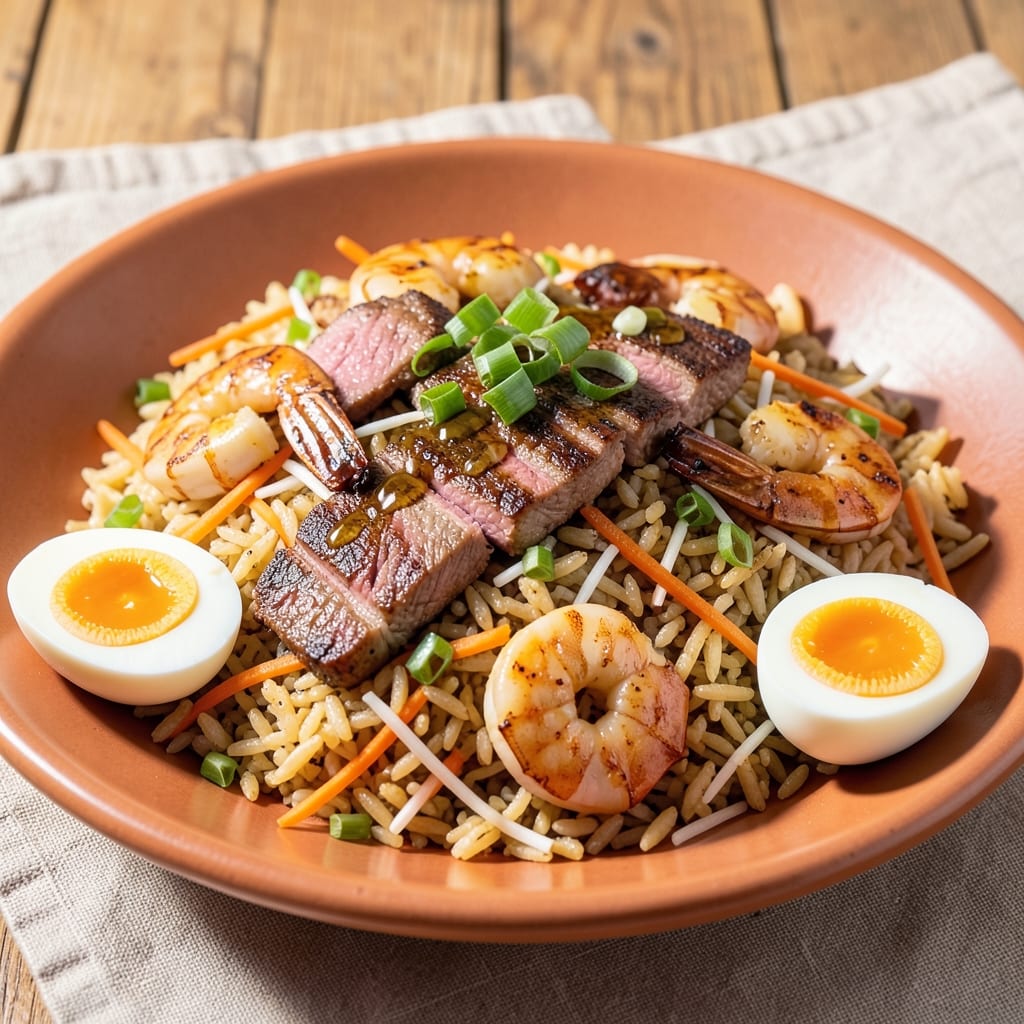
This beef and shrimp fried rice recipe delivers the perfect balance of crispy textures and bold flavors in every bite. The secret lies in proper protein prep—searing the beef until caramelized and sautéing shrimp with garlic until just pink—before combining everything with day-old rice and a savory soy-ginger sauce. I've perfected this wok-heated version to bring restaurant-quality results to your home kitchen, where the smoky aroma alone will have everyone gathering around the table.
The foundation of great fried rice is using cold, day-old rice that releases properly when stir-fried, creating that signature separate-grain texture. We'll build flavor through layering: first the proteins, then aromatic vegetables, and finally the sauce, which should be seasoned to taste at the end. This approach ensures each component maintains its integrity while developing complex umami notes from soy sauce, oyster sauce, and a touch of sesame oil.
What you'll end up with is a vibrant, aromatic dish where tender beef strips and sweet garlic shrimp contrast beautifully against crisp-tender vegetables and perfectly seasoned rice. The dish maintains its texture even when reheated, making it ideal for meal prep or serving a crowd. For pescatarians, simply omit the beef and double the shrimp portion—it works just as well.
This recipe delivers on the promise of restaurant-quality fried rice without requiring a wok—any large skillet will do. The key is high heat and constant motion, which creates that signature "wok hei" smokiness even in home kitchens. Ready in under 30 minutes, it's the perfect weeknight dinner that feels special enough for company.
Ingredients for beef and shrimp fried rice
Crispy beef, sweet garlic shrimp, and day-old rice—here's what you need for restaurant-style fried rice.
| Ingredient | Amount | Notes |
|---|---|---|
| Day-Old Cooked White Rice 🍚 | 4 cups | Cold rice preferred for texture |
| Ribeye Steak 🥩 | 8 oz | Thinly sliced against grain |
| Large Shrimp 🦐 | 12 whole | Peeled, deveined, tail-off |
| Eggs 🥚 | 2 whole | Lightly beaten for scrambling |
| Green Onions 🧅 | ½ cup | White and green parts separated |
| Carrots 🥕 | 1 cup | Julienned into matchsticks |
| Garlic Cloves 🧄 | 4 cloves | Minced for aroma |
| Sesame Oil 🫒 | 1 ½ tbsp | Toasted for nutty flavor |
| Light Soy Sauce 🥢 | ½ cup | Kikkoman preferred |
| Dark Soy Sauce 🥢 | 1 tbsp | For color and depth |
| Oyster Sauce 🍜 | 2 tbsp | Lee Kum Kee brand |
| Ginger Root 🌿 | 1 tbsp | Freshly grated |
| Vegetable Oil 🫒 | ½ cup | High smoke point |
| Salt 🧂 | 1 tsp | Diamond Crystal preferred |
| White Pepper 🌶️ | ½ tsp | Freshly ground |
The beef is non-negotiable for that crispy texture. Ribeye gives the best marbling, but flank or sirloin work too—just slice it thin against the grain. Costco or Walmart usually have pre-sliced steak for convenience, but if you're buying whole, ask the butcher to slice it paper-thin. Shrimp should be fresh or frozen thawed—never pre-cooked. I grab mine from Trader Joe's or the seafood counter at Whole Foods, but any reputable fishmonger will do. The day-old rice? Cook extra the night before so it's cold and dry for perfect texture.
No ribeye? Double the shrimp portion—this works beautifully as a seafood-only dish. Fresh ginger? Substitute 1.5 tbsp ground ginger if you're in a pinch, but fresh is worth it. The soy sauces matter—Kikkoman light soy for saltiness, Lee Kum Kee dark soy for color. No oyster sauce? Hoisin sauce at half the amount gets you close. For the green onions, use the white parts for cooking and save the greens for garnish. The sesame oil is toasted in the pan first—don't add it raw or it'll taste bitter.
Store any leftovers in an airtight container for 3-4 days—it reheats beautifully. The rice stays separate and crispy, which is the whole point. For meal prep, double the recipe and portion into containers with a thin layer of oil on top to prevent sticking. Freezes for 2 months if you want to make a big batch. The shrimp and beef can be prepped ahead too—just keep them separate until cooking. This dish is all about timing, so don't rush the stir-fry step.
Why You'll Love This Recipe
- No Rice Stress: I always have day-old rice in my fridge—this recipe turns it into gold. No fancy cooking skills needed, just toss, stir, and let the wok do the work.
- Steak Meets Shrimp Magic: That first bite? Juicy ribeye and plump shrimp in one forkful. The shrimp sizzles fast, so you get that perfect snap, while the steak stays tender—no overcooking here.
- Leftover Superhero: Make a big batch on Sunday, and you’ve got lunch all week. Reheats like a dream, and the flavors only get better the next day. (Yes, even my picky teenager approves.)
- Budget Flexibility: Ribeye feels fancy, but a small portion stretches far. Shrimp adds luxury without breaking the bank, and eggs bulk it up—cheap, satisfying, and always a crowd-pleaser.
Step-by-step instructions for wok-heated beef and shrimp fried rice
Here's how to make restaurant-quality fried rice with perfectly crispy beef and sweet garlic shrimp.
Prep Ingredients for Maximum Flavor
Start by slicing the 8 oz ribeye steak thinly against the grain—this ensures tender bites. Pat the shrimp dry with paper towels and season lightly with ½ tsp salt and ¼ tsp white pepper. Separate the 0.5 cup green onions into white and green parts, and julienne the 1 cup carrots into matchsticks. Mince the 4 cloves garlic and grate the 1 tbsp ginger root. Toast the 1.5 tbsp sesame oil in a small pan over low heat until fragrant—this adds nutty depth.
Lightly beat the 2 whole eggs in a bowl and set aside. Have all ingredients prepped and ready—this is a fast-moving dish where timing matters. The cold 4 cups day-old rice should be broken up into individual grains with your hands or a fork, no clumps allowed.
Cook Beef and Shrimp Separately
Heat ½ cup vegetable oil in a wok or large skillet over high heat until shimmering. Add the ribeye slices and sear for 1-2 minutes until they develop a deep brown crust. Remove and set aside. In the same pan, add the shrimp and cook for 1-2 minutes per side until just opaque—don't overcook or they'll turn rubbery. Remove and set both aside.
Here's the thing—cooking proteins separately prevents overcrowding, which steams instead of sears. The beef should be tender but still slightly firm, and the shrimp should have a pink center. Season both lightly with ¼ tsp salt and ¼ tsp white pepper while they're hot.
Scramble Eggs and Build the Sauce Base
Return the wok to high heat and add 1 tbsp vegetable oil. Pour in the beaten eggs and scramble quickly until just set—soft curds are perfect. Remove and set aside. In the same pan, add 1 tbsp minced garlic and 1 tbsp grated ginger, cooking for 30 seconds until fragrant but not browned.
Pour in ½ cup light soy sauce, 1 tbsp dark soy sauce, and 2 tbsp oyster sauce. Let it bubble for 1 minute to develop flavor. This sauce base is the soul of your fried rice—don't skip letting it reduce slightly. The dark soy sauce adds that beautiful caramelized color while keeping the light soy for saltiness.
Combine Everything for Perfect Texture
Add the cold rice to the wok and stir-fry vigorously for 2-3 minutes until heated through. The rice should be hot but still slightly underdone—it'll finish cooking from residual heat. Add the cooked beef, shrimp, and scrambled eggs back in, tossing everything together for 1-2 minutes until well combined.
Stir in the julienned carrots and white parts of the green onions. Taste and adjust seasoning—you might need a splash more soy sauce or a pinch of salt. The rice should be coated in sauce but still have a slight bite. If it's too dry, add 1-2 tablespoons water to steam it slightly.
Finish with Aromatics and Serve Immediately
Turn off the heat and stir in the toasted sesame oil and green onion tops. Toss everything together one final time—this coats each grain with that nutty, aromatic finish. The sesame oil should be evenly distributed, giving each bite that signature fried rice flavor.
Serve immediately while hot, garnished with extra green onions if desired. The beef should be tender with crisp edges, the shrimp sweet and juicy, and the rice perfectly textured—neither mushy nor dry. This dish tastes best straight from the wok when everything is piping hot and the flavors are at their peak.
Pro Tips For Making Beef And Shrimp Fried Rice
- Prep Shrimp Like a Pro: Peel and devein those shrimp, but leave the tails on if you want to look fancy—just snap them off after cooking. Pat them bone-dry with paper towels (I mean it, squeeze out every drop), or they’ll steam instead of sear. Overcooked shrimp turn rubbery, and no one wants that in fried rice.
- Slice Steak Against the Grain: Ribeye has stubborn fibers, so thinly slice it against the grain before cooking—this makes every bite tender. If you’re lazy and slice with the grain, you’ll end up chewing like you’re in a silent movie. Trust me, 5 minutes with a sharp knife now saves you from sad, chewy beef later.
- Scramble Eggs First, Fast: Push the eggs to the side of the wok after they set, then scramble them separately in the same pan with a splash of oil. This keeps them creamy instead of dry and rubbery—no one wants eggy fried rice that tastes like shoe leather. High heat, quick stir, done in 20 seconds.
- Use Cold Rice, Not Warm: Cold, day-old rice fries up light and separate—warm rice turns into glue. If you’re in a rush, pop leftover rice in the freezer for 10 minutes before using. I’ve burned more batches than I’d like to admit by skipping this step, so don’t be that person.
Wine and beer pairings for this recipe
Crispy Beef Pairings
A bold, dry red wine like Cabernet Sauvignon from Napa Valley cuts through the richness of the beef beautifully. Look for a 2018 or newer vintage with 14-15% ABV—the tannins complement the caramelized edges of the ribeye while balancing the dish's umami depth. I always reach for Caymus Vineyards or Stag's Leap Wine Cellars for their perfect balance of fruit and structure. 🍷
Sweet Shrimp Complements
For the shrimp's delicate sweetness, a crisp, off-dry white wine like Riesling from Germany's Mosel region works wonders. The 2019 Dr. Loosen Blue Slate (around $25) has enough acidity to cleanse your palate between bites while its honeyed notes mirror the garlic shrimp's sweetness. A chilled Sauvignon Blanc from New Zealand also pairs brilliantly—try Kim Crawford for its citrus and herbal notes.
Beer Options
A light, crisp lager like Peroni or Asahi Super Dry keeps the meal refreshing without overpowering the flavors. For something more adventurous, a Belgian-style witbier like Hoegaarden adds a citrusy contrast that enhances both the beef and shrimp. I like to serve it ice-cold in tulip-shaped glasses to maintain its effervescence. 🍺
Cocktail Pairings
For a more casual vibe, try a Lychee Martini made with vodka, lychee juice, and a splash of lime. The floral sweetness complements the shrimp's garlic notes while the vodka's neutrality lets the dish shine. For a non-alcoholic option, a ginger-lime spritzer with sparkling water and muddled mint brightens the meal's richness. I often make a big batch and serve it in mason jars with ice and lime wheels.
Regional Wine Adaptations
In California, where this dish originated, a Zinfandel from Lodi adds fruity depth to the beef's caramelized crust. For Asian-inspired pairings, try a Japanese sake like Dassai Junmai—its clean, slightly sweet profile enhances both proteins. In Texas, where I grew up, a Merlot from Texas Hill Country provides enough body to match the beef's richness while keeping the shrimp's sweetness in harmony.
Serving Temperature
Serve all beverages chilled—white wines and beers at 45-50°F, reds at 60-65°F. I like to open red wines 30 minutes before serving to let them breathe, especially if they're younger vintages. For beers, I use a Coors Light can cooler filled with ice and salt to keep them perfectly cold. The contrast between the hot fried rice and chilled drinks makes every bite feel special. ✨
Nutrition facts
Frequently asked questions
Why does the recipe call for day-old rice?
Day-old rice is essential because its dry, separate grains absorb flavors better and create that signature crispy texture when stir-fried. Freshly cooked rice releases too much moisture, turning your fried rice mushy. Pro tip: Cook extra rice the night before, spread it on a tray to cool quickly, and store it in an airtight container.
Can I substitute the beef for another protein?
For a seafood-only version, double the shrimp portion (use 24 large shrimp) or add 8 oz chicken thighs, sliced thin. For vegetarian, use 8 oz tofu (pressed and cubed) or 1 cup mushrooms. The key is keeping the protein crispy—high heat and quick cooking are crucial.
How do I prevent the shrimp from turning rubbery?
Never overcook shrimp—they should be just opaque (1-2 minutes per side) with a slightly pink center. Pat them dry thoroughly before cooking, and use high heat to sear them quickly. Also, avoid adding them to the wok until the very end of cooking to prevent steaming. The residual heat will finish cooking them perfectly.
What's the best way to reheat leftovers?
Reheat in a skillet over medium heat with a splash of water or soy sauce to restore moisture. Stir constantly for 2-3 minutes until hot through. Microwaving works too, but add 1 tbsp water and cover with a damp paper towel to prevent drying. Leftovers taste best within 3-4 days when stored in an airtight container.
Can I make this dish in a regular skillet instead of a wok?
Yes! While a wok creates "wok hei" (smoky aroma), a large, heavy-bottomed skillet works perfectly. Use high heat and keep the pan moving constantly to mimic wok technique. A 12-inch cast iron skillet is ideal—just reduce the oil slightly (3 tbsp) since it retains heat better. The texture will be slightly different but still delicious.