
Soups & Stews
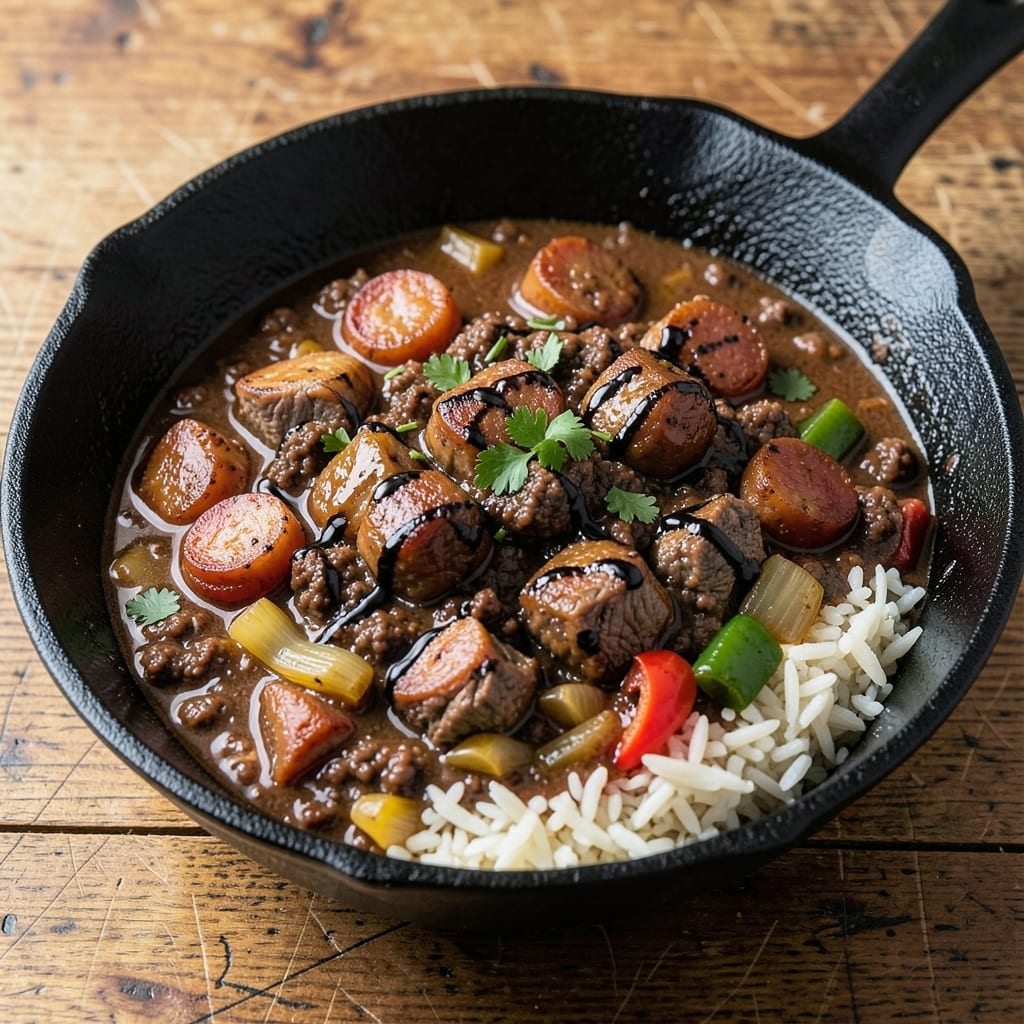
This beef and sausage gumbo recipe delivers the rich, smoky depth of Louisiana tradition in every bowl. The foundation—a perfectly browned roux—takes patience but transforms into the golden base that carries layers of Cajun spices, tender meat, and the "holy trinity" of vegetables. I've perfected this version through years of testing, balancing authentic technique with approachable steps for home cooks.
The secret lies in the roux: cooked low and slow until it reaches a deep amber color without burning, then deglazed with tomato paste to unlock its full potential. Smoked sausage and beef break down into melt-in-your-mouth tenderness, while okra or filé powder adds that signature gumbo texture. What begins as a simple pot of ingredients becomes a complex, aromatic stew that simmers for hours, developing flavors that only time can create.
By the final spoonful, you'll taste the caramelized roux, the smoky sausage, the deep umami of beef, and the bright acidity of the tomato base—all coming together in a broth that's rich yet balanced. This isn't just gumbo; it's a celebration of Louisiana's culinary heritage, brought to your kitchen with professional results. Serve it over steamed rice with green onions and hot sauce for the complete experience.
For those who want to modernize the classic, consider adding andouille sausage or even shrimp for a seafood twist. The technique remains the same—what changes is how you personalize this timeless dish. Let's build this gumbo from scratch, step by step.
Ingredients for beef and sausage gumbo
Pantry staples plus a few key ingredients to build that iconic roux and smoky depth.
| Ingredient | Amount | Notes |
|---|---|---|
| Vegetable Oil 🫒 | ½ cup | For roux base |
| All-Purpose Flour 🌾 | 1 cup | White flour preferred |
| Tomato Paste 🍅 | 2 tbsp | Squeeze tube or can |
| Smoked Sausage 🌭 | 1 lb | Andouille preferred |
| Beef Chuck Roast 🥩 | 1 ½ lb | Cubed, 1-inch pieces |
| Yellow Onion 🧅 | 1 whole | Medium, diced |
| Green Bell Pepper 🍅 | 1 whole | Medium, diced |
| Celery Stalks 🥬 | 3 whole | Medium, diced |
| Garlic Cloves 🧄 | 4 cloves | Minced |
| Dried Thyme 🌿 | 1 tsp | Or 1 tbsp fresh |
| Dried Oregano 🍃 | 1 tsp | Mexican if possible |
| Paprika 🌶️ | 1 tbsp | Smoked preferred |
| Ground Black Pepper 🌶️ | ½ tsp | Freshly ground |
| Salt 🧂 | 1 ½ tsp | Kosher preferred |
| Bay Leaves 🌿 | 2 whole | Removed before serving |
| Filé Powder 🌿 | 2 tbsp | Or okra pods |
| Chicken Stock 💧 | 4 cups | Low-sodium preferred |
The roux is everything here. Vegetable oil should be neutral—none of that fancy olive oil. Grab a 1-lb chuck roast from the butcher section (or pre-cubed from the meat counter)—it's cheaper and more flavorful than sirloin. For the holy trinity, Trader Joe's has pre-diced sets that save time, but chopping your own gives you better control. The tomato paste? Squeeze tubes are perfect—no waste, and they keep for months. Smoked sausage is non-negotiable; andouille if you can find it, but kielbasa works in a pinch.
No smoked paprika? Regular paprika plus a pinch of cayenne gets you close. Fresh thyme is ideal, but dried at one-third the amount works fine. Running low on stock? Water plus bouillon cubes is better than skipping it entirely. The filé powder is what gives gumbo that signature thickness—if you can't find it, okra pods work too (just simmer them in the broth first). For the roux, stir constantly—burnt flour tastes like sawdust, and nobody wants that.
This gumbo tastes even better the next day—double the batch if you can. Keeps 5 days in the fridge or 3 months frozen. I portion mine into containers with rice so lunches are ready to grab. The roux can be made ahead and refrigerated for 1 week—just reheat gently before adding other ingredients. Pro tip: Save the fat from the sausage and beef to add back at the end for extra richness.
Why You'll Love This Recipe
- One-Pot Magic: I swear by this recipe—just brown the meat, dump in the roux (flour + oil), and let it simmer. No extra pans, no fuss, and honestly? That’s all it takes for something that feels like a restaurant dish.
- Smoky Depth Bomb: The smoked sausage and beef chuck roast give this gumbo a richness that’s hard to beat. Between us, that tomato paste and roux base tie everything together with a flavor so bold, it’ll make you want to lick the spoon.
- Leftovers That Win: This gumbo tastes even better the next day—yes, really. I make a double batch on Sundays, and by Wednesday, it’s still the star of my lunch. (My picky-eater kid actually asks for seconds.)
- Budget-Friendly Feast: You’re getting protein-packed beef and sausage for less than takeout, and it stretches to feed four or more. Honestly, I’ve served this at potlucks, and no one’s ever questioned why it’s my go-to.
Step-by-step instructions for beef and sausage gumbo
Here's how to build that rich, smoky gumbo foundation that makes all the difference.
Build the Perfect Dark Roux
Heat the 0.5 cup vegetable oil in a heavy Dutch oven over medium-low heat. Add the 1 cup all-purpose flour all at once and stir constantly with a wooden spoon. The mixture will immediately thicken into a paste—this is your roux.
Keep stirring vigorously as it cooks. After 5 minutes, it'll turn from peanut butter brown to chocolate brown. Don't rush this—it needs to develop that deep, nutty flavor. If it starts smoking or smells burnt, reduce the heat slightly. You're aiming for a rich, dark brown color that looks almost black, about 20-25 minutes total. This is the flavor backbone of your gumbo.
Deglaze and Add Aromatics
Once your roux reaches that perfect dark color, immediately whisk in the 2 tablespoons tomato paste to mellow the intensity slightly. Let it cook for 1 minute to integrate completely.
Add the diced yellow onion, green bell pepper, and 3 celery stalks (this classic combination is called the "holy trinity"). Stir well to coat everything in that rich roux. Cook for 5 minutes until the vegetables begin to soften. Then add the minced garlic cloves and cook for another 30 seconds—just until fragrant. Don't let the garlic burn, or it'll turn bitter.
Brown the Meats
Push the vegetables to one side of the pot and add the 1 lb smoked sausage, sliced into rounds. Cook for 3-4 minutes until browned. Remove the sausage and set aside. In the same pot, add the 1.5 lb beef chuck roast cut into 1-inch cubes and brown on all sides—this should take about 5-6 minutes total.
Here's the thing—browning the meat develops that deep, meaty flavor that makes gumbo taste so satisfying. If your meat isn't browning properly, you might need to adjust the heat or work in batches. Don't overcrowd the pot, or you'll steam instead of sear.
Simmer the Base
Return the browned sausage to the pot and stir to combine with the vegetables. Sprinkle in the 1 teaspoon dried thyme, 1 teaspoon dried oregano, 1 tablespoon paprika, 0.5 teaspoon ground black pepper, and 1.5 teaspoons salt. Add the 2 bay leaves and pour in the 4 cups chicken stock.
Bring everything to a gentle boil, then reduce heat to low and let it simmer uncovered for 1 hour. Stir occasionally to prevent sticking. The liquid should reduce by about 1/3, and you'll see those beautiful meaty bits settling at the bottom—this is where all the flavor concentrates.
Finish and Thicken
Remove the 2 bay leaves and stir in the 2 tablespoons filé powder all at once. This will immediately thicken your gumbo to that perfect consistency. Taste and adjust seasoning—you might need a little more salt or pepper depending on your stock.
Let the gumbo sit off the heat for 5 minutes to allow the filé powder to fully hydrate and thicken. Serve immediately with hot rice—this dish tastes best fresh from the pot when the flavors are at their peak. The gumbo should coat the back of a spoon with a velvety texture, and each bite should deliver that perfect balance of smoky, spicy, and savory flavors.
Pro Tips For Making Beef And Sausage Gumbo
- CRISP THE ROUX LONG: I used to walk away from the roux every time the kitchen got smoky, but that’s how you end up with a gray paste instead of rich, nutty depth. Keep it at a steady simmer—no rushing—and let it cook until it’s the color of peanut butter (about 30-45 minutes). The longer you go, the deeper the flavor, but don’t let it burn; that’s the one time you can’t fix it.
- TRIM THE SAUSAGE FIRST: Cut those smoked sausages into ½-inch pieces before you even think about browning the beef. The fat renders faster than you’d expect, and if you toss them in later, you’ll end up with greasy, uneven cooking. Plus, the meat will break apart more cleanly when it hits the pot.
- BROWN THE BEEF IN BATCHES: I learned this the hard way—dumping a whole chuck roast into a pan with just vegetable oil leads to steaming, not searing. Cut the beef into 1-inch chunks and cook them in two batches over medium-high heat, letting them develop a deep crust. The extra effort makes the gumbo taste like it simmered all day instead of two hours.
- STIR THE TOMATO PASTE: Don’t just dump that tomato paste into the roux and walk away. Stir it in vigorously for a full minute to break up all the clumps—otherwise, you’ll end up with little paste balls floating in your gumbo. A wooden spoon works best, and if you’re lazy, just mash it with the back of your spoon first before adding it.
Health benefits of these flavors
Protein Powerhouse
This gumbo packs a serious protein punch with both beef chuck roast and smoked sausage, delivering about 50 grams of protein per serving—perfect for muscle repair and keeping you full for hours. The beef provides iron and zinc, while the sausage adds B vitamins and selenium. Together, they create a hearty meal that satisfies even the hungriest appetites. 💪
Iron-Rich for Energy
The beef chuck roast is particularly rich in heme iron, which helps transport oxygen in your blood and boosts energy levels. A single serving provides about 30% of your daily iron needs, making this gumbo especially beneficial if you're feeling fatigued or active. Pair it with a side of rice to enhance iron absorption even more.
Fiber from the Trinity
The holy trinity of onions, bell peppers, and celery adds 4 grams of fiber per serving, supporting digestion and keeping your gut happy. These vegetables also bring antioxidants like vitamin C and quercetin, which help reduce inflammation in your body. Don't skip this flavor foundation—it's what makes gumbo both nutritious and delicious!
Smoky Antioxidants
The smoked sausage and paprika contribute polyphenols and nitrates, compounds that act as antioxidants in your body. These help combat free radicals and may reduce the risk of chronic diseases over time. The slow-cooked roux also develops beneficial compounds during the Maillard reaction, adding depth to both flavor and nutrition. 🌶️
Balanced with Stock
Using low-sodium chicken stock keeps this gumbo heart-healthy while still delivering flavor. Stock provides collagen and gelatin that support joint health, plus electrolytes like potassium and magnesium. For extra nutrition, consider using homemade stock with vegetable scraps for added vitamins and minerals.
Customizable for Dietary Needs
While this gumbo is naturally rich in protein and iron, you can easily adapt it to dietary preferences. Swap the beef for chicken or shrimp to reduce fat, or use turkey sausage for a leaner option. The roux can even be made with gluten-free flour if needed—just keep an eye on the color development. The beauty of gumbo is its flexibility! ✨
Nutrition facts
Frequently asked questions
Can I make gumbo without a dark roux?
A light roux (5-10 minutes) works in a pinch, but the deep, nutty flavor of a dark roux is what makes gumbo special. For a quick version, cook the roux until peanut butter brown, then add tomato paste to mellow the intensity. If you're short on time, try a slurry of cornstarch and water instead—just whisk it in at the end and simmer for 2 minutes.
What's the best way to store leftover gumbo?
Store gumbo in an airtight container in the fridge for 5 days or freeze for 3 months. For reheating, warm over low heat on the stove, stirring often, until bubbly. Microwaving can make the filé powder turn grainy—avoid it if possible. Pro tip: Freeze portions with rice for easy lunches!
Can I substitute okra for filé powder?
Use 1 cup chopped fresh okra or 2 okra pods instead. Simmer the okra in the broth for 15 minutes before removing it—this releases its natural thickening properties. For best results, add the okra 15 minutes before the end of cooking, as overcooking can make it slimy.
How do I know when the roux is done?
The roux is ready when it reaches a deep, chocolate-brown color (almost black) and smells nutty—not burnt. Test it by dipping a spoon into the pot: if the roux coats the back of the spoon smoothly and smells rich, it's perfect. Burning it turns the flavor bitter, so keep stirring constantly and reduce heat if it starts smoking.
What's the difference between Cajun and Creole gumbo?
Cajun gumbo typically features roux, meat (like sausage and beef), and okra or filé powder, with a focus on rustic, hearty flavors. Creole gumbo often includes tomatoes, seafood, and a wider variety of spices, like thyme and bay leaves. This recipe leans Cajun, but you can add 1/2 cup tomato sauce for a Creole twist!