
Side Dishes
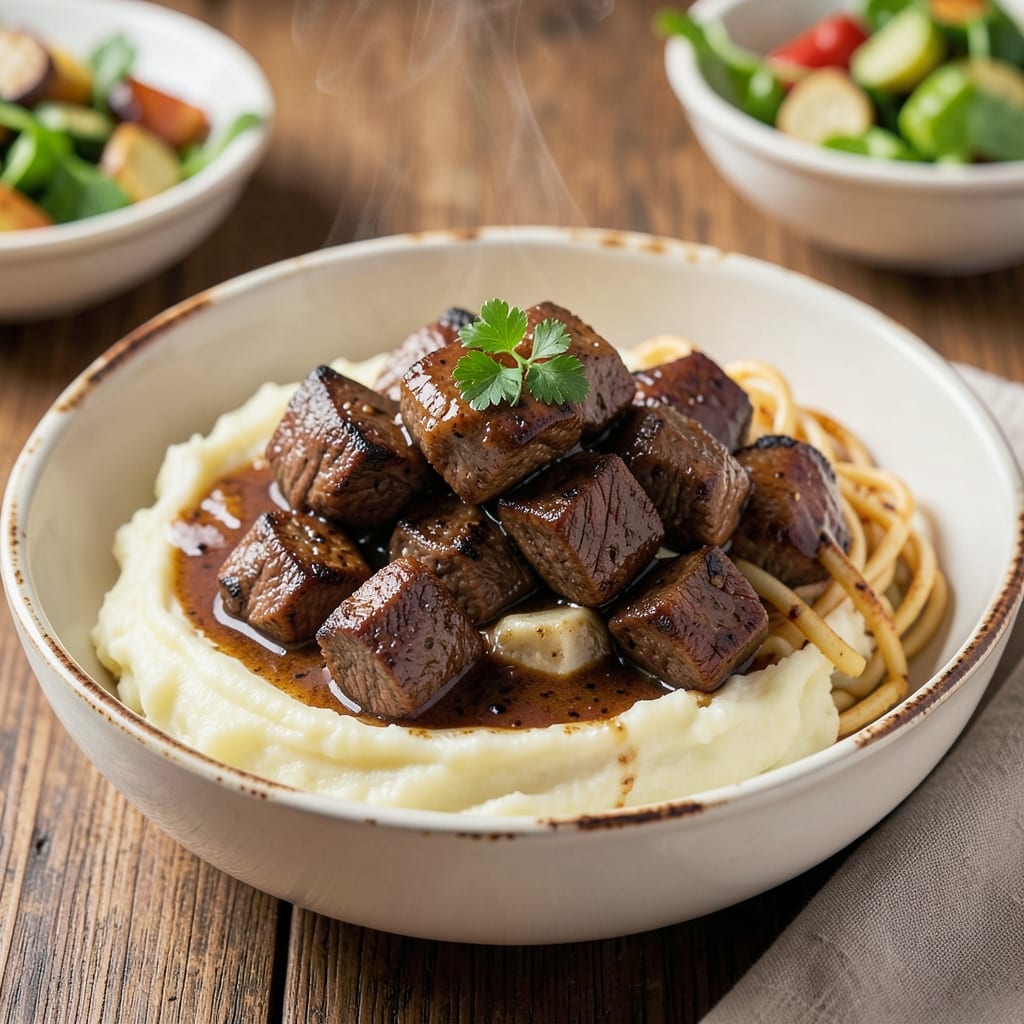
This beef and noodles over mashed potatoes recipe transforms a classic comfort meal into something heartier and more satisfying. The tender beef, rich gravy, and creamy mashed potatoes create layers of flavor that make every bite irresistible. I developed this recipe to bring restaurant-quality comfort to home kitchens, where simple ingredients become extraordinary when combined thoughtfully.
The secret lies in the cooking technique—searing the beef until deeply browned unlocks rich flavors that meld beautifully with the savory gravy. Meanwhile, the mashed potatoes are silky and buttery, providing the perfect base for the hearty beef and noodles to rest upon. This dish is perfect for chilly evenings when you crave a meal that feels like a warm embrace.
What makes this recipe stand out is the balance of textures and flavors: tender beef, al dente noodles, and velvety mashed potatoes all come together in harmony. The gravy ties everything together, ensuring each bite is packed with depth and richness. It’s the kind of dish that feels special yet comes together with straightforward steps.
Whether you’re feeding a family or treating yourself to a cozy meal, this recipe delivers on comfort without compromise. The combination of beef, noodles, and mashed potatoes creates a satisfying, filling dish that’s sure to become a staple in your rotation. Let’s get started on creating this hearty masterpiece.
Ingredients for beef and noodles over mashed potatoes
Simple ingredients that deliver restaurant-quality comfort and hearty satisfaction in every bite.
| Ingredient | Amount | Notes |
|---|---|---|
| Beef Chuck Roast 🥩 | 2 lb | Cut into 1-inch cubes, trimmed of fat |
| Egg Noodles 🍝 | 1 lb | Medium or wide egg noodles |
| Russet Potatoes 🥔 | 3 lb | Yukon Gold or similar for creaminess |
| Unsalted Butter 🧈 | ¾ cup | Cold, cut into 1-inch pieces |
| Heavy Cream 🥛 | 1 cup | Full-fat for richness |
| Beef Broth 💧 | 3 cups | Low-sodium preferred |
| Yellow Onion 🧅 | 1 whole | Medium size, diced |
| Garlic Cloves 🧄 | 6 cloves | Minced for depth of flavor |
| Tomato Paste 🍅 | 2 tbsp | Smooth, not chunky |
| Dried Thyme 🌿 | 1 tsp | Or 1 tbsp fresh thyme leaves |
| Worcestershire Sauce 🍶 | 1 tbsp | For umami depth |
| Dijon Mustard 🌶️ | 1 tsp | Adds subtle tang |
| Kosher Salt 🧂 | 1 ½ tsp | Adjust to taste |
| Ground Black Pepper 🌶️ | 1 tsp | Freshly ground preferred |
| Olive Oil 🫒 | ¼ cup | For searing beef |
The beef is the foundation—chuck roast delivers that melt-in-your-mouth tenderness when cooked low and slow. Look for well-marbled cuts at your butcher or the meat department, and ask for it to be cut into 1-inch cubes if pre-cut options aren't available. For the potatoes, Yukon Golds or Russets give the best texture, but any starchy potato will work. The heavy cream and butter are non-negotiable for that velvety mashed potato texture—full-fat versions make all the difference. If you're short on time, pre-cubed beef from the grocery store's frozen section works perfectly for this recipe.
No beef broth? Chicken or vegetable broth in a pinch, though beef adds that deeper flavor. Fresh thyme is ideal, but dried works at one-third the amount—just make sure it's not ancient. The tomato paste can be swapped for 1 cup crushed tomatoes if you prefer, though paste gives better consistency. For the Worcestershire sauce, Lee & Perrins is the classic choice, but any brand works. The Dijon mustard adds a subtle tang that balances the richness—skip it if you dislike tangy flavors. The olive oil should be a neutral variety for searing, while a fruity oil works better for finishing the mashed potatoes.
The beef and gravy can be prepped ahead and reheated beautifully—reheat gently on the stove to avoid drying out. Mashed potatoes are best made fresh, but you can parboil and refrigerate the cooked potatoes, then mash and reheat with extra butter and cream. This dish keeps well in the fridge for 3-4 days or freezes for up to 3 months. For leftovers, portion into individual containers so you can grab and reheat single servings. Store the gravy separately if you prefer it less thick when reheating—just add a splash of broth or water to loosen it up.
Why You'll Love This Recipe
- One-Pot Wonder: I swear by this trick—just sear the chuck roast, toss in the potatoes and noodles, then let it braise while you prep the table. The beef practically falls apart, and the creamy mashed potatoes soak up every last bit of flavor. (Yes, even on a Tuesday night.)
- Rich Without Effort: That heavy cream swirled into the potatoes? It’s the secret weapon. The beef stays tender but deep, the noodles get that perfect chewy bite, and somehow it still feels fancy. Honestly, it’s the kind of dish that makes you sound like a better cook than you actually are.
- Leftovers That Win: This meal actually improves the next day. The beef gets even more tender, the potatoes stay creamy, and you can toss extra noodles into a quick stir-fry or salad. I’ve fed my family for three days straight with just one cook—no takeout, no complaints.
- Budget Booster: Chuck roast is cheap, potatoes are cheap, and a pound of noodles lasts forever. You’re getting a full meal for less than half the cost of restaurant beef dishes. Plus, the leftovers stretch into lunches without breaking the bank. (My wallet thanks me every time.)
Step-by-step instructions for beef and noodles over mashed potatoes
This hearty dish combines rich beef stew with creamy mashed potatoes and egg noodles for ultimate comfort.
Sear the Beef Chuck Roast for Deep Flavor
Cut the 2 lb Beef Chuck Roast into 1-inch cubes and trim any excess fat. Heat 0.25 cup Olive Oil in a large Dutch oven over medium-high heat until shimmering. Working in batches, add the beef cubes and sear for 3-4 minutes per side until deeply browned. This step builds rich flavor through the Maillard reaction.
Remove the seared beef and set aside. In the same pot, add the diced Yellow Onion and cook for 5 minutes until softened. Stir in the 6 cloves Garlic Cloves and cook for 30 seconds until fragrant. Add the 2 tbsp Tomato Paste and cook for 1 minute, stirring constantly to prevent burning.
Build the Beef Stew Base
Return the seared beef to the pot. Pour in the 3 cups Beef Broth and add the 1 tsp Dried Thyme, 1 tbsp Worcestershire Sauce, 1 tsp Dijon Mustard, 1.5 tsp Kosher Salt, and 1 tsp Ground Black Pepper. Bring to a simmer, then reduce heat to low and cover. Let the stew cook for 2 hours, stirring occasionally, until the beef is fork-tender and the sauce has thickened.
Here's the thing—don't skip the simmering time. The low heat breaks down the connective tissue in the beef, creating a rich, velvety sauce. If the sauce reduces too much, add a splash of broth to maintain consistency.
Prepare Creamy Mashed Potatoes
While the beef stew simmers, peel and chop the 3 lb Russet Potatoes into 1-inch chunks. Place them in a large pot and cover with cold water by 1 inch. Bring to a boil over high heat, then reduce to a simmer and cook for 15-20 minutes until fork-tender.
Drain the potatoes thoroughly, then return them to the pot. Add the 0.75 cup Unsalted Butter and 1 cup Heavy Cream. Mash until smooth, adding more cream if needed for desired consistency. Season with additional Kosher Salt and Ground Black Pepper to taste. Keep warm in a covered pot.
Cook the Egg Noodles
Bring a large pot of salted water to a rolling boil. Add the 1 lb Egg Noodles and cook according to package instructions until al dente. Drain and set aside, reserving ½ cup pasta water for potential thinning of the sauce later.
Real talk: Don't overcook the noodles. They'll finish cooking in the beef sauce, and slightly underdone pasta absorbs more flavor. Toss the drained noodles with a bit of olive oil to prevent sticking while you assemble the dish.
Assemble and Serve
Divide the creamy mashed potatoes among 6 serving plates. Spoon the cooked egg noodles over the potatoes, then ladle the beef stew generously on top. The combination of tender beef, rich sauce, and creamy potatoes creates a satisfying, one-bowl meal.
Garnish with fresh parsley if desired, though the dish is delicious as-is. Serve immediately while the potatoes are warm and the beef is juicy. This dish delivers classic comfort food at its finest, with each component perfectly balanced in texture and flavor.
Pro Tips For Making Beef And Noodles Over Mashed Potatoes
- USE A COLD START: I learned this the hard way—dumping a raw chuck roast straight into a pot with boiling water turns it into a sad, gray brick. Instead, sear it first in a hot Dutch oven (no oil needed, the beef’s fat renders) until deep brown on all sides. That crust keeps the meat juicy when it eventually braises in the broth.
- PEEL THOSE POTATOES LAST: Russets oxidize fast, and nobody wants lumpy, waterlogged mash. Peel them right before boiling, then store them in cold water until you’re ready to cook. After boiling, drain thoroughly—I mean really drain—and hit them with a dry towel to squeeze out every last drop. Wet potatoes = gluey mash.
- DON’T SKIP THE NOODLE RINSE: Egg noodles stick like glue if you toss them straight into the beef broth. Rinse them under cold water first, then shock in ice water for 30 seconds to stop cooking. This keeps them from turning mushy when they hit the hot liquid later. (Yes, it’s extra work, but trust me—your dinner won’t be a sad, gummy mess.)
- STRETCH THE BROTH WITH CREAM LATE: Heavy cream in the wrong moment ruins everything—add it too early, and the sauce turns greasy. Instead, simmer the beef and veggies until the broth reduces by half, then whisk in the cream off the heat just before serving. This keeps the sauce rich without curdling, and the potatoes soak up the goodness instead of getting watered down.
Troubleshooting your beef and noodles over mashed potatoes
Beef Too Tough?
If your beef turns out tough instead of tender, it likely didn’t cook long enough. Chuck roast needs at least 2 hours of simmering at low heat to break down collagen. I’ve found that 2.5 hours guarantees perfect tenderness. If you’re short on time, try pressure cooking for 90 minutes on high—it mimics the low-and-slow process. Always check the internal temperature with a meat thermometer—195°F is your target for fork-tender results. 💡
Sauce Too Thin?
If your gravy is watery, it’s probably because the beef released too much liquid during cooking. To fix it, remove the beef and reduce the sauce uncovered over medium-high heat for 5-7 minutes, stirring frequently. For future attempts, skim excess fat from the top before reducing. Alternatively, mix 1 tbsp cornstarch with 2 tbsp cold water, stir into the sauce, and simmer for 2 minutes until thickened. 🥄
Mashed Potatoes Gritty?
Gritty mashed potatoes usually mean undercooked potatoes or improper draining. First, ensure your potatoes are fork-tender before mashing—15-20 minutes in boiling water is ideal. After draining, press them through a ricer or potato masher to eliminate lumps. For extra smoothness, add 1-2 tbsp warm milk while mashing. I swear by Yukon Golds for their naturally creamy texture. 🥔
Noodles Mushy?
Overcooked noodles happen when you don’t follow the package instructions closely. Egg noodles should be al dente—1-2 minutes less than the package suggests. They’ll finish cooking in the beef sauce. If they’re already mushy, try tossing them with 1 tbsp olive oil and 1 tsp lemon juice to brighten their flavor. For future attempts, reserve ½ cup pasta water to thin the sauce if needed. 🍝
Gravy Too Salty?
If your gravy tastes overly salty, don’t panic—there’s an easy fix. Stir in 1-2 tbsp heavy cream or milk to dilute the saltiness. For future batches, taste the gravy before adding all the salt, and adjust gradually. If you’re using low-sodium broth, you might need to add extra salt to balance flavors. I keep a small bowl of unsalted butter nearby to stir in—it helps smooth out harsh flavors. 🧈
Dish Too Dry?
If your beef and noodles over mashed potatoes feels dry, it’s likely because the sauce reduced too much. To fix it, loosen the sauce with 2-3 tbsp beef broth or water while reheating. For prevention, keep the beef and sauce covered while simmering to retain moisture. If the mashed potatoes are dry, fold in an extra 1-2 tbsp heavy cream and 1 tbsp butter while reheating. 💫
Nutrition facts
Frequently asked questions
Can I substitute ground beef for chuck roast?
Ground beef works in a pinch, but it won't give the same rich, tender texture. For best results, stick with chuck roast cut into 1-inch cubes—it develops deep flavor and becomes fork-tender when slow-cooked. If you must use ground beef, brown it well first and cook it for 10-15 minutes to develop flavor, but expect a slightly different texture.
How do I make this dish ahead of time?
This recipe is perfect for meal prep! Cook the beef stew and mashed potatoes up to 2 days ahead, then refrigerate. Reheat the stew gently on the stove, adding a splash of broth if needed. For the mashed potatoes, reheat with extra butter and cream. Cook the noodles fresh before serving. The flavors actually improve overnight!
What's the best way to reheat leftovers?
Reheat leftovers gently to prevent drying out. Place the beef and sauce in a skillet over low heat for 5-7 minutes, stirring occasionally. For the mashed potatoes, warm them in a covered pot with 1-2 tbsp milk or cream. Never microwave—it makes the potatoes gummy. Reheat noodles separately for 30 seconds in the microwave with a splash of water.
Can I make this vegetarian?
Swap the beef for mushrooms or lentils—both work well. For mushrooms, use 1 lb cremini or portobello sliced and sautéed until browned. For lentils, cook 1.5 cups dried brown lentils until tender, then proceed with the recipe. The gravy will still be rich and flavorful.
Why are my mashed potatoes watery?
Watery mashed potatoes usually mean you didn't drain them well or added too much liquid. Always drain thoroughly and press the potatoes through a ricer or fine-mesh strainer. For creaminess, use cold butter and heavy cream—they melt into the potatoes as they warm. If needed, add 1 tbsp flour while mashing to absorb excess moisture.