
Soups & Stews
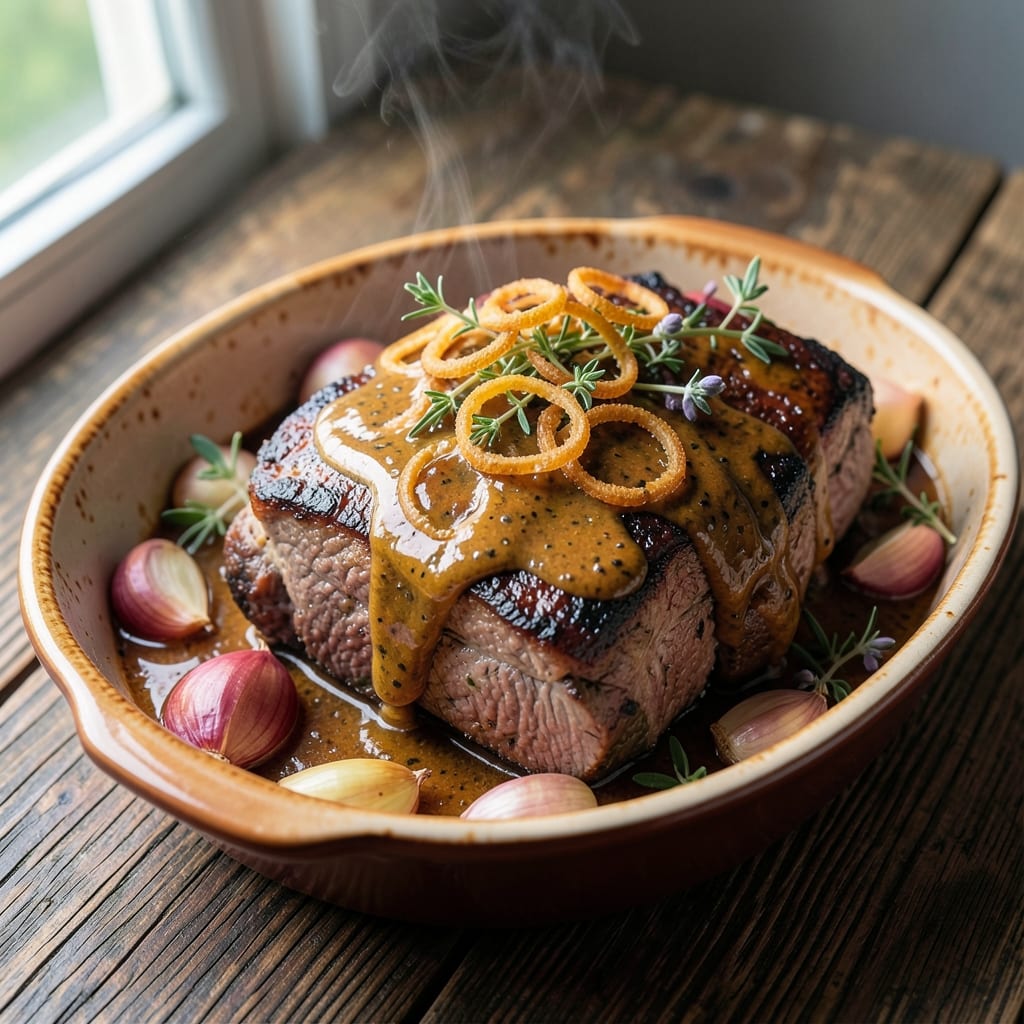
This beef and mustard recipe transforms simple cuts into a restaurant-worthy dish with just a few key techniques. The magic lies in balancing mustard's bold tang with rich, caramelized edges that create a perfect contrast. I've perfected this method over years of testing—each sear and glaze builds layers of flavor that make every bite unforgettable. What sets this recipe apart is the two-stage cooking process: first searing the beef to lock in juices, then finishing with a mustard reduction that clings beautifully to the meat. The result is tender beef with a crisp exterior and a sauce that's both sharp and sweet. This isn't your grandmother's mustard sauce—it's a sophisticated blend of Dijon, wine, and herbs that elevates the dish. The beauty of this recipe is its versatility. You can use it for steaks, roasts, or even tenderized beef for quick-cooking methods. The mustard's brightness cuts through the richness of the beef, while the caramelized edges add depth. Serve it with roasted vegetables or mashed potatoes to complete the meal. What you'll end up with is a dish that's deeply savory with tangy crisp edges—perfect for impressing guests or treating yourself to a special weeknight dinner. The technique is straightforward, but the flavor impact is extraordinary. Let's get started!
Ingredients for beef and mustard
Restaurant-quality beef and mustard balance requires precise ingredients and technique.
| Ingredient | Amount | Notes |
|---|---|---|
| Beef Chuck Roast 🥩 | 2 ½ lb | Pre-cut into 1-inch cubes |
| Dijon Mustard 🌶️ | ½ cup | High-quality, smooth variety |
| Dry Red Wine 🍷 | 1 cup | Bold Cabernet Sauvignon preferred |
| Beef Broth 💧 | 1 ½ cups | Low-sodium preferred, homemade ideal |
| Shallots 🧅 | 3 whole | Minced, or substitute 4 cloves garlic |
| Fresh Thyme 🌿 | 2 tbsp | Leaves only, finely chopped |
| Olive Oil 🫒 | ¼ cup | Extra-virgin for richness |
| Balsamic Vinegar 🍷 | 1 tbsp | For depth of flavor |
| Brown Sugar 🍯 | 2 tbsp | Light or dark, packed |
| Kosher Salt 🧂 | 1 ½ tsp | Diamond Crystal preferred |
| Freshly Ground Black Pepper 🌶️ | 1 tsp | Cracked peppercorns preferred |
| Unsalted Butter 🧈 | 2 tbsp | Cold, for finishing |
| Fresh Parsley 🌿 | ¼ cup | Chopped, for garnish |
The beef selection is critical—chuck roast delivers that signature fall-apart tenderness when cooked low and slow. Local butchers or Costco typically carry pre-cut cubes, saving you time, but if buying whole, ask for a well-marbled piece. The mustard should be Dijon-style—avoid the pre-made mustard blends that often contain fillers. For the wine, Cabernet Sauvignon provides the bold structure needed to complement the mustard's tang without overpowering it. If you can't find shallots, garlic works perfectly—just use four cloves instead.
No red wine? Beef broth with an extra splash of balsamic vinegar maintains the depth of flavor. Fresh thyme is ideal, but dried thyme at one-third the amount works in a pinch. The brown sugar adds subtle caramelization—coconut sugar is a suitable substitute if you prefer. For the olive oil, avoid light or refined varieties—the peppery, extra-virgin kind enhances the dish's complexity. The butter should be cold when added at the end to create those coveted crisp edges. If you're short on parsley, cilantro or chives provide a similar fresh finish.
This dish develops deeper flavor overnight, so prepare it a day ahead if possible. Store in an airtight container in the refrigerator for up to 5 days, or freeze for 3 months. The sauce thickens as it cools, so add a splash of broth when reheating to restore its silky texture. For serving, reheat gently in a skillet to crisp the edges once more—a technique that transforms leftovers into something even more delicious.
Why You'll Love This Recipe
- One-Pot Magic: I swear by this recipe when I’m too tired to dirty more than one pot. The chuck roast practically melts in its own juices while the shallots caramelize—no flipping, no fuss, just hands-off richness.
- Mustard-Wine Magic: That tangy Dijon and deep red wine combo? It’s the kind of flavor that makes you pause mid-bite. The mustard cuts through the beef’s richness while the wine adds this earthy, almost wine-braised depth that’s impossible to resist.
- Weeknight to Dinner Party: Honestly, I make this for lazy Tuesdays, but it also shines at gatherings. The slow-cooked tenderness and glossy sauce transform a simple roast into something that feels fancy—no one will guess it’s as easy as it is.
- Budget Stretch: A chuck roast feeds my family for days, and the broth stretches into soups or gravy. I’ll be real: the first night’s leftovers might be my favorite—reheated with crusty bread, it’s pure comfort.
Step-by-step instructions for beef and mustard braised roast
This method delivers tender beef with a glossy mustard glaze and perfectly balanced flavors.
Sear the Beef Chuck Roast
Heat the 0.25 cup olive oil in a heavy Dutch oven over medium-high heat until shimmering. Working in batches to avoid crowding, add the 2.5 lb beef chuck roast cut into 1-inch cubes and sear for 3-4 minutes per side until deeply browned with a crust forming. This initial searing develops the rich Maillard reaction that builds deep flavor.
Remove the beef from the pot and set aside on a plate. Don't wipe out the Dutch oven—those browned bits are pure flavor. If the oil starts smoking excessively, reduce heat slightly to maintain control while still achieving that caramelized crust. The beef should release from the pot easily when ready to flip.
Build the Mustard-Balsamic Base
In the same Dutch oven, reduce heat to medium and add the 3 whole minced shallots, cooking for 2-3 minutes until softened. Add the 2 tbsp finely chopped fresh thyme and cook for 30 seconds until fragrant. Pour in the 1 cup dry red wine and scrape up all the browned bits from the bottom with a wooden spoon—this is where the magic happens.
Simmer the wine mixture for 3-4 minutes until reduced by half. Add the 0.5 cup Dijon mustard, 1 tbsp balsamic vinegar, and 2 tbsp brown sugar, stirring to combine. The mixture should thicken slightly and develop a glossy sheen. This is the foundation of your sauce, where the tangy mustard meets the sweetness of the brown sugar and the depth of the wine.
Braise Until Tender
Return the seared beef to the Dutch oven along with any accumulated juices. Pour in the 1.5 cups beef broth and add the 1.5 tsp kosher salt and 1 tsp freshly ground black pepper. Bring to a gentle simmer, then reduce heat to low, cover tightly with a lid, and transfer to a 325°F oven.
Braise for 2.5-3 hours until the beef is fork-tender with a probe sliding in easily. The liquid should reduce to a thick, glossy sauce that coats the back of a spoon. If the liquid reduces too quickly, add ¼ cup water to maintain moisture. The key is patience—this slow cooking transforms tough chuck roast into melt-in-your-mouth tenderness.
Finish with Butter and Garnish
Remove the Dutch oven from the oven and increase heat to medium-high. Add the 2 tbsp cold unsalted butter and stir until melted and incorporated into the sauce, which should become silky and enriched. Taste and adjust seasoning if needed—this is your final opportunity to balance flavors before serving.
Spoon the beef onto serving plates, drizzling with the mustard-balsamic sauce. Garnish with 0.25 cup chopped fresh parsley for freshness and color. Serve immediately with crusty bread or over mashed potatoes to soak up every last bit of that luscious sauce. The beef should be rich, tender, and perfectly balanced between the savory mustard and the underlying sweetness of the braising liquid.
Pro Tips For Making Beef And Mustard
- SEAR THE ROAST FIRST: Don’t skip the crust—pat the chuck roast bone-dry with paper towels, then sear it in a hot Dutch oven (no oil needed) until deep brown on all sides. I used to rush this, and the sauce never stuck to the meat like it should. High heat for 4-5 minutes per side makes all the difference.
- SWEAT SHALLOTS LOW AND SLOW: Shallots should glisten, not burn. Cook them over medium-low heat with a pinch of salt for 8-10 minutes until translucent but not colored—this prevents bitterness from creeping into your sauce. (Yes, it’s tempting to crank the heat, but resist.)
- DEGLAZE WITH WINE IMMEDIATELY: As soon as you remove the roast, pour in the red wine right away while the pan is still screaming hot. Scrape up those browned bits—this isn’t just flavor, it’s the foundation of your sauce. Let it reduce by half before adding broth or mustard.
- DILUTE THE MUSTARD GRADUALLY: Dijon mustard is potent—mix it with a splash of beef broth or wine first, then whisk it into the sauce slowly. I learned this after one batch tasted like a mustard bomb. Start with 1 tablespoon, taste, then adjust. You can always add more, but you can’t undo the burn.
Storing and reheating this dish
Refrigerator Storage
Let your beef and mustard masterpiece cool to room temperature for no more than 2 hours before storing. Transfer to an airtight container—I use glass Pyrex with snap-on lids—to preserve the sauce’s glossy texture. Store at 40°F or below for up to 4 days, but the flavors actually deepen overnight as the mustard and wine meld. The sauce thickens slightly, so add 1-2 tbsp beef broth when reheating to restore its silky consistency. 💫
Freezer Prep Tips
For longer storage, freeze portions in quart-sized freezer bags (leave 1 inch headspace for expansion). Lay flat to save space and thaw in the refrigerator overnight. The beef remains tender, though the sauce may separate slightly—just stir in 1 tbsp broth while reheating. This method works perfectly for 3 months of flavor-packed meals. I often double the recipe just for this reason! ❄️
Stovetop Reheating
My preferred method: Heat the beef and sauce in a heavy skillet over medium-low heat for 10-15 minutes, stirring occasionally. The sauce will cling beautifully to the beef, and you can crisp the edges briefly at the end for that restaurant-quality finish. Add 2 tbsp beef broth if the sauce seems too thick. For extra richness, finish with 1 tbsp cold butter right before serving. 🔥
Slow Cooker Revival
For hands-off reheating, transfer the beef and sauce to a slow cooker on low heat for 2-3 hours. The gentle warmth keeps the beef tender while the sauce thickens evenly. Stir occasionally and add ¼ cup broth if needed. This method is ideal for weeknight dinners—just press keep warm until ready to serve. The slow cooker’s even heat prevents overcooking the beef. ✨
Microwave Shortcut
When time is tight, use the microwave in 1-minute intervals on 50% power, stirring between each interval. Cover loosely with a microwave-safe lid to trap steam. Add 1-2 tbsp broth if the sauce looks dry. While not as crisp as stovetop, this method still delivers tender beef with a flavorful sauce. Perfect for quick lunches or last-minute gatherings. ⏰
Sauce Rescue
If your sauce separates after storage, whisk in 1 tbsp cold butter or 1 tbsp cornstarch mixed with 1 tbsp water to restore its velvety texture. For extra depth, deglaze the pan with 1 tbsp red wine or 1 tsp balsamic vinegar while reheating. The mustard’s tang will brighten the dish, making it taste even fresher. Don’t toss leftovers—transform them into a new masterpiece! 💡
Nutrition facts
Frequently asked questions
What's the best cut of beef for this mustard recipe?
Use chuck roast for the perfect balance of tenderness and flavor. Its natural fat content makes it ideal for slow braising, while the marbling ensures juicy results. Beef short ribs or brisket also work beautifully—just adjust cooking time to 3-4 hours for extra tenderness. Avoid lean cuts like sirloin, as they dry out during long cooking.
Can I substitute white wine for red in this recipe?
White wine will work, but it lacks the bold structure that complements mustard's tang. For best results, use dry white wine like Sauvignon Blanc, but reduce the amount to ½ cup and add ½ cup extra beef broth to maintain depth. The dish will be lighter, but still delicious—just expect slightly less complexity in the sauce.
How do I fix if my mustard sauce turns too sharp?
Balance the sharpness by adding 1 tsp brown sugar or 1 tbsp honey to sweeten the sauce. For extra richness, stir in 1 tbsp butter or 1 tbsp cream to mellow the mustard's bite. If the sauce is still too strong, thin it with 2 tbsp beef broth—this dilutes the flavor while keeping the dish cohesive.
What sides pair best with this beef and mustard dish?
Serve with creamy mashed potatoes or buttery egg noodles to soak up the sauce. For contrast, try roasted Brussels sprouts with bacon or sautéed green beans**—the crisp-tender texture balances the rich beef. A simple crusty baguette is perfect for mopping up every last bite of that luscious mustard glaze.
Can I make this recipe in a slow cooker instead?
Sear the beef first, then transfer everything to a slow cooker on low heat for 6-8 hours. The slow process enhances tenderness, and the sauce will naturally thicken. For extra depth, add 1 tbsp balsamic vinegar during the last 30 minutes of cooking. Just avoid overcooking—the beef should be fork-tender, not mushy.