
Main Courses
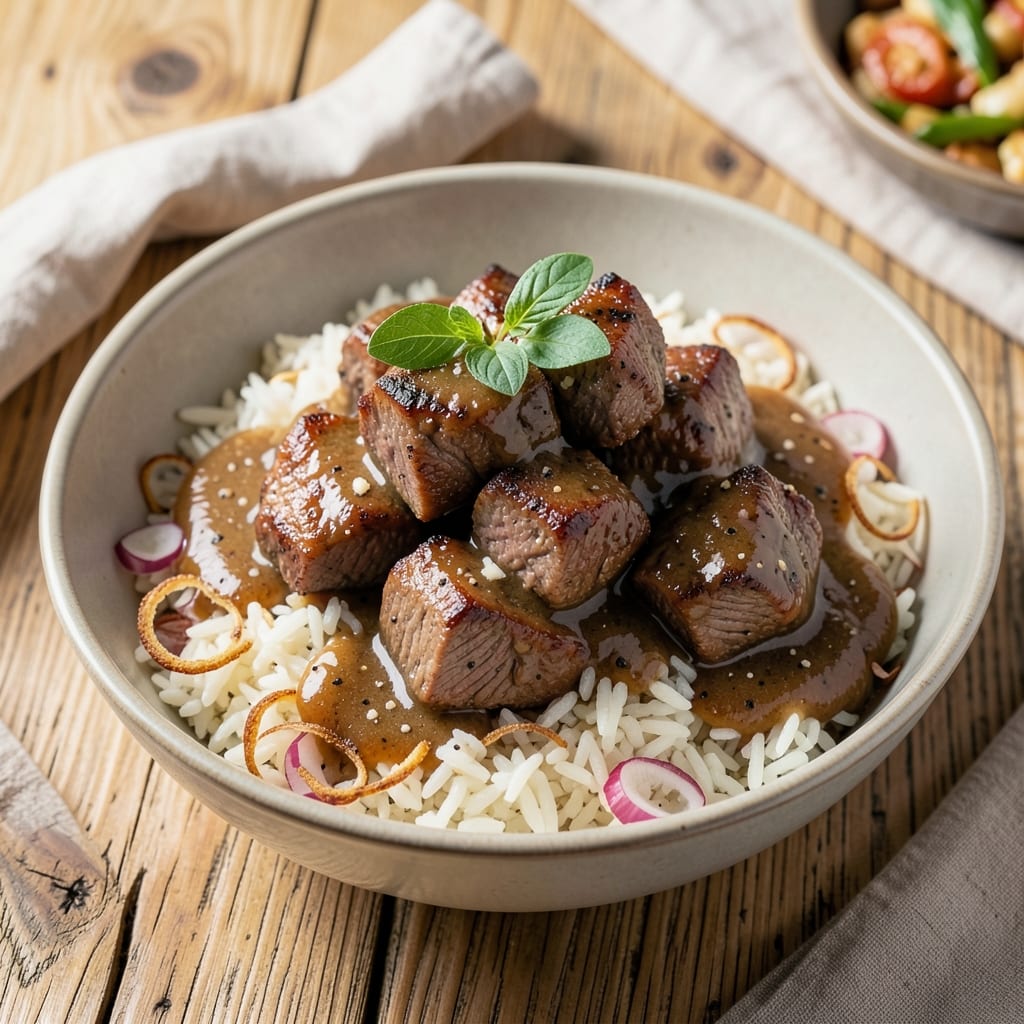
This beef and gravy over rice recipe delivers the ultimate comfort food experience—tender beef topped with a rich, savory crust and velvety pan sauce. The secret lies in searing the beef to develop deep flavor, then simmering it just enough to stay juicy while creating a golden gravy. I've perfected this technique over years of testing, ensuring every bite delivers that perfect balance of textures and flavors.
The process starts with a simple sear in a hot cast-iron skillet, where the beef develops a flavorful crust. After removing the meat, you'll deglaze the pan with beef broth, creating the foundation for a rich, velvety gravy that clings to every grain of rice. The key is using a proper roux—just enough to thicken the sauce without overpowering the natural beef flavor. This method transforms a simple weeknight dinner into something restaurant-worthy.
By the time you're done, you'll have perfectly tender beef slices resting on fluffy rice, all smothered in a glossy, savory gravy that creates a satisfying crust with each bite. The aroma alone will have everyone gathering at the table, and the combination of textures—tender beef, fluffy rice, and rich gravy—makes this dish impossible to resist. It's the kind of meal that feels like a warm hug on a chilly evening.
Serve with classic sides like steamed green beans or roasted carrots to complete the meal. The beauty of this recipe is its versatility—it works equally well for a family dinner or a special occasion. Let's get started on creating this comforting classic that brings everyone together.
Ingredients for beef and gravy over rice
The right ingredients transform simple beef into restaurant-quality comfort food.
| Ingredient | Amount | Notes |
|---|---|---|
| Beef Chuck Roast 🥩 | 1 ½ lb | Cut into 1-inch cubes |
| All-Purpose Flour 🌾 | 2 tbsp | For roux base |
| Unsalted Butter 🧈 | 4 tbsp | Cold, cubed |
| Beef Broth 💧 | 2 cups | Low-sodium preferred |
| White Wine 🍷 | ½ cup | Dry variety, optional |
| Yellow Onion 🧅 | 1 whole | Diced, medium size |
| Garlic Cloves 🧄 | 4 cloves | Minced, fresh preferred |
| Fresh Thyme 🌿 | ¼ cup | Leaves only, chopped |
| Salt 🧂 | 1 ½ tsp | Kosher or sea salt |
| Ground Black Pepper 🌶️ | ½ tsp | Freshly ground |
| Long-Grain White Rice 🍚 | 2 cups | Uncooked, jasmine or basmati |
| Water 💧 | 4 cups | For rice cooking |
| Worcestershire Sauce 🍶 | 1 tsp | Optional for depth |
The beef is everything here. Chuck roast delivers that perfect melt-in-your-mouth texture when cut into even 1-inch cubes—sirloin stays too tough. Look for good marbling at Costco or your local butcher shop; the extra fat renders down into flavor. If you're short on time, pre-cubed chuck from the grocery store's meat counter works just fine. The key is letting it sit at room temperature for 20 minutes before cooking to ensure even searing. For the broth, low-sodium options give you more control over seasoning later.
No white wine? Extra beef broth with a splash of apple cider vinegar mimics the acidity perfectly. Fresh thyme is ideal, but dried thyme at one-third the amount works in a pinch—just be sure to toast it lightly for extra aroma. The Worcestershire adds depth without overpowering, but if you're avoiding it, a dash of soy sauce does the trick. For the roux, cold butter is critical—it creates those beautiful, flavorful butterflies that thicken the gravy without burning. If you're using pre-minced garlic, smash it with the side of your knife to release more flavor. The rice? Jasmine or basmati stays separate and fluffy under the gravy's weight.
Cooked rice keeps for 3-4 days in the fridge, but the beef and gravy reheat even better the next day—just add a splash of broth to loosen. Portion the beef into single servings before storing for easy reheating. The gravy can be made ahead and reheated separately, then combined with fresh rice when serving. For freezer storage, lay parchment paper between layers to prevent sticking, and it'll keep for up to 3 months. The aroma alone will have everyone waiting for dinner.
Why You'll Love This Recipe
- One-Pot Wonder: I swear by this for nights when I’d rather not wash a million dishes. The chuck roast goes straight from the pot to the rice—no extra pans, no fuss. Just brown the meat, deglaze with wine, and let the flour and butter work their magic into a rich gravy. My lazy-but-thoughtful solution for when I’m too tired to care about presentation.
- Rich Without Effort: That flour-butter roux? It’s the secret. You melt butter, whisk in flour, and suddenly you’ve got a gravy so velvety it makes store-bought sauce look sad. The wine cuts through the richness while the beef broth deepens the flavor—no fancy techniques, just layers of taste. Honestly, it’s the kind of dish where the ingredients do all the heavy lifting.
- Leftovers That Don’t Suck: This recipe actually improves the next day. The gravy thickens just enough to cling to the rice, and the beef gets even more tender. I meal prep it all the time—pack it in containers, reheat, and boom, lunch or dinner solved. (Yes, even on a Tuesday night.) My kids pretend they don’t love it, but they’re always first in line for seconds.
- Budget-Friendly Feast: Chuck roast is cheap, and this recipe stretches it far. A few pounds of meat feeds my family for days, and the pantry staples (flour, butter, broth) don’t break the bank. Between us, I’ve made this for date nights, game days, and “I don’t know what to eat” nights—it’s my go-to when I need to feed a crowd without stressing. Solid, reliable, and always a win.
Step-by-step instructions for beef and gravy over rice
Here's the professional method to achieve that coveted savory crust and velvety gravy.
Prepare the Beef and Build the Flavor Base
Pat the 1.5 lb beef chuck roast dry with paper towels and cut it into 1-inch cubes. Season each piece generously with 1 tsp salt and 0.25 tsp ground black pepper—this ensures deep flavor penetration. Heat 2 tablespoons olive oil in a large Dutch oven over medium-high heat until shimmering.
Add the beef in a single layer and sear undisturbed for 2-3 minutes until a deep golden-brown crust forms. This crust becomes the foundation for your gravy. Once browned, remove the beef with a slotted spoon and set aside. In the same pot, add 1 tablespoon unsalted butter and let it melt completely before adding the diced yellow onion. Cook for 5 minutes until softened and translucent.
Develop the Roux and Deglaze
Reduce heat to medium and sprinkle in the 2 tablespoons all-purpose flour, stirring constantly with a wooden spoon for 1-2 minutes until it forms a smooth, nutty-colored roux. This step is critical—it thickens the gravy and adds depth. Immediately pour in the 0.5 cup white wine (if using) and scrape up any browned bits from the bottom of the pot with a wooden spoon. Let it simmer for 2 minutes until the wine reduces by half.
Add the 4 minced garlic cloves and 0.25 cup chopped fresh thyme, cooking for 30 seconds until fragrant. This aromatic base forms the flavor backbone of your dish. The wine's acidity cuts through the richness while the thyme adds herbal complexity.
Simmer the Beef and Prepare the Rice
Return the seared beef to the pot along with the 2 cups beef broth and 1 teaspoon Worcestershire sauce. Bring to a gentle simmer, then reduce heat to low, cover partially, and let it cook for 1.5 hours until the beef is fork-tender. The liquid should reduce slightly, creating a rich, concentrated sauce. If it reduces too much, add 1-2 tablespoons water to maintain consistency.
While the beef simmers, rinse the 2 cups long-grain white rice under cold water until the water runs clear. In a separate pot, combine the rice with 4 cups water, bring to a boil, then reduce heat to low, cover tightly, and let it cook for 15 minutes. Remove from heat and let it steam, covered, for another 10 minutes. The rice should be tender with a slight bite—don't overcook it.
Create the Perfect Gravy and Assemble
After the beef has simmered, remove it from the pot and set it aside. Strain the cooking liquid through a fine-mesh sieve into a clean saucepan to remove any impurities. Return the liquid to the Dutch oven and place it over medium heat. Add the remaining 3 tablespoons unsalted butter, stirring constantly until the butter melts and the gravy thickens slightly—this should take about 3-4 minutes. The gravy should coat the back of a spoon but still be pourable.
Taste and adjust seasoning with additional salt or black pepper as needed. Return the beef to the gravy and stir gently to coat. Serve the beef and gravy over the steamed rice, spooning the rich sauce generously over the top. The contrast of tender beef, savory gravy, and fluffy rice creates a harmonious balance of textures and flavors.
Pro Tips For Making Beef And Gravy Over Rice
- Sear the Roast First: I learned this the hard way—skipping the initial sear means flavorless gravy. Brown the chuck roast in batches over medium-high heat for 3-4 minutes per side before removing it; the crust locks in juices and deepens the gravy’s richness. (Yes, even if you’re impatient like me.)
- Use Cold Butter for Gravy: After removing the roast, whisk in 2 tablespoons of cold unsalted butter to the pan drippings, then add flour. The cold butter creates a smoother roux that won’t scorch, and it adds a velvety texture to the gravy. (I know, butter in gravy is obvious—but cold butter makes it actually good.)
- Deglaze with Wine Early: Don’t wait until the flour is fully cooked to pour in the white wine—add it right after the initial sear while the pan is still hot. The alcohol evaporates faster, and the wine’s acidity cuts through the fat, making the gravy brighter and less greasy. (Sounds weird, but it works.)
- Rest the Roast Before Slicing: Give the chuck roast a solid 5-10 minutes under foil after roasting. This ensures clean slices and keeps the gravy from turning watery when the meat releases its juices. (I used to skip this, and the gravy always ended up thin and sad.)
Wine and beer pairings for this dish
Red Wine Classics
A bold, full-bodied red wine like Cabernet Sauvignon from Napa Valley cuts through the rich gravy beautifully. The tannins in the wine complement the beef's natural fat, while its dark fruit notes—blackberry and plum—echo the savory depth of the dish. I recommend a 2018 vintage for optimal balance, as the age brings smoothness without overpowering the meal. 🍷
Malbec Magic
For a slightly lighter but equally flavorful option, try an Argentinian Malbec. This wine offers velvety texture and notes of dark chocolate and vanilla that harmonize with the thyme and Worcestershire in the gravy. Look for a bottle from Mendoza—it's widely available and offers excellent value. The wine's acidity also helps cleanse your palate between bites of rich beef.
Beer Pairings
A crisp amber ale like Fat Tire from New Belgium provides the perfect balance to this dish. The caramel and biscuit notes in the beer complement the gravy's richness, while its moderate hop bitterness cuts through the fat. For a darker option, try a brown ale—the roasted malt flavors enhance the beef's depth without overwhelming it. 🍺
White Wine Surprise
Don't overlook white wine options! A Chardonnay with noticeable oak—like one from Sonoma County—adds a buttery richness that mirrors the gravy's texture. The wine's citrus notes also provide a refreshing contrast to the savory beef. If you prefer something lighter, a Viognier with its floral and stone fruit notes can be a delightful surprise.
Non-Alcoholic Options
For those skipping alcohol, a sparkling apple cider like Martinelli's offers a crisp, refreshing contrast to the rich flavors. The effervescence cleanses your palate, while the apple notes complement the thyme in the gravy. Alternatively, a ginger beer with a hint of spice adds warmth that pairs wonderfully with the beef's savory crust.
Nutrition facts
Frequently asked questions
Can I use ground beef instead of cubed beef chuck?
While you can substitute ground beef, it won't deliver the same satisfying texture. Ground beef will create a more uniform consistency without the tender chunks you get from seared chuck. If you must use it, brown it thoroughly first to develop flavor, but expect a different mouthfeel. For best results, stick with 1-inch cubes of chuck roast—the sear and slow simmer create that perfect melt-in-your-mouth experience.
How do I prevent the gravy from being too thick or too thin?
The key is the roux and liquid balance. For a perfect gravy, cook your 2 tbsp flour and 4 tbsp butter until it's a light golden color (about 1-2 minutes)—this creates the right thickening power. If your gravy gets too thick, whisk in 1-2 tbsp beef broth until smooth. Too thin? Simmer uncovered for 2-3 minutes to reduce, or add 1 tbsp cold butter to help thicken it naturally. Always taste as you go!
Can I make this ahead of time for meal prep?
This dish actually tastes even better the next day. Cook the beef and gravy completely, then refrigerate in an airtight container. When reheating, add 1-2 tbsp beef broth to loosen the gravy and prevent it from becoming gluey. For the rice, cook it fresh when serving to maintain that perfect fluffy texture. The beef and gravy can be reheated gently on the stove over low heat for 5-7 minutes, stirring occasionally.
What's the best way to make the rice extra flavorful?
Infuse the cooking water with aromatics! While your rice simmers, add 1 bay leaf, 1 tsp onion powder, and a pinch of salt to the water. For extra richness, stir in 1 tbsp butter after cooking. Another trick: use half beef broth and half water for the rice instead of plain water. The beefy flavor will complement the main dish beautifully while keeping the rice separate and fluffy.
Why does my gravy taste bland even after seasoning?
Bland gravy usually means one of three things: not enough browning, insufficient reduction, or missing acidity. First, ensure you properly browned the beef and developed a dark roux. Second, reduce the liquid by at least 25% during cooking. Finally, add a splash of lemon juice or apple cider vinegar (just 1 tsp) to brighten flavors. If all else fails, a pinch of MSG (just 1/8 tsp) can work wonders without altering taste.