
Main Courses
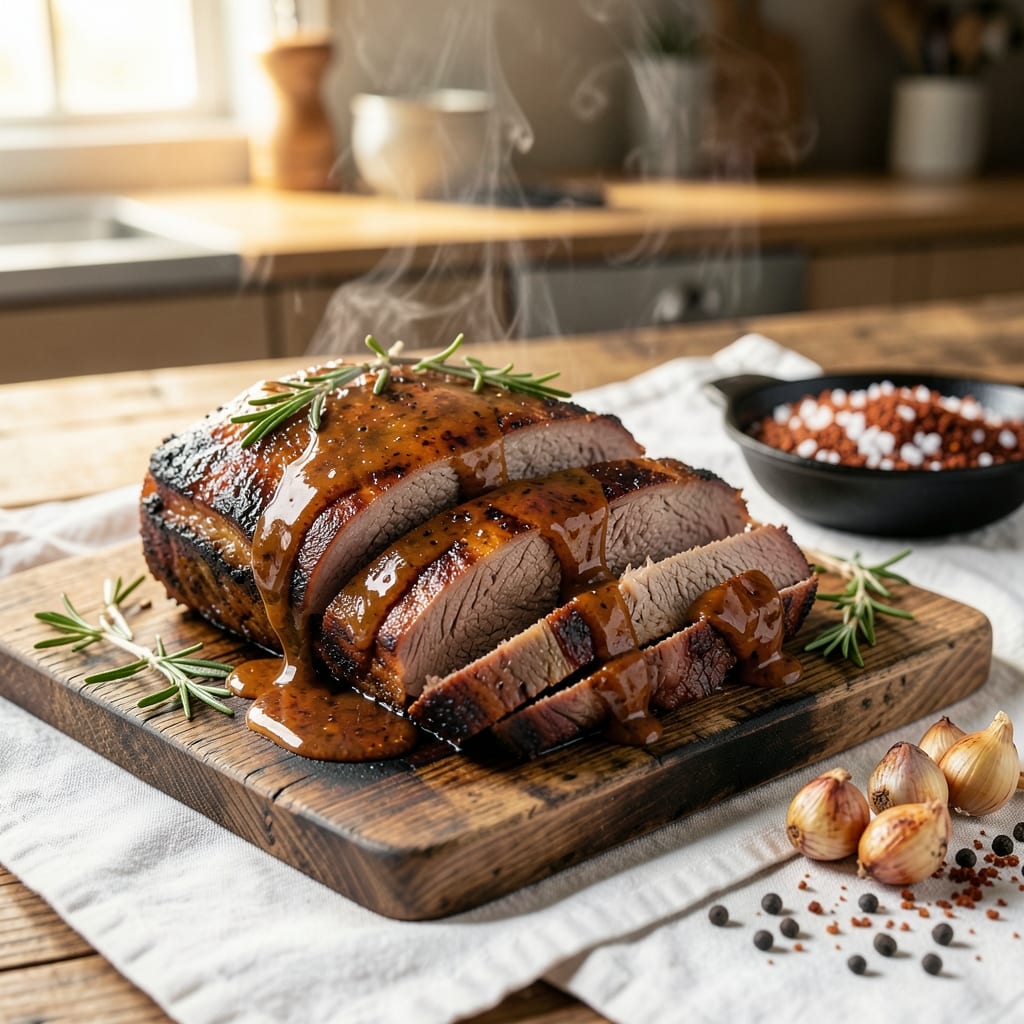
This BBQ beef brisket recipe transforms tough cuts into melt-in-your-mouth perfection through the science of slow grilling and Maillard magic. 🔥 The key lies in patience—low-and-slow cooking at 225°F–250°F for 8–12 hours breaks down collagen, while a final sear at 400°F+ creates that coveted bark. I perfected this technique after years of trial and error, and it’s become my go-to for gatherings where people actually wait for the meal.
The secret weapon? A dry rub of smoked paprika, brown sugar, and garlic powder that clings to the brisket like armor, while a spritz of apple cider vinegar keeps the surface moist during cooking. No fancy equipment needed—just your grill (or smoker) and time. The result is brisket so tender it falls apart at the touch, with layers of smoky depth that’ll have your guests asking for seconds before dessert.
What makes this recipe stand out is the balance of texture and flavor: the outer bark is crispy enough to stand up to a napkin, while the inside is so tender it practically dissolves. The fat cap renders perfectly, basting the meat in its own juices, and the aroma alone will have everyone gathering around the grill. This isn’t just BBQ—it’s a centerpiece.
Serve with classic sides like baked beans, coleslaw, and cornbread to complete the meal. The brisket’s richness pairs beautifully with tangy sauces or even just a sprinkle of flaky salt. Here’s how to make it happen—step by step, with all the tips I’ve learned along the way.
Ingredients for bbq beef brisket recipe grill
Eight ingredients transform tough brisket into melt-in-your-mouth perfection through slow grill magic.
| Ingredient | Amount | Notes |
|---|---|---|
| Beef Brisket 🥩 | 6 lb | Packaged with fat cap intact |
| Smoked Paprika 🌶️ | ½ cup | High quality, not cayenne |
| Brown Sugar 🍚 | ¼ cup | Light or dark preferred |
| Garlic Powder 🧄 | 2 tbsp | Freshly ground for best flavor |
| Kosher Salt 🧂 | ½ cup | Diamond Crystal preferred |
| Black Pepper 🌶️ | 2 tbsp | Freshly ground for depth |
| Onion Powder 🧅 | 1 tbsp | Adds sweet complexity |
| Apple Cider Vinegar 🍎 | ½ cup | For spritzing during cook |
| Yellow Onion 🧅 | 2 whole | Sliced for serving |
| Fresh Garlic Cloves 🧄 | 6 cloves | Minced for final rub |
| Flaky Sea Salt 🧂 | 2 tbsp | For finishing |
| Wood Chips 🌳 | 2 cups | Hickory or oak preferred |
| Beef Tallow or Oil 🫒 | ¼ cup | For greasing grill grate |
The brisket is non-negotiable—look for a well-marbled packer cut with a thick fat cap (at least 1/4 inch). Costco or local butchers often have the best selections, but the packaged kind at Walmart works fine too. If your brisket has a thick fat cap, leave it on—it renders down during cooking and bastes the meat. For the rub, Penzeys smoked paprika has the best depth, but the regular grocery store stuff is fine if it's fresh. Quick test: if your spices smell like dust, toss them. The wood chips? Traeger or Butcher's Broom brands are my go-to for consistent smoke flavor.
No smoked paprika? Substitute half cayenne, half regular paprika—but expect more heat. Running low on brown sugar? White sugar works in a pinch, though it won't caramelize as beautifully. The apple cider vinegar is crucial—it keeps the surface moist during that long cook. No time to make fresh minced garlic? Garlic powder works at double the amount. For the wood chips, if you can't find hickory or oak, mesquite adds a different but delicious depth. The key is to keep the brisket wrapped in butcher paper (not foil) during the cook—it lets smoke in while keeping moisture locked in.
This brisket tastes even better the next day—plan ahead. Wrap the cooked brisket in foil and refrigerate for up to 5 days, or freeze for 3 months. For serving, I like to slice against the grain into 1/4-inch thick slices. The rub keeps for 6 months in an airtight container, so make extra. Store wood chips in a dry place—they lose potency when damp. Pro tip: save the fat cap! It's perfect for frying potatoes or making gravy later.
Why You'll Love This Recipe
- Five-Ingredient Magic: I swear, this recipe is one of those rare dishes where the ingredients list reads like a grocery store run, but the result feels like a Sunday dinner. Smoked paprika and brown sugar team up to caramelize the brisket edges while keeping the inside tender—no fancy marinades or hours of prep.
- Smoky-Sweet Payoff: That first bite? The garlic powder and kosher salt cut through the richness, balancing the sweetness with a punch. Honestly, the moment the brisket pulls off the grill with a crust that cracks like glass? Worth every second.
- Tailgate to Tuesday: Between us, this is my go-to for game days and lazy Fridays. Slice it thin for sandwiches or serve it whole with pickles and buns—no one questions the leftovers when it’s this good. (Yes, even on a Tuesday night.)
- Leftovers That Lie: I’ve reheated this brisket three days later, and somehow it’s still the star. The brown sugar keeps it moist, and the smoky flavor only deepens. Budget win: one brisket feeds my family for days without breaking the bank.
Step-by-step instructions for grill-perfect BBQ beef brisket
Here's how to transform a tough cut into melt-in-your-mouth perfection using your grill.
🔥 Step 1: Prep the Brisket and Build the Dry Rub
Take the 6 lb Beef Brisket out of the fridge and pat it completely dry with paper towels—get into all the crevices. This drying step is crucial for that beautiful bark we're after. Trim the fat cap down to about ¼ inch thickness, leaving enough to protect the meat during cooking.
In a large bowl, combine the 0.5 cup Smoked Paprika, 0.25 cup Brown Sugar, 2 tbsp Garlic Powder, 0.5 cup Kosher Salt, 2 tbsp Black Pepper, and 1 tbsp Onion Powder. Mix thoroughly with your hands until it forms a fine, even powder. Press this rub firmly onto all sides of the brisket, working it into the meat so it sticks well. Let it sit at room temperature for 1 hour before grilling.
🔥 Step 2: Set Up Your Grill for Indirect Heat
Fill your grill's smoker box with the 2 cups Wood Chips (hickory or oak work best) and soak them in water for 30 minutes beforehand. Preheat the grill to 225°F using the indirect heat method—this means keeping the brisket away from direct flames. I like to place a drip pan filled with 0.5 cup Apple Cider Vinegar on the grill to help maintain moisture and add subtle tang.
Grease the grill grates thoroughly with 0.25 cup Beef Tallow or Oil using a paper towel to prevent sticking. Place the brisket fat-side up on the grill grate, positioning it away from direct heat. Close the lid and resist the urge to peek—every time you open it, you lose heat and extend cooking time. The vinegar will create a light smoke that enhances the bark without overpowering the rub.
🔥 Step 3: Smoke the Brisket Low and Slow
Grill the brisket for 6-8 hours until the internal temperature reaches 165-170°F. This is where the magic happens—the low and slow cooking breaks down the tough collagen into gelatin, creating that tender, fork-tender texture. You'll notice the temperature stall around 160°F—this is normal and happens as moisture evaporates. Don't panic; just keep the heat steady.
About halfway through cooking (3-4 hours in), sprinkle the brisket with another layer of the rub mixture. This boosts the bark and keeps the flavors vibrant. If the bark starts to dry out, spritz it lightly with apple cider vinegar using a spray bottle. The goal is a dark mahogany crust that's crispy but not burnt.
🔥 Step 4: Wrap and Finish for Maximum Tenderness
Once the brisket hits 165-170°F, it's time to wrap it in butcher paper (not foil—it breathes better). This technique, called the "Texas crutch," helps you power through the stall while keeping that beautiful bark intact. Place the wrapped brisket back on the grill and continue cooking until the internal temperature reaches 200-205°F, about 2-3 more hours.
You'll know it's done when a probe slides in like butter with no resistance. Remove the brisket from the grill and let it rest, wrapped in the butcher paper, for at least 1 hour (I prefer 2 hours in a cooler). This resting period allows the juices to redistribute, ensuring every slice is moist and flavorful.
🍽️ Step 5: Slice and Serve with Fresh Garnishes
Unwrap the brisket and locate the grain direction—you'll see lines running through the meat. Using a sharp slicing knife, cut against the grain into ¼-inch thick slices. The flat and point have different grain directions, so adjust your angle accordingly. Arrange the slices on a warm platter and sprinkle generously with 2 tbsp Flaky Sea Salt.
Serve immediately with the sliced 2 whole Yellow Onion and 6 cloves Fresh Garlic Cloves (lightly sautéed in butter if desired). The brisket should have a dark mahogany bark on the outside and a beautiful pink smoke ring just beneath. Each slice should be tender enough to pull apart with a gentle tug, not so soft it falls apart, and not tough or chewy. Enjoy with your favorite BBQ sauce or a simple side of pickles!
Pro Tips For Making Bbq Beef Brisket Recipe Grill
- Trim the Fat Cap: The thick fat layer on brisket is your friend—don’t slice it off. It renders down into flavorful drippings, so leave at least ¼-inch intact. I learned this the hard way after a dry, flavorless first attempt. Just score the fat in a crosshatch pattern before grilling to help it crisp without sticking.
- Sprinkle Salt Early: Salt the brisket the night before and let it sit uncovered in the fridge. This seasoning penetrates deeper and forms that coveted crust faster on the grill. I used to salt right before cooking, and the crust always ended up uneven—this method fixes that.
- Watch the Heat Zones: Start over direct heat to sear, then move to indirect heat for slow cooking. If your grill runs too hot, the brown sugar in your rub will burn before the brisket cooks through. I’ve ruined more briskets than I’ll admit by ignoring this—keep the temp steady at 225–250°F after the initial sear.
- Wrap in Foil at 165°F: Once the brisket hits 165°F internally, wrap it tightly in butcher paper or foil with a little apple cider vinegar or beef broth. This traps steam and finishes the cook without drying it out. I skipped this once and ended up with a brisket that looked done but tasted like shoe leather. Don’t be that person.
Perfect pairings for these flavors
Classic BBQ Sides
No brisket feast is complete without baked beans—I swear by Heinz Baked Beans with a splash of molasses and a pinch of smoked paprika for depth. Simmer them for 2 hours alongside your brisket so the flavors meld perfectly. For a smoky twist, add ½ cup BBQ sauce to the beans during the last 30 minutes of cooking. 🌶️
Classic coleslaw with a tangy vinegar-based dressing cuts through the richness of the brisket beautifully. I use 1 small head green cabbage, 2 carrots, ½ cup mayonnaise, 2 tbsp apple cider vinegar, 1 tbsp Dijon mustard, 1 tbsp sugar, and salt to taste. Shred everything finely and toss just before serving to keep it crisp. A sprinkle of toasted sesame seeds adds an unexpected crunch.
Bread Pairings
Cornbread is my go-to for soaking up those BBQ juices. I love Jiffy cornbread mix (just add eggs and milk) baked in a cast-iron skillet for that perfect crust. For a fancier touch, try honey butter cornbread—mix ½ cup honey and ¼ cup softened butter into the batter before baking. Serve warm with a drizzle of extra honey. 🍯
Crusty bread like sourdough or brioche works wonders for making brisket sandwiches. Toast the bread lightly and pile it high with brisket, sliced pickles, and a smear of garlic aioli. The contrast of the crispy bread and tender meat is pure magic. I keep a loaf of Portland’s La Boulange sourdough on hand for these occasions.
Sauce Strategies
While some purists skip sauce entirely, I love a light drizzle of store-bought Kansas City-style BBQ sauce (like Starkist) or a homemade vinegar-based sauce with tomato paste, apple cider vinegar, brown sugar, and smoked paprika. Brush it on just before serving so it doesn’t turn to mush during the long cook. For heat lovers, add ½ tsp cayenne pepper to the sauce. 🌶️
For a smoky-sweet glaze, mix ½ cup BBQ sauce with 2 tbsp molasses and 1 tbsp apple cider vinegar, then simmer until thickened. Brush this over the brisket during the last 30 minutes of cooking for a sticky, caramelized finish. It’s especially good if you’re serving the brisket sliced on a platter with the glaze pooling underneath.
Drink Pairings
Nothing beats a cold glass of sweet tea with your brisket—especially if you’ve got lemon slices and a pinch of fresh mint. For a boozy twist, add 1 oz bourbon to each serving. I also love light beer like Miller Lite or Corona to cleanse the palate between bites. The crispness balances the smoky richness perfectly. 🍺
For a wine lover’s option, a dry Riesling from Germany cuts through the fat beautifully. The acidity keeps your taste buds fresh, and the slight sweetness complements the caramelized flavors. If you’re feeling fancy, try a smoked truffle-infused olive oil drizzle on the brisket—it’s a Portland specialty that adds a luxurious touch.
Nutrition facts
Frequently asked questions
Can I cook brisket on a regular grill without a smoker box?
Use wood chunks instead of chips—soak them in water for 30 minutes first. Place them on one side of your grill and position the brisket on the cooler side for indirect heat. For extra smoke flavor, wrap aluminum foil around the chunks with holes punched in it, creating a makeshift smoker. Just monitor the temperature closely—it may fluctuate more than with a dedicated smoker.
How do I know when the brisket is done?
Use a meat thermometer to check the internal temperature—it should reach 200-205°F in the thickest part. The probe should slide in like butter with no resistance. You'll also see a beautiful pink smoke ring just beneath the bark, and the bark itself should be dark mahogany and crispy. If you cut into it and the meat pulls apart easily, it's ready.
Why does my brisket turn out tough?
Most common mistakes: cooking too fast (keep it at 225°F–250°F), not wrapping it in butcher paper at 165°F, or slicing against the grain incorrectly. The "Texas crutch" (wrapping) is crucial—it helps you power through the stall while keeping moisture. Also, always rest the brisket for 1-2 hours before slicing to let juices redistribute.
What's the difference between the flat and point cuts?
The flat is leaner with a more uniform grain, while the point has more fat and a different grain direction. They cook at slightly different rates—trim the point's fat cap thinner since it's more fatty. For best results, cook them together but check the point's temperature first. The flat will catch up during the wrap-and-rest phase.
Can I make this brisket in an oven?
Yes! Use an oven-safe roasting pan with a water pan underneath for moisture. Set your oven to 225°F and follow the same low-and-slow method. For smoke flavor, add wood chips to a foil packet with holes punched in it and place it on the grill grate above the brisket. The oven method works well if you don't have outdoor grill access, though the bark may be slightly less crispy.