
Main Courses
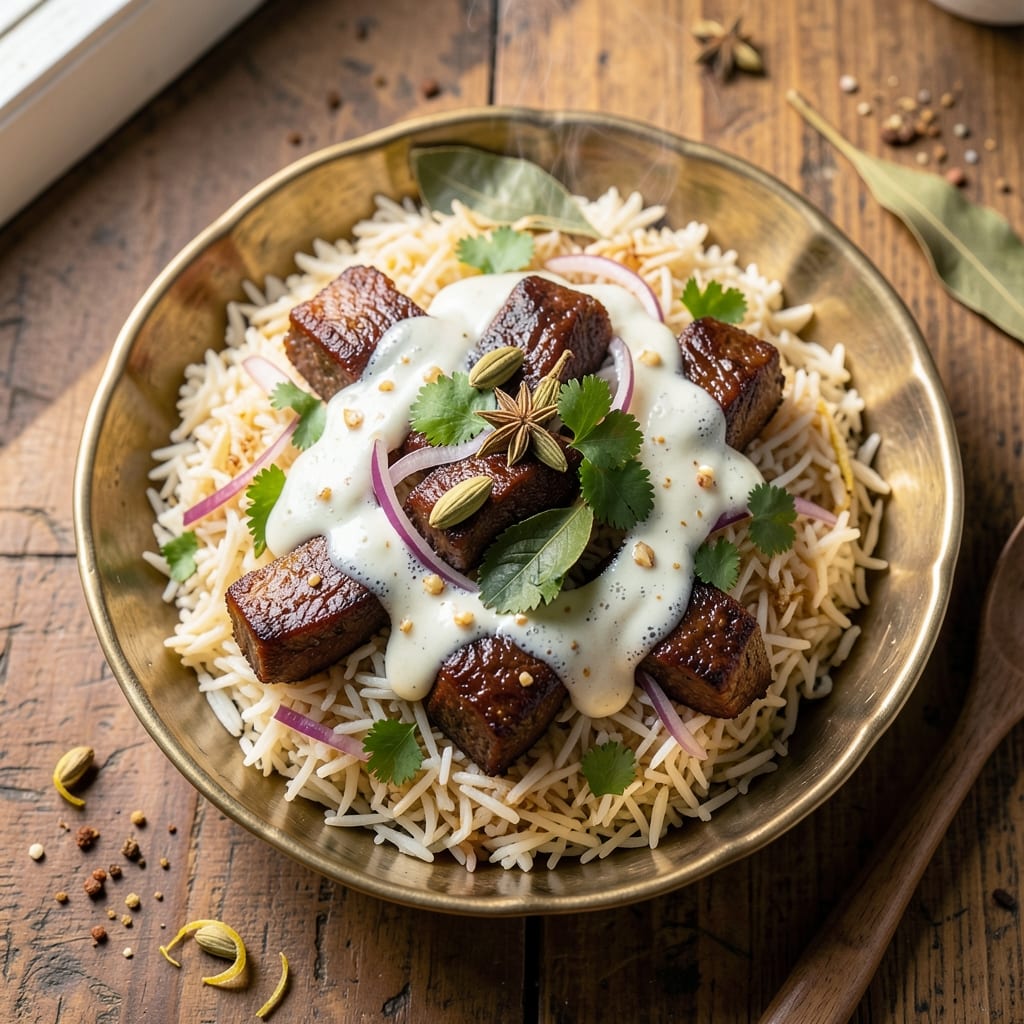
This Bannu beef pulao recipe brings the rich flavors of Khyber Pakhtunkhwa to your kitchen, where tender beef jewels and fragrant basmati rice create a dish fit for special occasions. The secret lies in slow-cooked beef marinated in yogurt and spices, layered with partially cooked rice, then steamed to perfection—just like the traditional dum cooking method. Every bite delivers a balance of smoky, spiced beef and delicate rice infused with whole spices and saffron.
The recipe begins with a yogurt marinade that tenderizes the beef while building deep, aromatic flavors. Whole spices like cardamom, cinnamon, and cloves infuse the rice as it steams, creating that signature fragrant aroma. Unlike other pulao recipes, this version uses a two-step cooking process—first parboiling the rice, then layering it with marinated beef and finishing it off with a tight lid to trap steam and develop rich, caramelized flavors at the bottom.
What makes this dish truly special is its authentic Bannu touch—the beef is cut into small, bite-sized pieces (beef jewels) that stay tender yet flavorful. The result is a restaurant-quality pulao with layers of texture: tender rice, juicy beef, and a lightly crisped bottom (tahiri). Serve it with a side of mint raita or a simple cucumber salad to balance the richness.
Perfect for gatherings or weekend meals, this pulao requires patience but delivers unmatched flavor. The slow-cooked beef and aromatic rice make it a showstopper, and the method ensures every grain of rice is infused with the essence of traditional Pakistani cuisine. Let’s get cooking!
Ingredients for bannu beef pulao
Authentic Bannu flavors start with these carefully selected ingredients for a restaurant-quality pulao experience.
| Ingredient | Amount | Notes |
|---|---|---|
| Beef Jewels (Chuck Roast) 🥩 | 2 ½ lb | Cut into 1-inch cubes, marinated overnight |
| Plain Whole Milk Yogurt 🥛 | 1 cup | Full-fat, unsweetened, for marinade |
| Basmati Rice 🍚 | 2 cups | Long-grain, unbroken grains preferred |
| Whole Milk 🥛 | 3 cups | For rice cooking, full-fat preferred |
| Bay Leaves 🌿 | 4 whole | Fresh or dried, for rice infusion |
| Green Cardamom Pods 🌿 | 8 whole | Lightly crushed, aromatic essence |
| Black Cardamom Pods 🌿 | 4 whole | Smoky depth, remove before serving |
| Cinnamon Sticks 🌿 | 2 whole | 2-inch pieces for rice infusion |
| Cloves 🌿 | 8 whole | Lightly crushed, aromatic base |
| Saffron Threads 🧡 | ¼ tsp | High-quality, soaked in 2 tbsp warm water |
| Ginger 🧄 | 2 tbsp | Freshly grated, aromatic kick |
| Garlic Cloves 🧄 | 6 cloves | Minced, for marinade and rice |
| Red Chili Powder 🌶️ | 1 tbsp | Adjust for heat preference |
| Ground Cumin 🌿 | 1 tsp | Toasted for deeper flavor |
| Ground Coriander 🌿 | 1 tsp | Freshly ground preferred |
| Garam Masala 🌶️ | 1 tsp | Homemade or store-bought blend |
| Salt 🧂 | 1 ½ tsp | Diamond Crystal preferred |
| Ghee 🧈 | 4 tbsp | For rice cooking, clarified butter |
| Fresh Mint Leaves 🌿 | ¼ cup | Chopped, for garnish and raita |
The beef selection is critical—chuck roast delivers the perfect balance of tenderness and flavor when cut into small cubes. For authentic Bannu style, source whole spices from a Pakistani or Indian specialty store like Patel Brothers or Spicewalla; their cardamom and cloves offer superior aroma. Fresh saffron is non-negotiable—look for Iranian saffron at gourmet markets or specialty stores, as it provides the most vibrant color and authentic flavor. The yogurt should be full-fat and unsweetened, with live cultures for optimal marinade effectiveness. If using dried spices, toast them lightly in a dry pan before grinding for deeper flavor development.
No green cardamom? Substitute with 2 extra black cardamom pods for a smokier profile, though the flavor will differ slightly. Running short on saffron? Turmeric at one-third the amount mimics the color but lacks the floral notes. For the rice, jasmine rice can substitute basmati though it won't have the same aroma. The ginger and garlic should be freshly grated and minced—pre-minced garlic loses its potency quickly. If you can't find ghee, melted butter works though it won't have the same high smoke point. For the garam masala, homemade blends (cumin, coriander, cinnamon, cardamom, cloves) outperform store-bought versions.
Marinated beef keeps up to 3 days in the refrigerator, though flavor improves with overnight marinating. Whole spices should be stored in airtight containers away from light to preserve their aroma for up to 6 months. Saffron loses potency after 3 months—refrigerate it in a sealed container. Cooked pulao reheats beautifully; cover with foil and warm in a 350°F oven for 15 minutes to maintain moisture. The crisped bottom (tahiri) is best enjoyed fresh—it loses its texture when reheated. For leftovers, portion into airtight containers with a layer of plastic wrap pressed directly on the rice surface to prevent drying.
Why You'll Love This Recipe
- Same recipe, different vibes: serve it with naan for a lazy Sunday or double the batch for guests. The chuck roast stays juicy, the rice fluffs perfectly, and no one will guess it’s not restaurant-quality.
- One-Pot Magic: The beef, rice, and yogurt all cook together—no switching pans, no extra bowls. Just layer the ingredients, dump in the milk, and let the slow simmer work its magic. (Yes, even if you burn toast sometimes.)
- Creamy Yogurt Hug: That whole milk yogurt? It’s the secret—tenderizing the beef while adding a velvety richness you won’t find in dry pulao. The bay leaves? They sneak in earthy depth without overpowering.
- Weeknight to Party: Same recipe, different vibes: serve it with naan for a lazy Sunday or double the batch for guests. The chuck roast stays juicy, the rice fluffs perfectly, and no one will guess it’s not restaurant-quality.
Step-by-step instructions for Bannu beef pulao
Master this rich, aromatic dish where tender beef jewels marry fragrant basmati rice in a symphony of spices.
Marinate the Beef Jewels Overnight
Cut the 2.5 lb beef jewels into 1-inch cubes and place them in a large mixing bowl. In a separate bowl, whisk together the 1 cup plain whole milk yogurt, 6 cloves minced garlic, 2 tbsp freshly grated ginger, 1 tbsp red chili powder, 1 tsp ground cumin, 1 tsp ground coriander, and 1.5 tsp salt. Pour this marinade over the beef cubes, ensuring each piece is fully coated.
Cover the bowl with plastic wrap and refrigerate for at least 12 hours—overnight works best. This extended marination breaks down the tough beef fibers and infuses the meat with deep, complex flavors. The yogurt tenderizes while the spices begin their flavor extraction. I like to give it a stir every few hours if I remember, but even if you forget, the overnight soak will still deliver exceptional results.
Prepare the Spiced Rice Base
In a large pot, combine the 2 cups basmati rice with 3 cups whole milk, 4 whole bay leaves, 8 lightly crushed green cardamom pods, 4 lightly crushed black cardamom pods, 2 whole cinnamon sticks (cut into 2-inch pieces), and 8 lightly crushed cloves. Bring this mixture to a boil over medium-high heat, then immediately reduce to a low simmer and cover tightly with a lid.
Simmer for 15 minutes—this is called the "parboiling" stage. You'll notice the rice begins to absorb the milk and the spices start releasing their aromatic oils. After 15 minutes, drain the rice through a fine-mesh strainer, reserving the spiced liquid. Return the drained rice to the pot and set aside. This step ensures your rice develops that signature Bannu pulao fragrance while preventing mushiness.
Cook the Spiced Beef
In a heavy-bottomed Dutch oven, melt 4 tbsp ghee over medium heat. Add the marinated beef jewels in a single layer and cook undisturbed for 5-6 minutes until they develop a deep golden-brown crust on all sides. This initial searing locks in juices and builds flavor depth. Once browned, stir the beef and cook for another 5-6 minutes until the marinade evaporates and the meat begins to release its natural juices.
Add the 0.25 tsp saffron threads (previously soaked in 2 tbsp warm water) to the beef along with 1 tsp garam masala. Stir well to coat the beef evenly with the saffron's vibrant color and floral notes. The garam masala will add that characteristic warm, earthy finish that defines Bannu beef pulao. Cook for another 2-3 minutes until the spices are fragrant and the beef is nearly cooked through.
Layer and Steam the Pulao
Return the drained, spiced rice to the Dutch oven with the beef. Gently fold everything together, ensuring the beef is evenly distributed among the rice grains. Pour the reserved spiced milk liquid over the top, then add 1 cup fresh water to maintain proper moisture levels. The total liquid should just cover the rice—you want it to steam rather than boil.
Bring to a gentle simmer over low heat, then immediately cover with a tight-fitting lid. Reduce heat to its lowest setting and cook for 20-25 minutes. During this time, the rice will absorb the remaining liquid and steam through the heat of the beef. The key here is patience—avoid peeking or lifting the lid, as this disrupts the steaming process and can lead to uneven cooking or dry rice.
Rest and Garnish for Perfect Texture
Once the rice is tender and the beef is fork-tender (about 20-25 minutes from when you covered the pot), turn off the heat and let the pulao rest, covered, for 10 minutes. This resting period allows the residual heat to finish cooking the rice evenly and lets the juices redistribute throughout the dish. The beef will continue to absorb flavors and become even more tender.
After resting, gently fluff the pulao with a fork, being careful not to break the rice grains. Remove the black cardamom pods and cinnamon sticks before serving. Garnish with 0.25 cup chopped fresh mint leaves and serve immediately with a side of yogurt raita for that authentic Bannu touch. The final dish should have perfectly tender beef jewels nestled among fragrant, slightly sticky basmati rice, with a harmonious blend of smoky, spicy, and floral flavors in every bite.
Pro Tips For Making Bannu Beef Pulao
- Cut Beef Small First: Chuck roast is tough—don’t skip the knife. Cut the beef jewels into 1-inch chunks before browning, not after, or you’ll end up with uneven cooking. I learned this the hard way when half my batch turned out chewy.
- Soak Rice 20 Minutes: Skip the "just rinse it" approach—soak basmati rice in warm water for 20 minutes before cooking. This guarantees even grains and prevents the dreaded split-and-mushy texture that ruins pulao. (Yes, even if you’re impatient like me.)
- Temper the Yogurt: Whole milk yogurt curdles like a nightmare if you dump it straight into hot oil. Mix it with a splash of cold water first—just enough to cool it slightly—then add it to the pan. This keeps your bannu pulao creamy, not lumpy.
- Simmer Rice on Low: After the beef and spices cook, reduce heat to the lowest setting for rice—no peeking or stirring. Too much heat = burnt bottom, not fragrant pulao. My grandmother swore by this, and she was right: patience here makes the dish.
Essential equipment for perfect results
Heavy-Duty Dutch Oven
Your heavy-bottomed Dutch oven is the star of this recipe—I swear by my Lodge 5.5-quart cast iron for even heat distribution and caramelization. The deep sides prevent spills when layering rice and beef, while the tight-fitting lid creates the perfect steam chamber for that signature Bannu texture. If you don’t have cast iron, a stainless steel Dutch oven like All-Clad works beautifully, though it requires slightly more heat control. 🔥
Fine-Mesh Strainer
A fine-mesh strainer is essential for draining the parboiled rice while retaining all those precious spiced milk aromas. I use a stainless steel strainer with long handles (like OXO Good Grips) to avoid losing any of that fragrant liquid. This step is critical—don’t skip it! The reserved liquid adds depth to the final pulao by infusing the beef and rice with extra spice oils. Pro tip: Line your strainer with a clean kitchen towel to catch any rice grains that might slip through.
Measuring Spoons & Spice Grinder
Precision matters with spices in Bannu pulao. Invest in a set of stainless steel measuring spoons (I recommend Weston Products) for accurate measurements of saffron, garam masala, and chili powder. For whole spices like cardamom and cloves, a mini spice grinder (like Norpro 00018) lets you crush them just enough to release aroma without turning to powder. Freshly ground spices make all the difference—store-bought powders can’t compete with the vibrant, complex flavors you get from whole spices crushed moments before use. 🌿
Plastic Wrap & Airtight Containers
Marinating beef overnight requires heavy-duty plastic wrap to seal in moisture and flavors. I use Glad Press'n Seal because it sticks tightly to the bowl and prevents any yogurt leaks. For storing leftovers, airtight glass containers (like Pyrex) preserve texture and prevent drying. The key is to press plastic wrap directly onto the rice surface before sealing—this creates a moisture barrier that keeps your pulao restaurant-fresh for up to 3 days in the fridge. For freezing, portion into quart-sized freezer bags with 1 inch headspace to prevent ice crystals from ruining the texture.
Wooden Spoon & Fine-Mesh Ladle
A wooden spoon (I prefer Oxo Good Grips) is your best friend for gently folding the rice and beef layers without breaking grains. Its heat-resistant handle lets you stir directly in the Dutch oven, and the flat edge helps distribute ingredients evenly. For serving, a fine-mesh ladle (like McElroy Stainless Steel) ensures you scoop up both rice and beef without losing the crisped bottom (tahiri). The slightly larger holes prevent clogging while maintaining presentation—critical for that Instagram-worthy plated pulao. ✨
Instant-Read Thermometer
While not strictly necessary, an instant-read thermometer (I use ThermoWorks Thermapen) gives you confidence in both beef and rice doneness. The beef should reach 160°F internal temperature by the time you layer it with rice, while the final pulao should be 195-200°F after resting. This prevents overcooking while ensuring food safety. The thermometer also helps troubleshoot—if your beef is tough, it might need more marinade time; if the rice is undercooked, check your heat level. Precision at this stage makes all the difference in texture. 🌡️
Nutrition facts
Frequently asked questions about Bannu beef pulao
Why does the recipe call for marinating beef overnight?
Overnight marination is key to achieving tender, flavorful beef jewels. The yogurt breaks down tough fibers while the spices penetrate deeply, creating that signature Bannu richness. For best results, marinate for at least 12 hours—the longer it sits, the more tender and aromatic the beef becomes.
Can I substitute milk for water in the rice cooking process?
While possible, using milk creates a creamier texture and enhances the fragrant aroma of the spices. For a lighter version, replace 1 cup milk with water—just be prepared for slightly less rich flavor. The traditional method uses milk to create that signature Bannu pulao creaminess that sets it apart from other regional versions.
What's the best way to prevent dry rice in the final pulao?
Keep the lid tightly sealed throughout cooking and avoid peeking! The steam is what keeps the rice moist. If your rice is still dry after 25 minutes, add 2 tbsp warm water and cover for another 5 minutes. The key is low, steady heat—never boil vigorously after layering.
How do I know when the beef is fully cooked?
The beef should reach 160°F internal temperature before layering with rice. For visual cues, look for juices that run clear when pierced with a fork. If using an instant-read thermometer, check the thickest piece—it should be fork-tender but still slightly pink in the center when layered with rice.
Can I make this pulao in a rice cooker?
Yes, but with adjustments! Parboil the rice separately, then cook the beef in a pot before transferring everything to the rice cooker. Use the "steam" function if available, and add 1/4 cup extra water to compensate for the rice cooker's different moisture control. The texture won't be identical, but it's a convenient alternative for busy weeknights.