
Main Courses
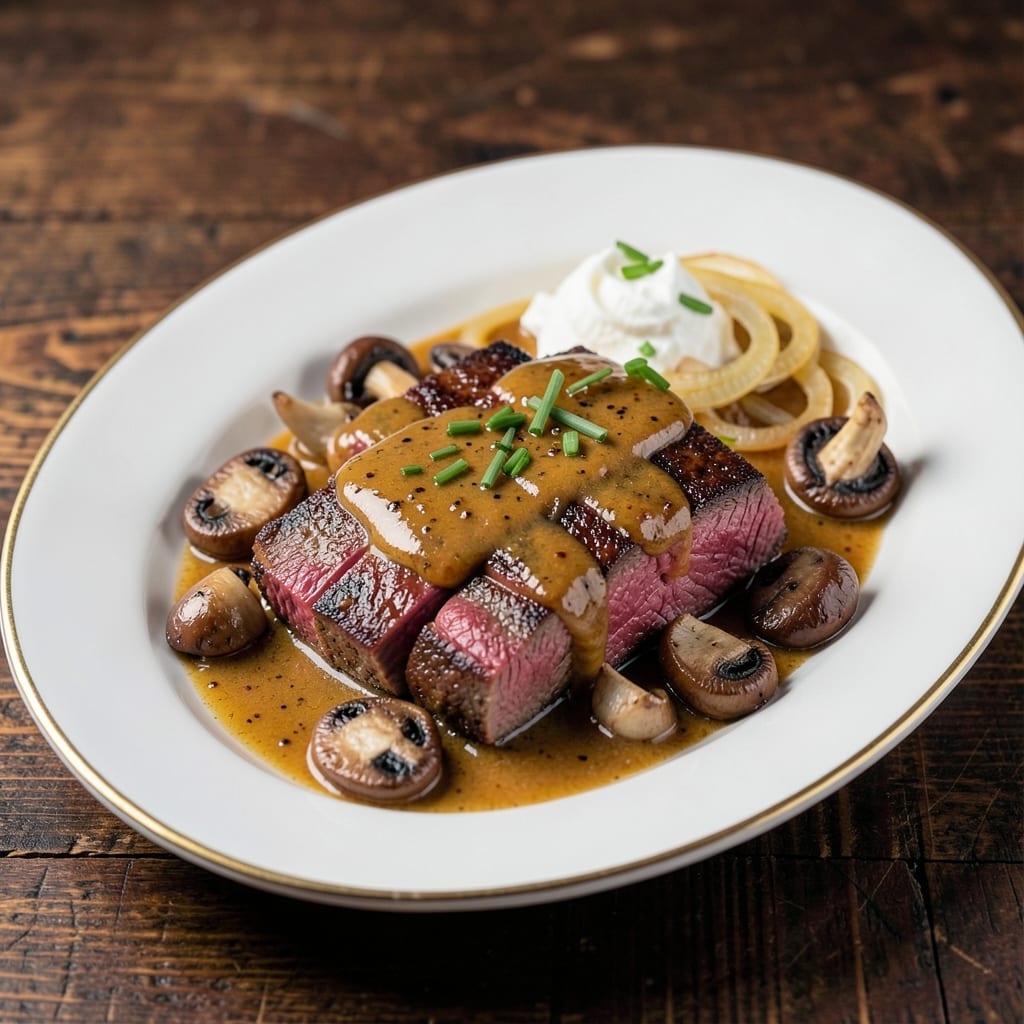
Balthazar's beef stroganoff delivers the creamy, tender beef and mushroom sauce that made this dish legendary. 💛 The secret lies in slow-cooked beef strips and a velvety wine-mushroom sauce that balances richness with bright acidity. This version stays true to the original while using modern shortcuts like pre-sliced mushrooms and store-bought stock without sacrificing depth.
The recipe begins with searing beef strips to lock in juices, then simmering them in a rich sauce made from mushrooms, onions, and a splash of white wine. A touch of Dijon mustard adds subtle complexity, while heavy cream creates that signature creamy texture. The dish is traditionally served over egg noodles, but roasted potatoes or crusty bread work beautifully as alternatives.
What sets this stroganoff apart is the balance of flavors—savory beef, earthy mushrooms, and the bright tang of wine. The sauce thickens just enough to coat the noodles perfectly, creating each bite with a luxurious mouthfeel. Garnish with fresh parsley or a dollop of sour cream for extra freshness and contrast.
Perfect for weeknight dinners or special occasions, this stroganoff comes together in about 45 minutes with minimal prep. The dish reheats well, making it ideal for meal prep or leftovers. Whether you're a stroganoff purist or just love creamy beef dishes, this recipe delivers restaurant-quality results at home.
Ingredients for balthazar beef stroganoff
These fourteen ingredients craft Balthazar's legendary beef stroganoff with velvety texture and balanced flavors.
| Ingredient | Amount | Notes |
|---|---|---|
| Beef Tenderloin 🥩 | 1 ½ lb | Thinly sliced against the grain |
| White Wine 🍷 | 1 cup | Dry variety, such as Sauvignon Blanc |
| Heavy Cream 🥛 | 1 cup | Full-fat for optimal richness |
| Dijon Mustard 🧄 | 1 tbsp | For subtle depth of flavor |
| Fresh Mushrooms 🍄 | 1 ½ lb | Cremini or baby bella preferred |
| Yellow Onion 🧅 | 1 whole | Thinly sliced for even cooking |
| Garlic Cloves 🧄 | 4 cloves | Minced for aromatic base |
| Beef Stock 🥫 | 1 cup | Homemade or high-quality store-bought |
| All-Purpose Flour 🌾 | 2 tbsp | For thickening the sauce |
| Egg Noodles 🍝 | 8 oz | Fresh or dried, cooked al dente |
| Unsalted Butter 🧈 | 2 tbsp | For searing beef and finishing sauce |
| Salt 🧂 | 1 ½ tsp | Diamond Crystal preferred |
| Ground Black Pepper 🌶️ | ½ tsp | Freshly ground for best flavor |
| Fresh Parsley 🌿 | ¼ cup | Chopped for garnish |
| Sour Cream 🥛 | ¼ cup | For serving, optional |
The beef tenderloin is the foundation of this dish—look for well-marbled cuts at specialty butchers like D'Artagnan or high-end grocery stores. Thinly slicing against the grain ensures tender results. For mushrooms, cremini or baby bella provide the ideal earthy flavor; avoid pre-sliced varieties as they bruise quickly. White wine should be dry—Sauvignon Blanc or Pinot Grigio work beautifully, but avoid anything overly oaky or sweet. The heavy cream must be full-fat for that signature richness, so avoid light or low-fat versions.
No beef tenderloin? Flank steak or sirloin work well when sliced thinly, though they may require marinating. Substitute white wine with dry vermouth or chicken stock if unavailable, though the flavor will differ slightly. For a vegetarian alternative, mushroom or seitan strips can replace the beef, though texture will vary. The Dijon mustard adds complexity—avoid regular yellow mustard, which lacks depth. Fresh parsley is ideal for garnish, but dried parsley at one-third the amount suffices in a pinch. The egg noodles should be cooked al dente to avoid a mushy final dish.
Store prepped ingredients separately: beef and mushrooms in airtight containers for up to 3 days, while cooked noodles keep for 2 days. The sauce reheats beautifully—simmer gently to avoid curdling the cream. For optimal freshness, assemble the stroganoff just before serving. Leftover sauce freezes well for up to 3 months, making it perfect for quick weeknight meals. Garnish with fresh parsley and a dollop of sour cream for that restaurant-quality finish.
Why You'll Love This Recipe
- Here’s what sold me: tenderloin might sound fancy, but a single cut feeds four, and the rest of the ingredients are pantry staples. That heavy cream and wine make it feel indulgent, but the mushrooms stretch the dish further. Plus, leftovers reheat like a dream—no dry, sad stroganoff here. It’s the kind of recipe that makes you feel like you’re treating yourself, even on a tight budget.
- One-Pan Magic: I swear by this—just sear the beef, toss in the mushrooms and wine, then let the cream do its thing. No flipping pans, no stress. The tenderloin stays juicy while the mushrooms soak up all that rich sauce. That’s my kind of "I’ll have dinner ready by 6:30" recipe.
- Wine-Infused Luxury: Honestly, the white wine isn’t just for flavor—it cuts through the richness of the heavy cream like a dream. That Dijon mustard? Tiny but mighty, giving it a tangy kick that makes it taste restaurant-worthy without trying too hard. The beef tenderloin melts in your mouth, and the mushrooms add that earthy depth.
- Date Night or Meal Prep: Between us, this is my go-to for when I want to impress someone without slaving away. But it’s also the dish I make on Sundays to reheat all week—just add a splash of water or broth to loosen it up. The sauce clings to the beef like glue, so every bite feels special, whether it’s day one or day three.
Step-by-step instructions for Balthazar beef stroganoff
Master the perfect balance of tender beef and velvety mushroom sauce with these precise techniques.
🔥 Step 1: Sear the Beef Tenderloin to Perfection
Pat the 1.5 lb beef tenderloin completely dry with paper towels—this ensures maximum browning. Heat 2 tablespoons unsalted butter in a large skillet over medium-high heat until it foams. Add the sliced beef in a single layer and sear for 2-3 minutes per side until deeply golden brown and just cooked through.
Here's the thing—don't overcrowd the pan. Work in batches if needed to maintain even searing. The beef should release easily from the pan when ready. Transfer the cooked beef to a plate and set aside, reserving any browned bits in the pan for the sauce. Season lightly with ½ teaspoon salt and ¼ teaspoon ground black pepper at this stage—we'll add more later to balance the flavors.
🍳 Step 2: Develop the Mushroom-Wine Sauce Base
In the same skillet (no need to clean it—those browned bits are flavor gold), add 1 tablespoon unsalted butter over medium heat. Add the 1.5 lb fresh mushrooms and cook for 5-6 minutes until they release their moisture and begin to brown. Add the 1 whole yellow onion (thinly sliced) and cook for another 4-5 minutes until softened and golden.
Stir in the 4 cloves minced garlic and cook for 30 seconds until fragrant—don't let it burn. Pour in the 1 cup dry white wine and scrape up all those delicious browned bits from the bottom of the pan. Let the wine simmer for 3-4 minutes until reduced by half. This reduction concentrates the flavors and forms the foundation of your sauce.
🥘 Step 3: Thicken and Enrich the Sauce
Sprinkle the 2 tablespoons all-purpose flour over the mushroom mixture and stir vigorously for 1-2 minutes until fully incorporated. Gradually whisk in the 1 cup heavy cream and 1 cup beef stock, then add the 1 tablespoon Dijon mustard. Bring to a gentle simmer and cook for 5-6 minutes until the sauce thickens enough to coat the back of a spoon.
Return the seared beef to the skillet and stir gently to coat everything in the sauce. Season to taste with the remaining 1 teaspoon salt and ¼ teaspoon ground black pepper. The sauce should be creamy but not overly thick—if it's too thick, whisk in 1-2 tablespoons of hot water to reach your desired consistency. Let it simmer for another 2 minutes to meld all the flavors together.
🍽️ Step 4: Assemble and Finish the Stroganoff
Cook the 8 oz egg noodles according to package instructions until al dente (1 minute less than package directions). Drain and return them to the pot. Stir in the beef and sauce mixture until everything is well combined and the noodles are coated. Taste and adjust seasoning if needed—this is your final chance to balance the flavors.
For serving, transfer to warmed plates and top each portion with ¼ cup chopped fresh parsley and a dollop of ¼ cup sour cream (optional). The sour cream adds a lovely contrast to the rich, creamy sauce. Serve immediately while the beef is still tender and the sauce is at its peak consistency.
Pro Tips For Making Balthazar Beef Stroganoff
- SEAR THE TENDERLOIN FAST: Get that pan screaming hot before the beef hits—think 450°F if your stove can handle it. I used to let it warm up halfway, and the meat would steam instead of develop that golden crust. Two minutes per side max, then pull it out while it’s still bright red inside (it’ll finish in the sauce).
- SLICE MUSHROOMS THIN AND EVEN: No chunky hunks here—aim for paper-thin slices, like you’re shaving them with a sharp knife. Thick pieces turn to mush while the sauce thickens, and you’ll end up with a watery stroganoff. A mandoline helps, but a steady hand works too.
- DEGLAZE WITH WINE IMMEDIATELY: As soon as you remove the beef, pour in that white wine and scrape every last bit of fond off the pan. Let it reduce by half before adding anything else—this builds flavor faster than waiting or diluting it with broth. (Yes, even if you’re impatient like me.)
- TEMPER THE CREAM SMART: Warm the heavy cream separately to body temperature (just a few seconds in the microwave, then stir) before mixing it into the sauce. Cold cream makes the whole dish seize up like a stubborn child. Stir in slowly while the pan’s off the heat to avoid curdling.
Best sauces and condiments for these flavors
Creamy Mushroom Sauce
The velvety sauce is the heart of this stroganoff, and it all starts with browning the mushrooms until they release their moisture. I recommend using cremini or baby bella mushrooms—they hold their shape while adding deep umami flavor. For extra richness, deglaze the pan with 1 cup dry white wine (like Sauvignon Blanc) after searing the beef. This step reduces the alcohol and concentrates the flavor, creating a complex base for your sauce. 🍷
To thicken the sauce, whisk in 2 tablespoons all-purpose flour and cook for 1-2 minutes before adding the 1 cup heavy cream and 1 cup beef stock. The Dijon mustard adds a subtle tang that brightens the dish—never skip this step if you want that authentic Balthazar touch. For a smoother sauce, strain it through a fine-mesh sieve after simmering.
Wine Reduction Magic
The wine reduction is where the sauce gets its depth. After adding the wine, let it simmer until reduced by half—this usually takes 3-4 minutes. The key is patience; rushing this step will make your sauce taste flat. I like to use Pinot Grigio for its crisp acidity, but Chardonnay works too if you prefer a slightly richer profile. Avoid sweet wines like Riesling, as they’ll overpower the dish. 🍷
Butter and Herb Finishing
Finish the sauce with 1 tablespoon unsalted butter, swirled in at the end to add a luxurious mouthfeel. This step is non-negotiable—it ties all the flavors together and gives the sauce that signature silky texture. For garnish, I always use fresh parsley (about ¼ cup chopped) because it adds a bright, fresh contrast to the richness. If you want extra tang, a dollop of sour cream on top is a must—it cuts through the creaminess beautifully.
Alternative Sauce Variations
Want to switch it up? Swap the white wine for 1 cup beef broth and add 1 teaspoon Worcestershire sauce for a deeper, umami-rich sauce. For a lighter version, replace half the heavy cream with Greek yogurt—it keeps the creaminess but adds a subtle tang. If you’re feeling adventurous, stir in 1 teaspoon smoked paprika for a smoky twist. 🌶️
Sauce Thickening Tips
If your sauce is too thin, whisk in 1 tablespoon cornstarch mixed with 2 tablespoons cold water and simmer for 1-2 minutes until thickened. For a glossier finish, add 1 teaspoon lemon juice at the end—it brightens the flavors and prevents the sauce from curdling. Always taste as you go; stroganoff sauce should coat the back of a spoon but still be smooth, not gluey.
Nutrition facts
Frequently asked questions
Why does the recipe call for beef tenderloin instead of sirloin or flank steak?
The tenderloin delivers that signature tender texture Balthazar stroganoff is known for. While sirloin or flank steak can work, they require careful slicing against the grain and may need marinating to achieve the same melt-in-your-mouth quality. The tenderloin's lean yet buttery texture stays perfectly tender even after simmering in the sauce.
Can I make this stroganoff ahead of time?
Yes! The sauce and cooked beef can be refrigerated for up to 3 days in an airtight container. Reheat gently on the stove over low heat (never microwave) and add fresh noodles just before serving. For best results, store components separately—the sauce reheats beautifully, while the beef stays juicier when reheated with fresh noodles.
What's the secret to getting the sauce just right?
The magic happens in three steps: reducing the wine by half (never skip this!), whisking the flour vigorously to avoid lumps, and simmering the sauce just until it coats the back of a spoon. If it thickens too much, whisk in 1 tablespoon hot water to reach that perfect creamy yet silky consistency. Always finish with a pat of butter for that restaurant-quality sheen.
Can I substitute egg noodles with something else?
For a heartier dish, use roasted baby potatoes or crusty bread to soak up the sauce. If you prefer pasta, try fettuccine or pappardelle—just cook them al dente and add them to the skillet at the very end to prevent overcooking. The key is choosing a starch that complements the rich sauce without overpowering its flavors.
What if I don't have white wine?
No problem! Use dry vermouth or chicken stock as a substitute, though the flavor will differ slightly. For a non-alcoholic version, try apple cider vinegar (1 tablespoon) mixed with 1 cup beef broth. The acidity helps balance the richness, though wine's complexity is hard to replicate. If using stock, add ½ teaspoon sugar to mimic wine's slight sweetness.