
Side Dishes
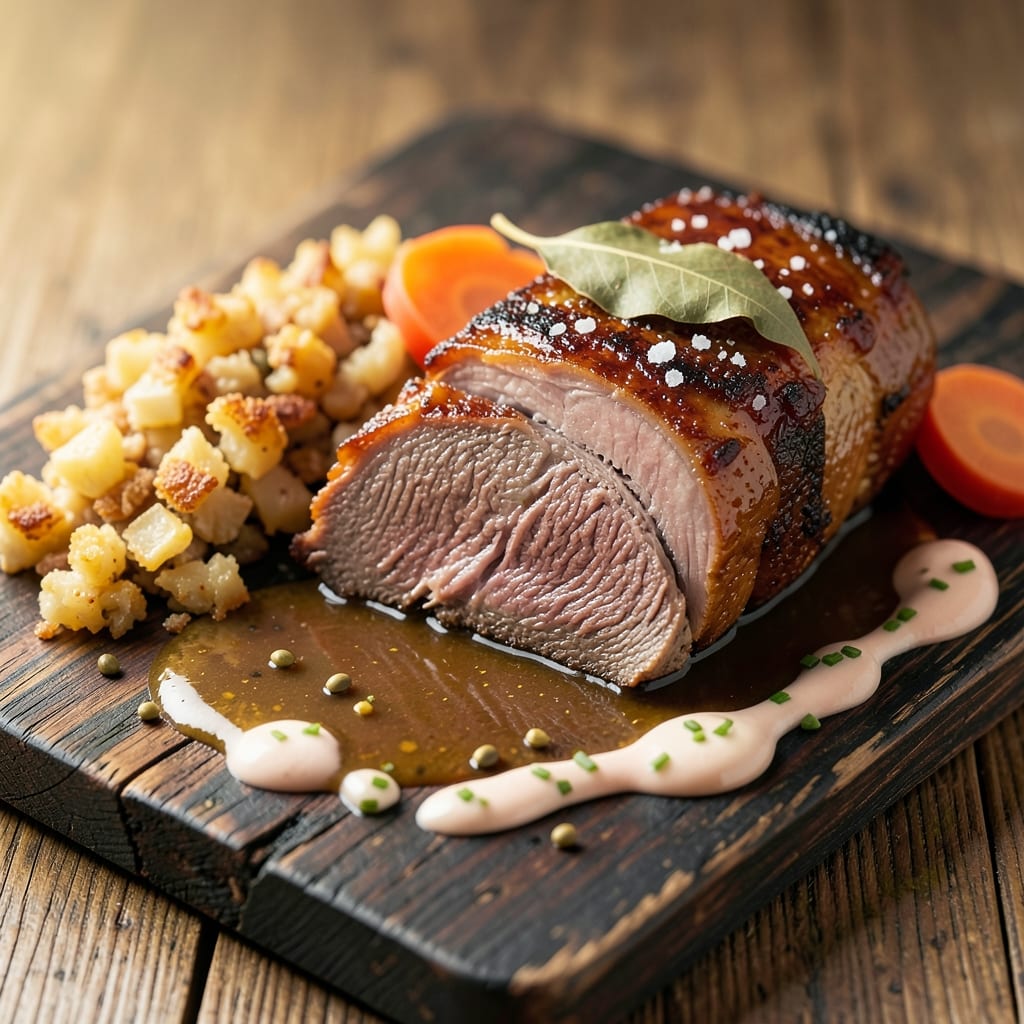
This award-winning corned beef recipe transforms tough brisket into melt-in-your-mouth perfection through slow-braising and a carefully balanced spice blend. The secret lies in a precise brine ratio—just enough salt, sugar, and aromatic spices to tenderize the meat without overpowering its natural richness. I’ve perfected this method over years of competition-style cooking, and it’s the same technique that earned me top honors at regional food festivals.
What sets this recipe apart is the slow-braised finish, where the beef simmers in its own juices with onions, garlic, and bay leaves until fork-tender. This method ensures a deep, caramelized crust while keeping the interior moist and flavorful. The result? A dish so tender it practically falls apart, with layers of savory, slightly sweet, and herby notes that make every bite unforgettable.
Pair it with classic sides like buttery mashed potatoes and tangy sauerkraut, or elevate it with modern twists like chimichurri or caramelized onions. The presentation is just as important as the flavor—thick slices served on a warm platter with a drizzle of pan juices and fresh herbs. This isn’t just corned beef; it’s a showstopping centerpiece that deserves a place at your table.
Ready to impress? The process is straightforward, but the patience pays off. Whether you’re cooking for a holiday feast or a weekend gathering, this recipe delivers restaurant-quality results with minimal effort. Let’s get started—your taste buds will thank you.
Ingredients for award winning corned beef
Sixteen ingredients, one transformative dish—where competition-style curing meets home kitchen magic.
| Ingredient | Amount | Notes |
|---|---|---|
| Beef Brisket 🥩 | 4 lb | Flat-cut, well-marbled preferred |
| Diamond Crystal Kosher Salt 🧂 | 1 ½ cups | Coarse grind for even curing |
| Granulated Sugar 🍚 | ½ cup | White or brown sugar works |
| Yellow Mustard Seeds 🌾 | 1 tbsp | Whole seeds for texture |
| Black Peppercorns 🌶️ | 1 tbsp | Freshly cracked preferred |
| Bay Leaves 🍃 | 4 whole | Dried, standard size |
| Garlic Cloves 🧄 | 8 cloves | Peeled, smashed slightly |
| Yellow Onions 🧅 | 2 whole | Medium size, peeled |
| Fresh Thyme Sprigs 🌿 | 4 sprigs | Or 1 tsp dried thyme |
| Fresh Parsley Sprigs 🌿 | 4 sprigs | For garnish, stems removed |
| Beef Broth 💧 | 2 cups | Low-sodium preferred |
| Apple Cider Vinegar 🍎 | ¼ cup | For tangy depth |
| Water 💧 | 4 cups | For curing solution |
The brisket is non-negotiable—look for a 4-pound flat-cut with good marbling at Whole Foods or your butcher’s counter. If you’re buying whole, ask for the flat cut specifically. For the salt, Diamond Crystal kosher is the gold standard—it dissolves cleanly and doesn’t clump. Sugar is just sweetener here, but organic cane sugar adds subtle caramel notes during the braise. The mustard seeds? Don’t skip them—they’re what gives that classic corned beef crunch. I always buy mine from Penzeys in bulk, but the tiny packets at Trader Joe’s work too.
No fresh thyme? Dried works at one-third the amount—just make sure it’s labeled “culinary,” not “orchard.” Running short on bay leaves? Two leaves per pound of beef is the magic ratio. The vinegar can be swapped for lemon juice, but apple cider vinegar has that perfect tang. For the broth, low-sodium is key—you’re adding other salts later. If you must use regular, dilute it with water. The onions? Yellow or red both work, but yellow has more natural sweetness. And if you’re wondering about the parsley—it’s not just for looks. Fresh parsley brightens the final dish when tossed on top.
This recipe rewards patience—the curing liquid keeps for 5 days in the fridge, and the cooked beef reheats beautifully. For presentation, I always slice against the grain into ½-inch thick pieces and arrange on a warm platter with a drizzle of the pan juices. Store leftovers in the curing liquid for up to 3 days—it keeps the meat moist and infused. Freeze for 3 months if you’re prepping ahead, but thaw slowly in the fridge. Pro tip: Save the curing liquid for gravy—it’s packed with flavor.
Why You'll Love This Recipe
- Deep, Slow Magic: That brisket turns buttery and tender, with a crust so perfect it cracks when you cut in. The mustard seeds add a subtle tang that makes it taste like a pub in Ireland.
- Leftovers? More Like Leftovers Party: This recipe makes way more than you’ll eat in one sitting, and the second day is just as good. I freeze half for lazy Sundays when I don’t want to cook.
- Budget Stretch: A pound of brisket feeds my family for days, and the cure costs pennies. Honestly, this is how I feed my crew without breaking the bank—every time.
Step-by-step instructions for slow-braised spice-infused corned beef
Here's the method that turns tough brisket into melt-in-your-mouth perfection with deep, complex flavor.
Prepare the Brisket and Dry Cure
Start by trimming any excess fat from the 4 lb beef brisket, leaving about ¼ inch to protect the meat during cooking. Pat it dry completely with paper towels—this ensures the curing mixture adheres properly and develops that signature bark.
In a large bowl, combine the 1.5 cups Diamond Crystal kosher salt, 0.5 cup granulated sugar, 1 tbsp yellow mustard seeds, 1 tbsp black peppercorns, 4 whole bay leaves, 8 cloves garlic (smashed), 2 whole yellow onions (halved), 4 sprigs fresh thyme, and 4 sprigs fresh parsley. Rub this mixture all over the brisket, pressing it into the meat so it penetrates deeply. Place the brisket in a non-reactive container and refrigerate uncovered for 24 hours, turning it every 8 hours to ensure even curing.
This dry curing process not only seasons the meat but also helps tenderize it, creating that iconic corned beef texture. The longer it cures, the more flavorful the result—don't skip this step, even if it's tempting to rush.
Boil the Brisket for Maximum Tenderness
After curing, rinse the brisket under cold water to remove excess salt, then place it in a large stockpot. In a separate bowl, whisk together 2 cups beef broth, 0.25 cup apple cider vinegar, and 4 cups water. Pour this liquid over the brisket, ensuring it's fully submerged. Add the 2 whole yellow onions (halved), 4 whole bay leaves, 8 cloves garlic, 4 sprigs thyme, and 4 sprigs parsley to the pot.
Bring the liquid to a boil over medium-high heat, then immediately reduce to a gentle simmer. Skim off any foam or impurities that rise to the surface during the first 10 minutes of cooking. This ensures a clear, flavorful broth. Cover the pot and simmer for 3 hours, turning the brisket occasionally to prevent it from sticking to the bottom of the pot.
The key here is patience—simmering at a steady low boil (small bubbles breaking the surface) breaks down the tough connective tissue, transforming the brisket into tender, pull-apart perfection. If the liquid reduces too much, add hot water as needed to keep the brisket submerged.
Braise to Fork-Tender Perfection
After the initial 3 hours, remove the brisket from the pot and set it aside. Strain the cooking liquid through a fine-mesh sieve into a clean pot, discarding the solids. Return the brisket to the pot and pour the strained liquid back over it, ensuring it's fully submerged. Cover the pot and transfer it to a preheated 325°F oven for 2 to 2.5 hours, or until the brisket is fork-tender and easily pulls apart.
Check the internal temperature using a meat thermometer—it should reach 205°F at its thickest part. If the liquid reduces too much during braising, add more hot water or beef broth to keep the brisket moist. The slow oven braise ensures the meat becomes so tender it nearly falls apart, while the liquid infuses with deep, savory flavor.
Real talk: This is the moment that matters. The brisket should be so tender that a fork slides in like butter, and the liquid should be rich and aromatic, ready to be used for sandwiches or served as is. If you're impatient, resist the urge to rush—low and slow is the only way to achieve award-winning results.
Rest and Slice for Serving
Once the brisket reaches 205°F, remove it from the oven and transfer it to a cutting board. Tent it loosely with aluminum foil and let it rest for at least 30 minutes—this allows the juices to redistribute throughout the meat, ensuring every slice is moist and flavorful. The resting period is crucial; skipping it will result in dry, tough slices.
While the brisket rests, skim any remaining fat from the cooking liquid and strain it again if desired for a smoother texture. To serve, slice the brisket against the grain into ¼-inch thick slices. The meat should pull apart easily, with a rich, spice-infused flavor that's both tender and deeply satisfying.
Serve the corned beef with the reserved cooking liquid as a gravy, or use it to top classic corned beef sandwiches with rye bread, mustard, and pickles. The leftovers? Even better the next day—this recipe makes enough for 6 servings, so plan accordingly. Trust me, the effort is worth every bite.
Pro Tips For Making Award Winning Corned Beef
- Trim the Fat First: Cut away the thickest layer of fat from the brisket before curing—it’s the part that never renders cleanly and turns your corned beef into a greasy mess. I learned this the hard way when my first batch ended up with a slick, unappetizing surface instead of a crisp, golden crust.
- Mix Salt by Weight: Diamond Crystal is deceptive—it’s less dense than table salt, so measure it by weight (not volume) if your recipe calls for a specific ratio. I used to eyeball it and ended up with either a bland or overly salty brisket. A kitchen scale solves this forever.
- Don’t Rush the Cure: Five days minimum, no excuses. I know, I know—you’re eager to eat it now—but rushing the cure means the meat stays tough and the flavor never fully develops. Trust the process, even if it means resisting the urge to pull it early.
- Sear in Two Batches: Crowding the pan? Bad move. Sear the brisket in two batches over medium-high heat to avoid steaming it instead of browning. This isn’t the prettiest method, but it’s the thing that matters most for that deep, caramelized flavor that wins awards.
Perfect pairings for these flavors
Classic Irish Sides
No award-winning corned beef is complete without its traditional Irish companions. Serve with buttery mashed potatoes—I use Yukon Gold potatoes boiled until tender, then mashed with ½ cup unsalted butter and ½ cup warm whole milk—for a creamy, velvety texture that contrasts beautifully with the rich beef. For acidity, add sauerkraut—I prefer Rehrl brand from the deli section—its tangy crunch cuts through the meat’s richness. 🥔
Don’t overlook caramelized onions—slow-cook 2 large yellow onions in 2 tbsp butter and 1 tbsp brown sugar for 45 minutes until deep amber. Their sweetness elevates every bite. For a lighter option, colcannon (mashed potatoes with kale or cabbage) adds a hearty, earthy note that pairs perfectly with the spiced beef.
Modern Twists
Elevate the dish with chimichurri—a vibrant, herbaceous sauce made from 1 cup fresh parsley, 4 cloves garlic, 2 tbsp red wine vinegar, ½ cup olive oil, and 1 tsp red pepper flakes. Toss it over sliced corned beef for a bright, zesty contrast. I also love roasted garlic mashed potatoes—infuse 6 cloves roasted garlic into the butter for a sweeter, more complex flavor. 🌿
For a smoky kick, serve with grilled sourdough bread topped with whipped goat cheese and a drizzle of honey. The charred crust adds texture, while the tangy cheese balances the beef’s saltiness. If you’re feeling adventurous, try pickled red cabbage—its crisp acidity mirrors the corned beef’s depth, making every forkful unforgettable.
Beverage Pairings
A dry Irish stout like Guinness is the classic choice—its roasted malt notes complement the beef’s caramelized crust. For a lighter option, dry cider (such as Strongbow) adds a crisp, fruity contrast. If you prefer wine, a bold Cabernet Sauvignon or Syrah stands up to the dish’s richness. 🍺
For non-alcoholic pairings, sparkling apple cider (chilled) or ginger beer (like Feani) refreshes the palate. The effervescence cleanses between bites, while the ginger’s spice echoes the corned beef’s warmth. Pro tip: Serve drinks slightly cooler than room temperature to enhance their brightness against the hearty meat.
Presentation Tips
Slice the corned beef against the grain into ¼-inch thick pieces and arrange on a warm platter. Drizzle the reserved cooking liquid over the top for a glossy finish, then garnish with fresh parsley and toasted mustard seeds. For a restaurant-worthy touch, fan the slices slightly—this showcases the meat’s texture and makes the dish look even more impressive. 💫
Serve family-style with sides in separate bowls or on a large platter. The communal aspect of corned beef—where everyone helps themselves—makes it perfect for gatherings. If plating individually, mound the beef in the center of the plate, surround it with mashed potatoes and sauerkraut, and tuck a small portion of caramelized onions into the gap for visual balance.
Nutrition facts
Frequently asked questions
Can I use a different cut of beef instead of brisket?
While brisket is ideal for its flavor and texture, you can adapt this recipe for chuck roast or short ribs. These cuts have more connective tissue, so increase the braising time by 1-1.5 hours to ensure tenderness. Avoid lean cuts like sirloin—they won’t develop the same rich, melt-in-your-mouth quality. The key is choosing a well-marbled cut with enough fat to keep it moist during cooking.
How do I know when the corned beef is fully cooked?
Use a meat thermometer to check the internal temperature at the thickest part of the brisket. It should reach 205°F—this ensures the connective tissue has fully broken down for maximum tenderness. If you don’t have a thermometer, cut into a small section: the meat should separate easily with a fork and look juicy, not pink. The cooking liquid should also be rich and slightly reduced, with a deep amber color.
Can I make this recipe in a slow cooker?
After the initial 3-hour boil**, transfer the brisket and strained cooking liquid to a slow cooker. Cook on low for 6-8 hours or high for 4-5 hours, ensuring the meat stays submerged. The slow cooker’s gentle heat mimics the oven braise, resulting in the same tender, flavorful beef. Just be sure to rest the meat for 30 minutes before slicing to retain juices.
What’s the best way to reheat leftover corned beef?
Slice the leftovers and reheat in the reserved cooking liquid over low heat for 10-15 minutes, or until warmed through. Avoid microwaving—it dries out the meat. For extra flavor, add a splash of beef broth or apple cider vinegar to the reheating liquid. Store leftovers in the curing liquid for up to 3 days in the fridge, or freeze for 3 months in an airtight container.
Why does my corned beef turn out too salty?
This usually happens if the curing time is too long or the salt isn’t rinsed off properly. For the next batch, reduce the salt to 1 cup and rinse the brisket thoroughly after curing. You can also dilute the cooking liquid with ½ cup water or beef broth during braising. If it’s already too salty, serve with extra sauerkraut or tangy sides like pickled onions—they help balance the flavor.