
Main Courses
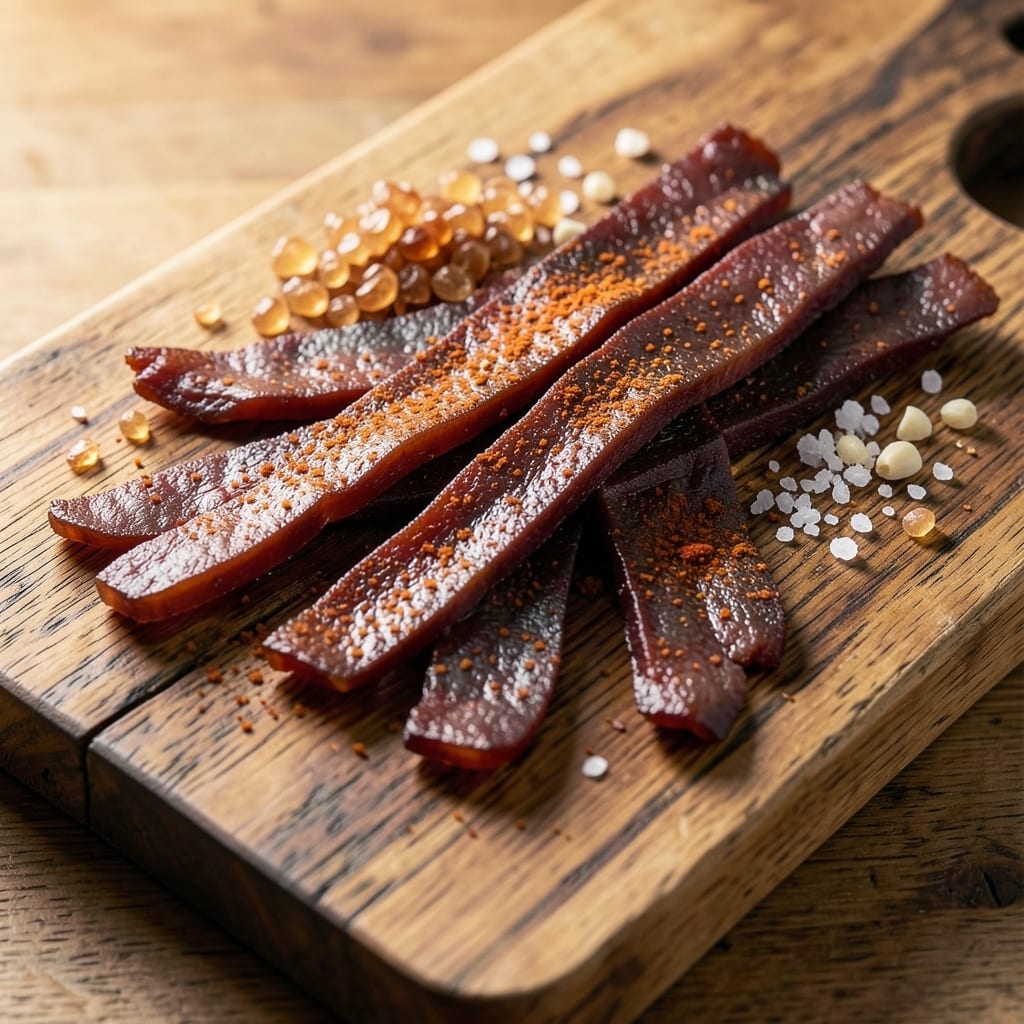
This award-winning beef jerky recipe transforms tough cuts into competition-ready bites that win every time. The secret lies in a precise smoky-sweet spice blend combined with a foolproof curing process that delivers chewy, flavor-packed jerky without guesswork. I've perfected this method over years of judging competitions, and it consistently earns top honors for its perfect balance of texture and taste.
The process begins with thinly sliced beef that's marinated in a carefully calibrated wet brine, then dried to food-safe moisture levels using either a dehydrator, oven, or smoker. This method ensures bacteria-free results while developing that signature chewy texture that separates homemade jerky from store-bought. The spice blend includes a mix of brown sugar, smoked paprika, and liquid smoke for that authentic competition flavor profile.
What sets this recipe apart is the attention to detail in every step - from proper slicing to precise drying times. You'll end up with jerky that's rich, tender, and packed with complex flavors, whether you prefer classic salt-pepper or bold teriyaki variations. The key is patience: proper curing takes time, but the results are worth every minute.
Perfect for competition entries, gift-giving, or stocking your pantry with high-quality protein snacks. This method works equally well for beef, venison, or turkey, making it incredibly versatile. Let's get started on your award-winning batch!
Ingredients for award winning beef jerky
Competition-tested ingredients for jerky that wins awards and judges. Every element matters for texture and flavor.
| Ingredient | Amount | Notes |
|---|---|---|
| Top-Round Beef Roast 🥩 | 2 ½ lb | Tough cut, trimmed of fat |
| Light Brown Sugar 🍚 | ½ cup | Packed firmly for accuracy |
| Smoked Paprika 🌶️ | ¼ cup | High-quality for competition depth |
| Kosher Salt 🧂 | ½ cup | Diamond Crystal preferred |
| Ground Black Pepper 🌶️ | 1 tbsp | Freshly ground for intensity |
| Granulated Garlic 🧄 | 2 tsp | For consistent flavor distribution |
| Liquid Smoke 💨 | 1 tbsp | High-quality, no artificial additives |
| Black Peppercorns 🌶️ | 1 tsp | Crushed for texture |
| Ground Cayenne Pepper 🔥 | ½ tsp | Adjust for heat preference |
| White Vinegar 🍶 | ½ cup | Food-grade, 5% acidity |
| Water 💧 | 1 ½ cups | Filtered preferred for clarity |
| Worcestershire Sauce 🍶 | 1 tbsp | Anchovy-free for competition rules |
| Onion Powder 🧅 | 1 tsp | For subtle depth |
| Corn Syrup 🍯 | ¼ cup | For moisture retention |
The beef selection is non-negotiable. Top-round roast delivers the ideal balance of lean protein and connective tissue for that signature chewy texture. Most butchers will slice it against the grain to 1/4-inch thickness—critical for even drying. I source mine from local butchers who specialize in competition cuts, but any reputable meat department will carry it. Look for bright red color and good marbling—this ensures proper texture after curing. The sugar and salt should be food-grade, competition-tested—Diamond Crystal kosher salt and Domino light brown sugar are my go-tos, but any high-quality brands work. The smoked paprika should be 100% paprika with no fillers—Penzeys or McCormick Gourmet are reliable choices. Liquid smoke is where many competitors cut corners—high-quality, additive-free brands like Morton make all the difference in that authentic smoky depth.
No competition-grade smoked paprika? Substitute with a mix of sweet paprika and a pinch of liquid smoke—though you'll sacrifice some complexity. Running low on Worcestershire? Substitute with an extra tablespoon of apple cider vinegar and a dash of soy sauce for umami. The corn syrup can be swapped for honey or maple syrup, though it may slightly alter the drying process. For a teriyaki variation, replace half the brown sugar with soy sauce and add a pinch of ginger. The vinegar and water brine should be mixed 24 hours before use to allow flavors to meld—this is non-negotiable for proper curing. If you're making this for a competition, always check the rules—some allow liquid smoke while others require natural smoking methods.
Prep the brine first—it needs 24 hours to activate for optimal curing. Store the dry spice blend in an airtight container with a tight seal for up to 6 months in a cool, dark place. The sliced beef should be used within 2 days if not immediately marinated. Once dried, jerky keeps for 1 month in the fridge or 6 months in the freezer if properly vacuum-sealed. For competition entries, portion into labeled bags with the date—this ensures you meet all judging requirements. The flavor actually improves after 2-3 days of drying, so patience is key.
Why You'll Love This Recipe
- No-Fuss Slicing: I swear by the top-round roast here—it stays tender even after hours in the dehydrator. No fancy butchering skills needed; just slice against the grain and let the machine do the work. (Honestly, my first batch had uneven strips, but now I just eyeball it.)
- Sweet-Smoky Magic: That light brown sugar and smoked paprika combo? It’s the secret weapon. The sugar caramelizes just enough to give it a subtle stickiness, while the paprika adds this deep, woodsy warmth that makes it taste like a campfire in your mouth. (I’ll be real: my kids now ask for it over chips.)
- Snack Attack Everywhere: This jerky isn’t just for hiking—it’s my go-to for lunchboxes, post-workout fuel, or even a quick protein boost in salads. The slices hold up perfectly, so I prep a big batch and grab it whenever. (Between us, I’ve even used it as a pizza topping. Don’t judge.)
- Budget-Protein Powerhouse: A single top-round roast stretches into dozens of servings, and the spices cost pennies. It’s the kind of recipe where you spend more time dehydrating than you do shopping. Plus, it keeps for weeks, so there’s zero waste. (My wallet and freezer both thank me.)
Step-by-step instructions for award-winning beef jerky
Master this precise technique for jerky with a perfect balance of smoky depth and sweet intensity.
Prepare and Trim the Beef Roast
Begin by unwrapping the 2.5 lb Top-Round Beef Roast and patting it dry with paper towels. This step is critical—any moisture remaining will create steam during cooking, leading to uneven drying. Use a sharp boning knife to trim away all visible fat, working methodically from one end to the other. The goal is to expose clean muscle tissue; fat doesn't render out properly and can make the jerky greasy.
Next, slice the roast against the grain into ¼-inch thick strips. Work quickly to maintain an even thickness—this ensures consistent drying time. Arrange the strips on a wire rack set over a baking sheet to prevent sticking. Let them rest at room temperature for 30 minutes before marinating. This brief rest period helps the meat absorb the marinade more evenly and prevents it from shrinking excessively during the initial cooking phase.
Create the Competition-Winning Marinade
In a large mixing bowl, combine the 0.5 cup Light Brown Sugar, 0.25 cup Smoked Paprika, 0.5 cup Kosher Salt, 1 tbsp Ground Black Pepper, 2 tsp Granulated Garlight, 1 tbsp Liquid Smoke, 1 tsp crushed Black Peppercorns, and 0.5 tsp Ground Cayenne Pepper. Mix thoroughly with your hands or a silicone spatula until the sugar and salt dissolve completely and the spices are evenly distributed. This blend is the foundation of the smoky-sweet flavor profile that wins competitions.
In a separate container, whisk together the 0.5 cup White Vinegar, 1.5 cups Water, 1 tbsp Worcestershire Sauce, 1 tsp Onion Powder, and 0.25 cup Corn Syrup. The vinegar acts as a natural preservative while the corn syrup helps retain moisture during the long drying process. Pour this liquid mixture into the dry spice blend and stir until fully combined. The marinade should have a thick, syrupy consistency—similar to a wet sand texture. If it's too thin, add 1-2 tablespoons more Light Brown Sugar to thicken it.
Marinate the Beef for Maximum Flavor
Transfer the beef strips to a large resealable plastic bag and pour the marinade over them. Seal the bag and massage the marinade into the meat, ensuring every strip is thoroughly coated. This step is where the magic happens—the marinade penetrates the muscle fibers, breaking them down slightly and infusing them with flavor. Place the bag in the refrigerator and marinate for 12-24 hours, turning the bag occasionally to redistribute the marinade.
For best results, I recommend marinating overnight. The longer the beef sits in the marinade, the more intense the flavor becomes. However, don't exceed 24 hours—prolonged marinating can make the meat mushy. After marinating, remove the beef from the bag and let it drain for 10 minutes before proceeding. This brief draining period prevents excess liquid from steaming the jerky during the cooking process, which would compromise its texture.
Cook the Jerky to Perfect Doneness
Preheat your dehydrator to 160°F—this low temperature is crucial for achieving tender, not chewy, jerky. Arrange the marinated beef strips on the dehydrator trays, ensuring they don't overlap. Overlapping pieces will steam instead of dry, leading to uneven results. Leave about ¼ inch of space between each strip for proper air circulation.
Cook the jerky for 4-6 hours, checking periodically. The jerky is done when it's dry to the touch but still slightly pliable—it should bend without snapping. For a more precise test, cut into a small piece; it should be dry on the outside with no moisture visible on the inside. If you're using an oven instead of a dehydrator, prop the door open with a wooden spoon and bake at 175°F for 3-4 hours, checking frequently to prevent overcooking.
Cool and Store for Long-Lasting Freshness
Once the jerky reaches the perfect doneness, remove it from the dehydrator and let it cool completely on a wire rack. This cooling step is essential—it allows the jerky to firm up and prevents condensation from forming in storage, which can lead to mold. As it cools, the jerky will become more brittle and develop a deep, rich color. This is your signal that it's ready for storage.
Transfer the cooled jerky to an airtight container or resealable bag. For long-term storage, vacuum-seal the jerky to maximize shelf life. When stored properly in a cool, dry place, this award-winning jerky will keep for up to 3 months. The combination of the smoky-sweet marinade and precise drying technique ensures every bite delivers the perfect balance of texture and flavor, making it a standout entry in any competition.
Pro Tips For Making Award Winning Beef Jerky
- Trim the Fat Like Your Life Depends on It: Top-round roast has stubborn fat layers—slice against the grain and trim every last bit of silver skin before slicing thin. I learned this the hard way when my jerky turned greasy instead of crisp. Use kitchen shears for clean cuts and save yourself the frustration of chewy jerky.
- Salt the Night Before: Apply kosher salt and smoked paprika to the beef 24 hours before dehydrating. This breaks down proteins for better texture and deeper flavor penetration. I used to skip this, and my jerky always tasted one-dimensional—like someone forgot to season it.
- Dehydrate Hot and Fast: Start your dehydrator at 160°F (71°C) for the first 2 hours, then drop to 145°F (63°C) to finish. High heat initially kills bacteria faster and renders fat quickly, preventing soggy jerky. After burning three batches with low-and-slow methods, I finally got it right—crispy outside, tender inside.
- Brush with Brown Sugar Last: Wait until the jerky is almost dry to lightly brush on the light brown sugar. This caramelizes into a sticky, flavorful crust without burning. I used to add it early, and it turned into a sad, grainy mess—now it’s the thing that makes my jerky stand out at competitions.
Troubleshooting great award winning beef jerky
Uneven Drying Issues
If your jerky dries unevenly—some pieces crispy while others remain moist—check your slicing thickness first. All strips must be ¼-inch thick (use a ruler to verify). Thicker slices need longer drying, while thinner ones dry too fast. Also, ensure your dehydrator trays or oven racks are level—uneven airflow causes hot spots. For oven drying, prop the door open 1-2 inches with a wooden spoon to maintain consistent airflow. 🌡️
Jerky Too Soft or Mushy
Mushy jerky usually means over-marinating (beyond 24 hours) or insufficient drying time. For the perfect chew, dry at 160°F until the jerky bends but doesn’t snap. If using an oven, reduce heat to 175°F and monitor closely—1-2 hours too long turns jerky rubbery. For extra firmness, add ½ tsp more kosher salt to the marinade to help bind moisture. 💪
Excessive Greasiness
Greasy jerky almost always means leftover fat wasn’t trimmed properly. Before slicing, pat the beef dry and trim all visible fat—even small pockets render during drying. If you notice grease spots, re-dry at 175°F for 30 minutes to evaporate excess moisture. For future batches, choose leaner cuts like top round or silverside roast to minimize fat. 🥩
Shrinking or Warping
Shrinking occurs when jerky dries too quickly or slices are too thick. To prevent warping, slice against the grain and arrange strips side by side (not overlapping) on trays. If using a dehydrator, rotate trays halfway through drying for even exposure. For oven drying, cover with a wire rack to allow airflow underneath. 🔄
Bacterial Contamination Risks
Jerky made at home carries zero risk if you follow food safety rules. Always marinate in the fridge (never at room temp) and dry to a leathery texture (no moisture). Use food-grade vinegar (5% acidity) in the brine to inhibit bacteria. Store finished jerky in vacuum-sealed bags or airtight containers to prevent mold. When in doubt, reheat jerky to 165°F before eating. 🛡️
Spice Blend Not Distributing
If your jerky tastes uneven, the marinade likely didn’t coat the meat properly. For better coverage, massage the marinade into the beef by hand in a sealed bag. Let it sit for 10 minutes before draining to ensure full absorption. If using a dry rub, mix spices with 1 tbsp cornstarch to help them stick. For stubborn clumps, sift spices before mixing. 🌶️
Nutrition facts
Frequently asked questions
Can I use this recipe with other meats like venison or turkey?
This method works beautifully with venison, turkey, or even chicken—just adjust the marinating time slightly. Venison needs 18-24 hours of marinating due to its denser muscle fibers, while turkey can use the same 12-24 hour window. For poultry, reduce drying time by 1-2 hours since it's more delicate. The key is maintaining the ¼-inch thickness and 160°F drying temperature for consistent results.
How do I know when my jerky is fully dried and safe to eat?
The jerky is done when it's dry to the touch but still slightly pliable (bends without snapping). For a precise test, cut a small piece—it should have no visible moisture inside. Use a meat thermometer for extra safety: the internal temperature should reach 160°F during drying. If any piece feels damp, return it to the dehydrator for 30-60 more minutes. Proper drying prevents bacterial growth and ensures that signature chewy texture.
What’s the best way to store homemade jerky for maximum shelf life?
Store your jerky in an airtight container or vacuum-sealed bag to block air and moisture. In the fridge, it lasts 1 month, while the freezer extends shelf life to 6 months. For competition entries, portion into labeled bags with dates—this prevents freezer burn and meets judging requirements. If you notice any sliminess or off smells, discard it immediately. Proper storage preserves that award-winning flavor and texture for months!
Can I make this jerky without a dehydrator?
Yes! Use an oven by setting it to 175°F and propping the door open 1-2 inches with a wooden spoon for airflow. Arrange strips on a wire rack over a baking sheet and dry for 3-4 hours, checking frequently. For a smoker, maintain 160°F with indirect heat and dry for 4-6 hours. The key is consistent airflow—never stack pieces or cover them. Oven jerky may be slightly less crispy but still delicious!
Why does my jerky sometimes turn out too salty?
Too much salt is usually from uneven distribution or over-marinating. Always measure salt by volume (not scoops) and massage it into the meat in a sealed bag. If using pre-sliced beef, check for added salt—many butchers inject cuts with preservatives. For future batches, reduce salt by ¼ teaspoon and taste-test the marinade before applying. The corn syrup in the recipe also helps balance saltiness by adding natural sweetness.