
Main Courses
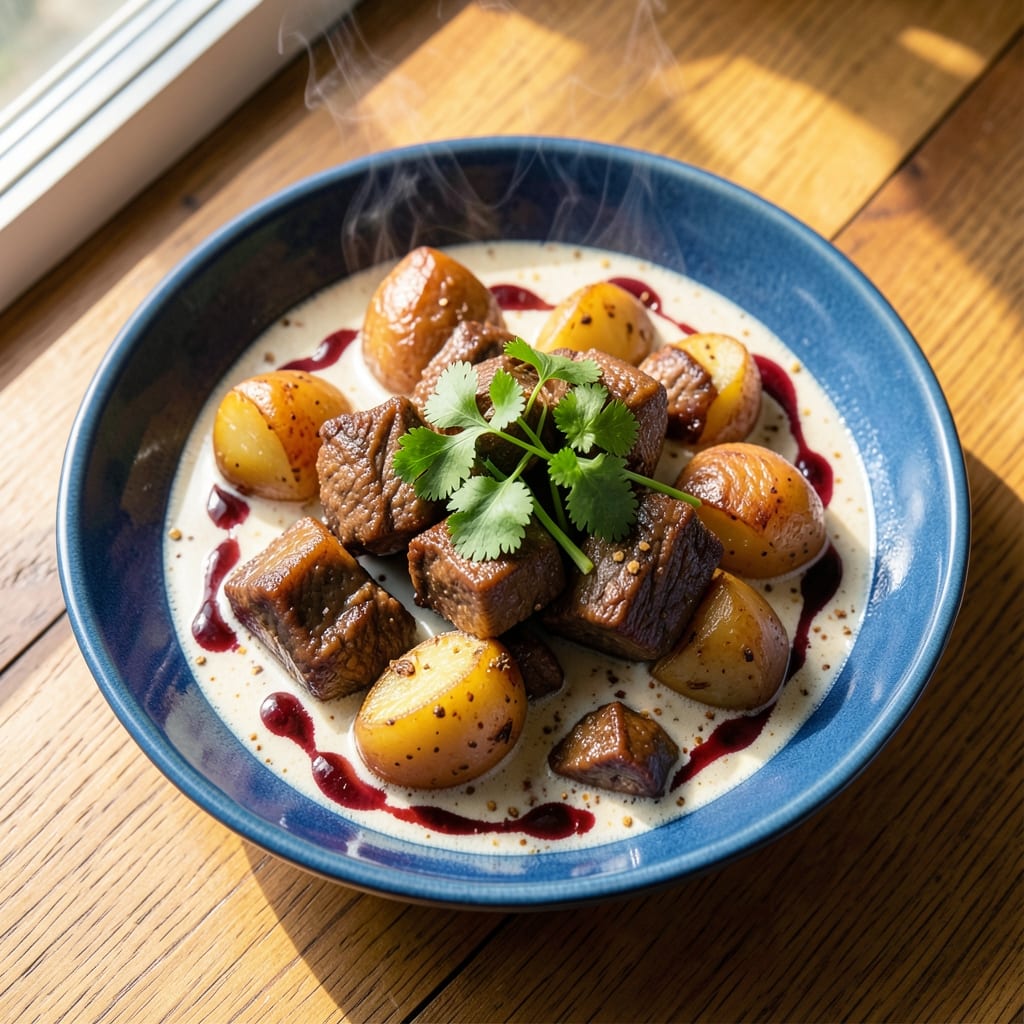
This authentic Thai beef Massaman curry recipe delivers the rich, aromatic balance of slow-cooked meat, tender potatoes, and fragrant spices that make it a Thai classic. The key lies in authentic Massaman curry paste—its blend of cinnamon, cardamom, and lemongrass creates a sweet-savory depth that sets it apart from other curries. I've perfected this version through years of testing, ensuring every element comes together for restaurant-quality results at home.
The magic happens in the slow simmer, where coconut milk and tamarind create a velvety sauce that coats tender beef and potatoes perfectly. Unlike quick stir-fries, this dish rewards patience—each hour deepens the flavors, transforming simple ingredients into a harmonious masterpiece. The final touch of crushed peanuts adds crunch and nutty contrast, balancing the dish's rich complexity.
What you'll achieve is a curry that's authentically Thai yet approachable for home cooks—no specialized equipment required. The beef becomes melt-in-your-mouth tender, the potatoes absorb the fragrant sauce, and the spices shine without overpowering. This is the kind of dish that transforms an ordinary weeknight into a flavorful celebration.
Serve with steamed jasmine rice to soak up every last drop of that luscious coconut sauce. The recipe scales beautifully for gatherings, and leftovers taste even better the next day as the flavors meld further. Let's create this Thai masterpiece together—step by step.
Ingredients for authentic thai beef massaman curry
Authentic Thai flavors begin with these carefully selected ingredients for restaurant-quality Massaman curry at home.
| Ingredient | Amount | Notes |
|---|---|---|
| Beef Chuck Roast 🥩 | 1 ½ lb | Trimmed of excess fat, cut into 1.5-inch cubes |
| Massaman Curry Paste 🌶️ | 3 tbsp | Authentic Thai brand preferred |
| Coconut Milk 🥥 | 1 can | Full-fat, 13.5 oz can |
| Tamarind Paste 🍋 | 1 ½ tbsp | Unsweetened, or substitute lime juice |
| Galangal 🌿 | 2 inch | Fresh root, peeled and sliced thin |
| Russet Potatoes 🥔 | 2 medium | Peeled and quartered |
| Red Curry Paste 🌶️ | 1 tbsp | For depth of flavor |
| Cinnamon Sticks 🌿 | 2 whole | For aromatic infusion |
| Cardamom Pods 🌿 | 6 whole | Lightly crushed |
| Lemongrass 🌿 | 1 stalk | Bruised and cut into 2-inch pieces |
| Peanuts 🥜 | ½ cup | Crushed, for garnish |
| Fish Sauce 🍶 | 1 tbsp | Red Boat brand preferred |
| Brown Sugar 🍚 | 2 tbsp | Light or dark |
| Jasmine Rice 🍚 | 2 cups | Uncooked, for serving |
| Olive Oil 🫒 | 1 tbsp | For searing beef |
The Massaman curry paste is non-negotiable for authenticity—Maesri or Thai Kitchen brands are my go-tos, but any quality Thai paste will work. Galangal can be tricky to find; Asian markets carry it fresh, or substitute with ginger at half the amount. The beef should be well-marbled chuck roast—Costco or Whole Foods carry excellent cuts. For the coconut milk, full-fat is essential—the richness is what makes this curry sing. I always buy extra peanuts since they're used for garnish and snacks alike.
No Massaman paste? Combine 1 tbsp each red and yellow curry paste with 1 tsp cinnamon for a close approximation. Galangal unavailable? Ginger plus a pinch of turmeric mimics its earthy profile. Fish sauce adds umami depth—Red Boat is the gold standard, but any reputable brand works. Tamarind paste can be replaced with lime juice plus 1 tsp sugar, though it won't be identical. The potatoes should be firm and starchy—Russets are ideal. For a quicker version, use baby potatoes whole.
This curry tastes even better the next day as flavors meld—plan ahead. Store in an airtight container for 4-5 days in the fridge or 3 months frozen. I like to make double batches since it reheats beautifully. For serving, steam jasmine rice separately—it absorbs the sauce perfectly. The crushed peanuts should be toasted lightly in a dry pan before adding to keep them fresh.
Why You'll Love This Recipe
- One-Pot Magic: I swear by this recipe when I’m too tired to scrub pots—just brown the beef, toss in the curry paste and coconut milk, and let it simmer. The galangal and tamarind do all the heavy lifting while you sip your wine (or tea, no judgment).
- Sweet-Savory Balance: That tamarind paste? It’s the secret weapon—tangy, rich, and just sweet enough to make your taste buds sing. Between us, I’ve tried skipping it, and I’ll never make that mistake again.
- Leftover Heaven: This curry actually improves the next day—beef gets tenderer, flavors meld deeper. I make a double batch on Sundays so I can reheat it for lazy nights or pack it for work.
- Budget-Friendly Luxury: Beef chuck roast is affordable, and a jar of Massaman paste stretches across multiple meals. Honestly, it feels like a fancy restaurant dish for half the cost—my wallet and I are both happy.
Step-by-step instructions for authentic Thai beef Massaman curry
Master this slow-cooked curry with rich spices and tender beef—authentic technique delivers restaurant-quality results.
Sear the Beef for Deep Flavor
Heat the 1 tablespoon olive oil in a heavy Dutch oven over medium-high heat until shimmering. Add the 1.5 lb beef chuck roast cut into 1.5-inch cubes, working in batches to avoid crowding. Sear each piece for 2-3 minutes per side until deeply browned and caramelized—this builds the foundation for rich flavor.
Remove the beef and set aside. If the oil isn't hot enough, the beef will steam instead of sear. You'll know it's ready when the edges turn golden brown and the meat releases easily from the pan. This step is non-negotiable for authentic depth.
Build the Spice Base
In the same Dutch oven, reduce heat to medium and add 3 tablespoons massaman curry paste and 1 tablespoon red curry paste. Stir for 1 minute until fragrant, then add 2 whole cinnamon sticks, 6 whole cardamom pods, and 2-inch galangal (peeled and sliced). Cook for 2 minutes to toast the spices—this releases their essential oils.
Add 1 stalk lemongrass (bruised and cut into 2-inch pieces) and stir for 30 seconds. The spices should smell intensely aromatic with notes of cinnamon, cardamom, and citrusy galangal. This aromatic base is the soul of Massaman curry—don't rush this step.
Simmer the Curry with Coconut and Tamarind
Pour in the 1 can coconut milk, scraping up any browned bits from the bottom. Stir in 1.5 tablespoons tamarind paste, 2 tablespoons brown sugar, and 1 tablespoon fish sauce. Return the beef to the pot, add 2 medium russet potatoes (peeled and quartered), and bring to a gentle simmer.
Cover and cook at 325°F for 1.5 hours, stirring occasionally. The curry should reduce slightly, coating the beef and potatoes in a thick, velvety sauce. You'll notice the tamarind adds a tangy depth while the coconut milk creates natural richness. Taste occasionally—adjust seasoning with more fish sauce or sugar if needed.
Finish and Garnish
Once the beef is fork-tender (it should pull apart easily), remove the cinnamon sticks and cardamom pods. Stir in 0.5 cup crushed peanuts and simmer uncovered for 5 minutes to thicken the sauce. The peanuts add a satisfying crunch and nutty contrast to the creamy curry.
Serve immediately over 2 cups cooked jasmine rice, garnished with additional crushed peanuts. The curry should be aromatic with layers of sweet, spicy, and tangy flavors—each bite should balance rich beef with creamy coconut and nutty peanuts.
Pro Tips For Making Authentic Thai Beef Massaman Curry
- Sear the Beef in Batches: I learned this the hard way—crowding the pan turns your beef into steamed cutlets instead of caramelized perfection. Work in 2-3 batches over medium-high heat with just enough oil to coat the bottom, and don’t rush it. That crust is what makes the curry sing later.
- Bloom the Paste Properly: After burning three batches of curry paste, I finally figured out: cook it in the same oil you seared the beef with, on medium-low for 5-7 minutes. Stir constantly—this releases the flavors and deepens the aroma without scorching. Skip this, and your dish will taste flat.
- Use Full-Fat Coconut Milk: Sounds weird, but it works: split the can of coconut milk—save ½ cup of the thick cream for the end. Stir it in last to create a velvety finish instead of a greasy mess. (Yes, even if you’re impatient like me.)
- Toast the Galangal: My grandmother swore by this, and she was right: slice the galangal into thick rounds, then lightly toast them in the same pan as the paste for 2 minutes. It mellows the sharpness and adds a nutty depth that raw galangal just can’t match.
Serving suggestions for this authentic thai beef massaman curry
Rice Pairings
Jasmine rice is the classic choice—its delicate, floral aroma complements the curry's rich coconut and spice notes beautifully. Cook 2 cups uncooked jasmine rice with 2.5 cups water for perfectly fluffy grains that soak up every drop of sauce. For extra authenticity, use a rice cooker set to "white rice" mode. 🍚
For texture contrast, try brown rice or forbidden black rice. These take longer to cook (35-45 minutes) but add earthy depth. I like to mix ½ cup cooked brown rice with white rice for added nuttiness and fiber.
Fresh Garnishes
Fresh cilantro leaves add brightness—chop ¼ cup and sprinkle over each serving just before eating. The citrusy notes cut through the coconut richness. For heat lovers, add 1 tsp Thai bird's eye chili slices (adjust to taste). 🌿
Lime wedges are essential—they balance the dish's sweetness. Serve with 2-3 wedges per bowl so guests can squeeze fresh juice as they eat. I also love adding thinly sliced cucumber for a refreshing crunch.
Bread Options
Warm Thai basil naan or garlic flatbread makes an excellent side. Brush with melted butter and sprinkle with toasted sesame seeds before serving. The bread's softness contrasts perfectly with the curry's hearty texture. 🥖
For a lighter option, serve with steamed pandan leaves or lemongrass-infused rice paper rolls**. These add aromatic complexity without overpowering the main dish. I often make extra to use in summer rolls later.
Drink Pairings
A crisp Thai iced tea (made with black tea, condensed milk, and lemon juice) is the perfect match—its sweetness complements the curry's savory depth. For a non-dairy option, try coconut water chilled with lime slices. 🍹
Light white wine like Pinot Grigio or Sauvignon Blanc works beautifully with the coconut and citrus notes. For beer lovers, a Thai lager such as Singha or Chang provides refreshing contrast.
Nutrition facts
Frequently asked questions
Why does authentic Massaman curry have potatoes?
Potatoes are essential—they absorb the rich coconut sauce and add hearty texture that balances the tender beef. In traditional Thai cuisine, potatoes soften during slow cooking while soaking up all the aromatic spices, creating a satisfying bite. This technique dates back to royal kitchens where Massaman was served as a complete meal.
Can I make this curry without Massaman paste?
Yes! For a substitute, mix 1 tbsp red curry paste + 1 tbsp yellow curry paste + 1 tsp cinnamon + ½ tsp cardamom. Toast the spices first to release their oils—this mimics the authentic paste's depth. The flavor won't be identical, but it'll still deliver that signature sweet-savory balance.
How do I prevent the curry from being too spicy?
Massaman curry is naturally mild, but if you're sensitive to heat, reduce the red curry paste to ½ tbsp and omit the galangal (substitute with ginger). For extra safety, add a pinch of sugar to balance any lingering spice. The tamarind and coconut milk naturally temper the heat in authentic preparations.
What's the best way to reheat leftovers?
Gently reheat in a pot over low heat with 1-2 tbsp water or coconut milk to prevent drying. Avoid microwaving—it can make the sauce watery. If the sauce thickens too much, stir in a splash of warm water. Leftovers actually improve as flavors meld over time!
Can I use chicken instead of beef?
While beef is traditional, you can use bone-in chicken thighs for moisture. Cook for 45 minutes instead of 1.5 hours—they'll be tender but retain some structure. For authenticity, stick with beef, but chicken works well for a lighter version. The potatoes will still soak up the sauce beautifully.