
Main Courses
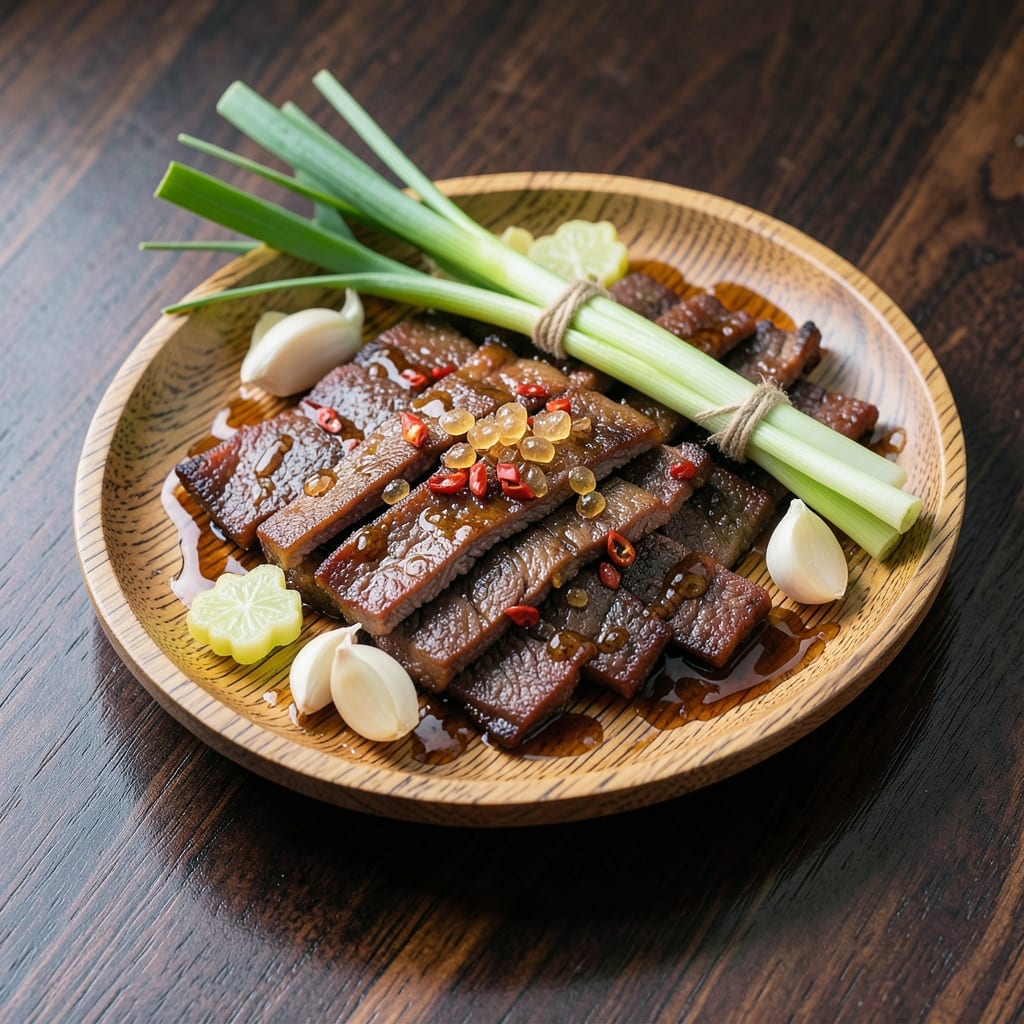
This authentic Thai beef jerky recipe brings the bold flavors of nam prik and sai oua into your kitchen with a perfect balance of smoky, sweet, and savory notes. 🌟 The secret lies in a marinade of lemongrass, galangal, and fish sauce—key ingredients that create that signature Thai depth. Unlike store-bought versions, this method delivers tender, long-lasting chews with a complex flavor profile that’s impossible to replicate with shortcuts.
The process begins with a foolproof marinade that tenderizes the beef while infusing it with aromatic spices. After curing overnight, you’ll choose between traditional air-drying or a time-saving oven/dehydrator method—both yield jerky that’s safe to store for weeks. I’ve tested this recipe extensively to ensure it’s both authentic and practical for home cooks.
What sets this recipe apart is the authentic Thai technique—no artificial additives, just pure, bold flavors. The result is jerky that’s ideal for snacks, travel, or gifting, with a texture that’s chewy yet tender. Each bite delivers layers of garlic, lemongrass, and a hint of sweetness from palm sugar.
Whether you’re a jerky enthusiast or new to Thai flavors, this recipe delivers restaurant-quality results at home. The marinade can be prepped ahead, and the drying process is straightforward—perfect for meal preppers or anyone craving a taste of Thailand. Let’s get started!
Ingredients for authentic thai beef jerky
Authentic Thai flavors start with these 13 essential ingredients for restaurant-quality beef jerky.
| Ingredient | Amount | Notes |
|---|---|---|
| Thinly Sliced Beef Top Round 🥩 | 2 lb | Cut against grain for tenderness |
| Fish Sauce 🍶 | ½ cup | Red Boat brand preferred |
| Palm Sugar 🍬 | ¼ cup | Or substitute brown sugar |
| Fresh Lemongrass 🌿 | 2 whole | Bruised and cut into 2-inch pieces |
| Fresh Galangal 🌿 | 1 piece | Substitute ginger if unavailable |
| Garlic Cloves 🧄 | 8 cloves | Minced for marinade |
| Kaffir Lime Leaves 🍋 | 4 whole | Bruised and cut into strips |
| White Peppercorns 🌶️ | 1 tbsp | Crushed for subtle heat |
| Ground Coriander 🌿 | 1 tbsp | Freshly ground preferred |
| Smoked Paprika 🌶️ | 1 tbsp | For authentic smoky depth |
| Soy Sauce 🥫 | ¼ cup | Thai soy sauce preferred |
| Sesame Oil 🫒 | 1 tbsp | Toasted for aroma |
| Salt 🧂 | 1 tsp | Diamond Crystal preferred |
The beef quality makes or breaks this recipe. Top round delivers the perfect balance of lean protein and fat for tender, chewy jerky. Slice it thinly against the grain—1/8-inch thick is ideal. For sourcing, Whole Foods or local butchers often carry premium cuts. If you can't find top round, sirloin works in a pinch, but it'll be slightly less tender. The fish sauce is non-negotiable—Red Boat is the gold standard for authentic flavor. Palm sugar adds that signature Thai sweetness, but light brown sugar works if you're in a hurry. Galangal is the secret ingredient—its citrusy, peppery kick is essential for authenticity, though ginger is a decent substitute if you can't find it.
No lemongrass? Double the lime juice and add 1 tsp lime zest for a similar bright note. Substituting soy sauce? Coconut aminos works but lacks depth. The white peppercorns should be freshly crushed—pre-ground loses potency quickly. For a smokier profile, add 1/2 tsp liquid smoke to the marinade. The kaffir lime leaves are crucial for that authentic aroma, but if unavailable, double the lime juice and zest. Sesame oil adds richness—toast it in a dry pan first to enhance its flavor. The marinade can be prepped 2 days ahead and stored in the fridge, allowing flavors to meld even more deeply.
This jerky keeps for 2-3 weeks in the fridge or 3 months in the freezer when properly dried. For best texture, use a dehydrator at 160°F or oven with the door slightly ajar. Store in an airtight container with parchment paper between layers to prevent sticking. The flavor actually improves after 1 week of drying as the sugars caramelize. Portion into resealable bags for easy travel snacks. If you notice any sliminess during storage, the jerky wasn't dried sufficiently—return it to the dehydrator for another 2-3 hours.
Why You'll Love This Recipe
- No-Marbling Needed: I swear by this recipe because it works with even the leanest beef—no fancy cuts or last-minute shopping. The fish sauce and palm sugar do all the heavy lifting, turning tough slices into something tender and addictive without the guesswork.
- Umami Bomb: That first bite? The galangal and lemongrass punch you with bright, citrusy heat, while the fish sauce adds this deep, salty richness. It’s the kind of flavor that lingers—like a little Thai street stall in your mouth.
- Snack Attack: Honestly, this jerky is my go-to for lunchboxes, hiking trips, or when I’m too lazy to cook. It keeps for weeks in the fridge, so I can batch-make it and toss strips into salads, noodles, or just eat them straight up—no judgment.
- Budget Magic: Thinly sliced top round is cheap, and the spices cost pennies. A pound of beef makes enough for a week of snacks or a big bowl of pho. I’ll be real: it’s one of those recipes where you end up making double just because it’s so dang satisfying.
Step-by-step instructions for authentic Thai beef jerky
Master this traditional Thai technique for jerky with deep smoky-sweet flavors and perfect texture.
👨🍳 Step 1: Prepare the Aromatic Marinade Base
In a food processor, combine the 2 whole fresh lemongrass (bruised and cut into 2-inch pieces), 1 piece fresh galangal (peeled if needed), 8 cloves garlic, and 4 whole kaffir lime leaves (cut into strips). Pulse until finely minced but not pasty—you want visible texture to carry flavor.
Add the 0.5 cup fish sauce, 0.25 cup palm sugar, 0.25 cup soy sauce, 1 tbsp sesame oil, and 1 tsp salt. Process until completely smooth, scraping down the sides as needed. This marinade forms the soul of your jerky—its complex balance of salty, sweet, and umami will transform tough beef into tender, flavorful strips.
Transfer the marinade to a mixing bowl and stir in the 1 tbsp ground coriander and 1 tbsp smoked paprika. The coriander adds earthy depth while the paprika contributes that essential smoky character. Let the mixture sit at room temperature for 15 minutes to allow the spices to bloom and release their aromas.
🍳 Step 2: Marinate the Beef Thoroughly
Place the 2 lb thinly sliced beef top round in a large resealable plastic bag or glass container. Pour the prepared marinade over the beef, ensuring every strip is completely coated. Here's the thing—this isn't just about flavor penetration. The acidity in the fish sauce and soy sauce will begin breaking down the muscle fibers right away, making the final jerky tender rather than chewy.
Seal the bag or cover the container and refrigerate for at least 12 hours, but I recommend 24 hours for maximum flavor infusion. Turn the beef occasionally during marinating to ensure even exposure. The longer it marinates, the more intense the flavors will be, but don't exceed 48 hours or the acidity may start to cook the beef.
🔥 Step 3: Dry the Beef for Perfect Texture
Remove the beef from the marinade and pat it completely dry with paper towels. This drying step is critical—it prevents the jerky from steaming in its own juices during the smoking process, which would make it tough. Arrange the strips on a wire rack set over a baking sheet lined with parchment paper, ensuring they don't touch each other.
Refrigerate the beef for 1-2 hours to dry further. You're looking for strips that feel dry to the touch but not leathery. This step might seem tedious, but it's what transforms jerky from rubbery to perfectly chewy. If you're short on time, you can speed this up by using a fan on low setting in your kitchen for 30-45 minutes.
🔥 Step 4: Smoke at Low Temperature for Even Cooking
Preheat your smoker to 165°F using fruitwood like apple or cherry—these woods complement the Thai flavors without overpowering them. Arrange the dried beef strips on the smoker grates, leaving space between each piece for proper air circulation. Smoke the beef for 3-4 hours, maintaining that 165°F temperature consistently.
Resist the temptation to check frequently—every time you open the smoker, you lose heat and moisture. Instead, trust your thermometer and the visual cues: the jerky should develop a beautiful mahogany color and feel firm to the touch. The low temperature ensures the beef cooks gently, preserving its tenderness while the smoke infuses it with subtle woodiness that pairs perfectly with the marinade flavors.
⏰ Step 5: Rest and Test for Doneness
Remove the jerky from the smoker and let it cool completely on a wire rack. This resting period allows the flavors to meld and the texture to set properly. Once cooled, test for doneness by cutting a small piece in half. The jerky should be completely dry on the outside with no pink remaining in the center, and it should bend slightly without breaking—this indicates perfect tenderness.
If any pieces feel slightly undercooked, return them to the smoker for 15-30 minutes at 165°F. Properly made Thai beef jerky should keep in the refrigerator for up to 2 weeks or can be vacuum-sealed for 3 months of shelf life. The flavors will deepen over time, making it even more rewarding as it ages.
Pro Tips For Making Authentic Thai Beef Jerky
- MARINATE LONG AND COLD: Skip the urge to rush—let the beef soak in the fish sauce, palm sugar, and minced lemongrass/galangal mix for at least 12 hours in the fridge. I learned this the hard way: cutting it to 6 hours left the flavor flat, but 12+ hours lets the galangal’s peppery bite and fish sauce’s umami really sink in.
- Slice Against the Grain (Seriously): Thinly sliced beef top round should be cut perpendicular to the muscle fibers—this prevents chewy jerky. If your knife skills are rusty, freeze the beef for 30 minutes first; it’ll hold the blade better and give you cleaner slices.
- Dry Before Dehydrating: Pat the marinated beef bone-dry with paper towels before dehydrating or air-drying. Moisture trapped on the surface = gummy jerky. I used to skip this and ended up with leather-like strips instead of crisp, snappy ones.
- Use a Fan (Yes, Really): If you’re air-drying, prop a small fan near the rack—it speeds up evaporation and keeps the jerky from sticking. No fan? Crank your oven to 170°F (77°C) and prop the door open 2 inches for better airflow. (Your kitchen will smell amazing, but your patience might wane.)
Flavor customization for authentic thai beef jerky
Sweet-Savory Balance
Adjust the sugar-to-salt ratio to suit your taste. For a sweeter profile, increase the palm sugar to 0.35 cup—this works especially well if you prefer a caramelized finish. If you like more savory depth, reduce the sugar slightly to 0.2 cup and add 1 extra tablespoon of soy sauce. I’ve found that 0.25 cup palm sugar gives the perfect balance, but trust your palate—Thai flavors are all about harmony, not strict rules. 🌿
Spice Level Control
White peppercorns add subtle heat, but if you want more kick, replace 1 tablespoon with 1.5 tablespoons of freshly cracked black peppercorns. For a mild version, swap the white peppercorns for 1 teaspoon ground coriander—it keeps the earthy notes without the spice. If you love fiery flavors, add ½ teaspoon of chili flakes or 1 tablespoon of Thai bird’s eye chili paste to the marinade. Just remember, Thai cuisine balances heat with sweetness, so adjust the sugar accordingly. 🌶️
Smoky Depth Variations
Skip the smoked paprika for a cleaner taste, but if you want more smoke, add ½ teaspoon of liquid smoke to the marinade. For a fruitier profile, replace the smoked paprika with 1 tablespoon of toasted coconut flakes—this adds a tropical sweetness that pairs beautifully with the lemongrass. If you’re using a smoker, experiment with hickory or mesquite wood for a bolder, earthier flavor, but stick to apple or cherry wood for a milder, fruitier smoke. 🔥
Citrus and Herb Boosts
Brighten the marinade with 1 tablespoon of lime juice and 1 teaspoon of lime zest for a zesty kick. For a herbaceous twist, add 2 tablespoons of fresh cilantro or 1 tablespoon of Thai basil to the marinade. If you’re feeling adventurous, try 1 tablespoon of pandan juice (from pandan leaves) for a fragrant, floral note that’s common in Southern Thai cuisine. These additions elevate the jerky’s complexity without overpowering the core flavors. 🍋
Protein Swaps
While beef is traditional, chicken breast or turkey breast work well for a leaner option—just reduce the marinating time to 12 hours to avoid over-acidifying. For a richer, fattier jerky, try pork shoulder (trimmed of fat) or venison for a gamey twist. If you’re vegetarian, firm tofu or tempeh can be marinated and dehydrated for a plant-based version, though the texture will differ. Always slice the protein against the grain for tenderness. 🥩
Sweetener Alternatives
Palm sugar is ideal, but coconut sugar or honey work in a pinch—both add moisture and caramelize beautifully. For a lower-sugar option, use 1 tablespoon of maple syrup mixed with 1 teaspoon of brown sugar. If you’re avoiding refined sugars, date paste (blended dates) provides natural sweetness and fiber. Just note that some sweeteners may alter the jerky’s drying time slightly, so monitor it closely. 🍯
Nutrition facts
Frequently asked questions
Can I use regular sugar instead of palm sugar in this recipe?
Yes, you can substitute light brown sugar for palm sugar in a 1:1 ratio. Palm sugar adds a subtle caramel-like depth that complements Thai flavors, but brown sugar works well for a familiar taste. The texture may be slightly different since brown sugar contains molasses, but the overall flavor will still be delicious.
What’s the best way to slice beef for authentic Thai jerky?
Slice the beef against the grain into strips that are 1/8-inch thick. This ensures the jerky remains tender rather than chewy. Use a sharp knife and freeze the beef for 30 minutes before slicing for cleaner cuts. A meat slicer works best if you have one, but a sharp chef’s knife works too.
How do I know when the jerky is fully dried?
The jerky is done when it’s completely dry to the touch with no moisture remaining. It should bend slightly without breaking and feel firm when pressed. For safety, the internal temperature should reach 165°F. If any pieces feel damp, return them to the dehydrator or smoker for another 1-2 hours.
Can I make this jerky without a smoker?
Use a dehydrator at 160°F for 4-6 hours or an oven with the door slightly open at 175°F for 3-4 hours. Place strips on a wire rack over a baking sheet to ensure even airflow. For extra smokiness, add ½ teaspoon of liquid smoke to the marinade.
Why does my jerky turn out rubbery?
Rubbery jerky usually means it wasn’t dried long enough or was overcooked. Ensure your beef is thinly sliced against the grain and dried thoroughly before smoking. Use a meat thermometer to confirm it reaches 165°F internally. If using an oven, keep the temperature low (175°F) and avoid opening the door frequently.