
Main Courses
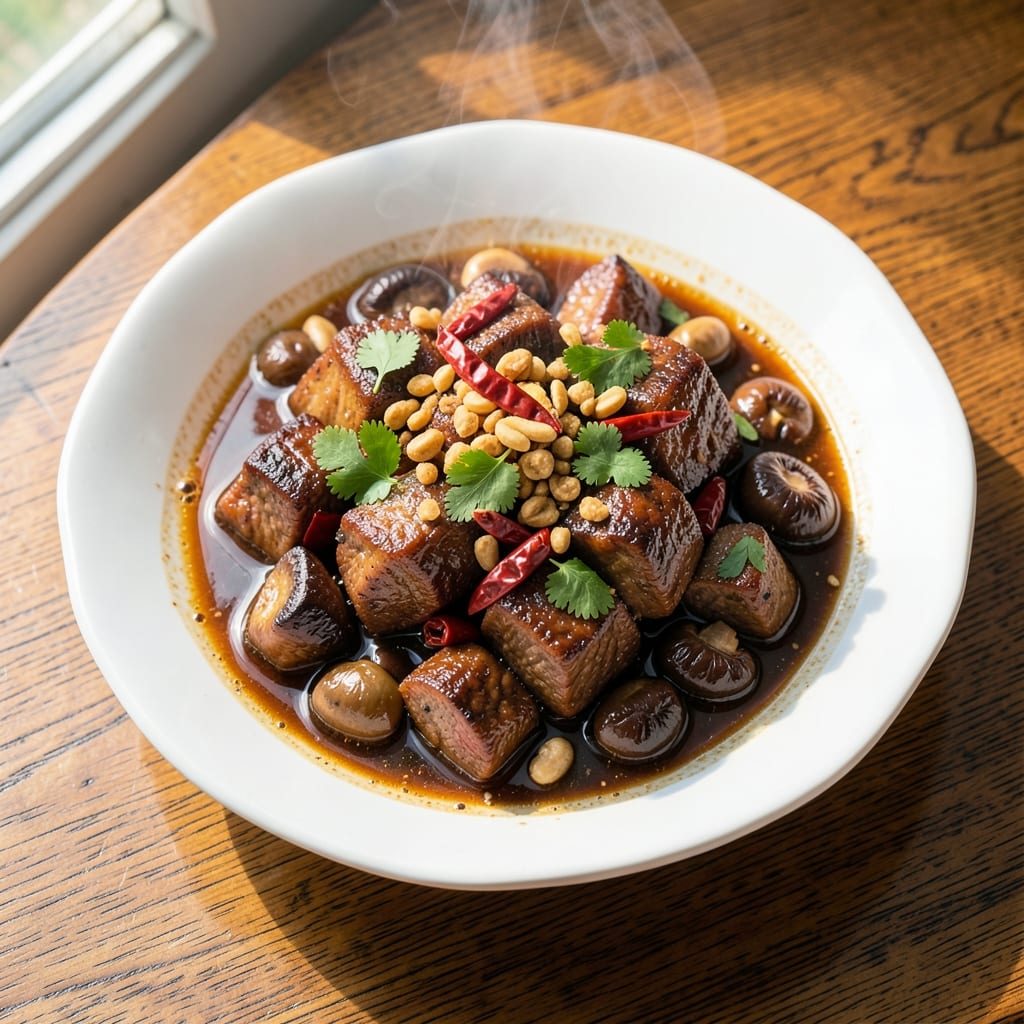
This authentic kung pao beef delivers the bold, smoky, and slightly sweet flavors that define Sichuan cuisine—crispy beef, toasted peanuts, and a sauce that balances heat, tang, and umami in every bite. The secret lies in high-heat wok cooking, a technique called wok hei that creates that signature smoky aroma and crispy edges. I’ve perfected this recipe over years of testing, ensuring the beef stays tender while developing a caramelized crust that’s irresistibly crunchy.
The foundation of great kung pao beef is the sauce—a harmonious blend of soy sauce, rice vinegar, fermented black beans, and chili paste, sweetened just enough to balance the heat. Unlike many Westernized versions, this recipe skips shortcuts like pre-made sauces, opting instead for fresh ingredients and careful toasting of peanuts and garlic for maximum depth. The beef is marinated in a simple mix of cornstarch and spices, ensuring it sears perfectly while staying juicy.
By the end, you’ll have a dish that’s as visually striking as it is flavorful—golden-brown beef, glossy sauce, and crunchy peanuts scattered on top. The aroma alone will draw everyone to the table, while the first bite delivers a perfect balance of textures and flavors. Serve it over steamed jasmine rice to soak up every last drop of that smoky, spicy sauce.
This isn’t just another take on kung pao beef; it’s the real deal, brought to life with techniques and ingredients that honor its Sichuan roots. Whether you’re cooking for a crowd or treating yourself to a restaurant-quality meal at home, this recipe delivers the authentic, crispy experience you’ve been craving.
Ingredients for authentic kung pao beef
The essential ingredients for authentic kung pao beef—bold flavors meet crispy texture in every bite.
| Ingredient | Amount | Notes |
|---|---|---|
| Beef Chuck Roast 🥩 | 1 ½ lb | Cut into 1-inch cubes |
| Dried Shiitake Mushrooms 🍄 | 4 whole | Rehydrated, sliced |
| Dried Red Chilies 🌶️ | 2 pieces | Stemmed, seeded |
| Garlic Cloves 🧄 | 8 cloves | Minced for marinade |
| Fresh Ginger 🌿 | 1 ½ tbsp | Grated, juiced |
| Light Soy Sauce 🥄 | ½ cup | Kikkoman preferred |
| Shaoxing Wine 🍷 | ¼ cup | Substitute dry sherry |
| Rice Vinegar 🍶 | ¼ cup | White vinegar substitute |
| Fermented Black Beans 🫘 | ¼ cup | Rinsed, chopped |
| Sichuan Chili Paste 🌶️ | 2 tbsp | Lao Gan Ma brand |
| Cornstarch 🌾 | ¼ cup | For velveting beef |
| Peanuts 🥜 | ½ cup | Roasted, unsalted |
| Green Onions 🧅 | 4 whole | Sliced, white and green parts |
| Sesame Oil 🫒 | 1 tbsp | Toasted for aroma |
| Vegetable Oil 🫒 | ½ cup | High smoke point |
| Salt 🧂 | 1 ½ tsp | Kosher or sea salt |
| White Sugar 🍚 | 1 tbsp | Balances heat |
The beef is non-negotiable—chuck roast delivers that signature tender-yet-crispy texture. Trader Joe's or Asian markets carry pre-cut cubes, but ask for chuck if buying whole. Look for good marbling, not lean cuts. Shiitake mushrooms add umami depth, so dried is best—rehydrate in hot water for 20 minutes. For the chilies, red dried chilies from bulk bins at Penzeys or H Mart give authentic heat without overpowering. The garlic and ginger should be freshly grated or minced—pre-minced loses flavor fast.
No Shaoxing wine? Dry sherry works in a pinch, but the alcohol helps tenderize the beef. Fermented black beans can be found in the Asian aisle of most supermarkets—Lee Kum Kee is reliable. Sichuan chili paste is a game-changer; Lao Gan Ma is the gold standard, but Huy Fong works too. Peanuts should be roasted and unsalted—store-bought versions often have added oils. For the cornstarch, Bob's Red Mill is my go-to, but any quality brand works. The rice vinegar adds tang, but white vinegar at half the amount gets you close if you're in a hurry.
Store the dried chilies and shiitake mushrooms in a cool, dark place for up to 6 months. Once rehydrated, mushrooms keep 5 days in the fridge. The marinated beef can be prepped 1 day ahead—store in an airtight container with the marinade. For leftovers, reheat gently in a wok with a splash of water to restore crispiness. This dish freezes beautifully for 3 months—just thaw in the fridge overnight before reheating.
Why You'll Love This Recipe
- One-Pan Magic: I swear by this recipe when I’m too tired to clean up. Sear the beef, toss in the shiitakes and chilies, and let the wok do the work—no extra pots, no stress.
- Umami Bomb: That beef chuck roast turns so tender it melts, while the dried shiitakes soak up flavor like sponges. Honestly, the first bite makes me question why I don’t make this every week.
- Weeknight Workhorse: Between us, this is my go-to when friends drop by or I need a meal that feeds a crowd without fuss. Double the batch, and you’ve got lunch sorted for days—no sad leftovers here.
- Budget-Friendly Fire: Chuck roast is cheap, dried chilies last forever, and a few shiitakes stretch across multiple meals. I’ll be real: it’s the kind of recipe that makes me feel like I’m eating fancy without breaking the bank.
Step-by-step instructions for authentic Kung Pao beef
Master the wok-hei technique and perfect velveting for restaurant-quality Kung Pao beef.
Prepare the Beef with Velveting Technique
Cut the 1.5 lb beef chuck roast into 1-inch cubes and place them in a mixing bowl. Add the 0.25 cup cornstarch, 1.5 tsp salt, and 1 tbsp white sugar, then toss gently until each piece is fully coated. This velveting process creates a tender, silky texture that's essential for authentic Kung Pao.
Let the coated beef rest for 15 minutes at room temperature while you prepare the marinade. This resting period allows the cornstarch to begin breaking down the meat fibers, ensuring maximum tenderness. Don't skip this step—it makes all the difference in the final texture.
Create the Signature Sauce Base
In a small bowl, whisk together the 0.5 cup light soy sauce, 0.25 cup shaoxing wine, 0.25 cup rice vinegar, 2 tbsp sichuan chili paste, and 1.5 tbsp fresh ginger juice. This combination creates the perfect balance of salty, sweet, tangy, and spicy flavors that define authentic Kung Pao.
Simmer this mixture in a small saucepan over medium heat for 5 minutes until slightly reduced. The sauce should thicken just enough to coat the back of a spoon. Remove from heat and set aside—this prepped sauce will infuse the beef with maximum flavor during cooking.
Rehydrate and Prepare Aromatics
Soak the 4 whole dried shiitake mushrooms in hot water for 20 minutes, then drain and slice. In a separate bowl, combine the 8 cloves minced garlic, 0.25 cup chopped fermented black beans, and 4 whole sliced green onions. These aromatics form the flavor foundation of the dish.
Toast the 0.5 cup peanuts in a dry skillet over medium heat for 3-4 minutes until golden and fragrant. Remove and set aside—these will add the signature crunch. In the same skillet, heat 1 tbsp sesame oil and quickly sauté the garlic and black beans for 30 seconds until fragrant. This step builds the aromatic base before combining everything.
Cook the Beef to Perfect Doneness
Heat 0.25 cup vegetable oil in a wok or large skillet over high heat until shimmering. Working in batches, add the cornstarch-coated beef and sear for 1-2 minutes per side until the exterior develops a golden crust. The high heat is crucial—it creates the wok-hei (breath of the wok) that gives authentic Kung Pao its signature smoky aroma.
Once all beef is browned, add the prepped sauce mixture and 0.25 cup sliced shiitake mushrooms to the wok. Stir-fry vigorously for 2-3 minutes until the sauce coats the beef evenly. The beef should be tender but still slightly firm to the touch—it will continue cooking from residual heat.
Combine and Finish with Wok-Hei
Return the beef to the wok and add the toasted peanuts and green onions. Stir-fry for an additional 1-2 minutes until everything is heated through and the peanuts are evenly distributed. The dish should be vibrant, with visible red chilies and peanuts throughout.
Taste and adjust seasoning if needed—add a splash of water if the sauce is too thick. Serve immediately over steamed rice, ensuring each bite delivers the perfect balance of tender beef, spicy heat, and nutty crunch. The dish should be hot, aromatic, and packed with contrasting textures that make Kung Pao so addictive.
Pro Tips For Making Authentic Kung Pao Beef
- CUT BEEF THINLY BEFORE SEARING: I learned this the hard way—thick slices of chuck roast won’t cook through properly in the stir-fry stage. Use a sharp knife (or butcher’s twine to tie the roast and slice against the grain) to get ¼-inch strips. They’ll finish cooking in the sauce, not turn to shoe leather.
- SOAK SHIITAKES IN HOT WATER: Cold soaking makes mushrooms gummy. Instead, pour boiling water over dried shiitakes for 15 minutes, then drain and squeeze out excess liquid. This keeps them chewy but not soggy—critical when they’re the dish’s texture anchor.
- STOP THE SAUCE BEFORE IT BOILS: Kung pao sauce needs to simmer, not bubble violently. After adding the sauce to the beef, reduce heat to medium-low and let it coat everything evenly. I used to rush this and ended up with a thin, watery mess instead of a glossy, clinging sauce.
- TOAST CHILIES AND GINGER FIRST: Dry-toast the dried chilies in a separate pan until fragrant (about 30 seconds), then add them to the garlic and ginger. This deepens their flavor and prevents them from turning bitter in the oil. (Yes, even if you’re impatient like me—trust the process.)
Regional styles of authentic kung pao beef
Sichuan Roots
Kung Pao beef originated in Chongqing, Sichuan province, where the cuisine thrives on bold flavors and wok-hei technique. The dish was traditionally made with chili oil, fermented black beans, and dried chilies to create that signature fiery kick. I always recommend using Lao Gan Ma chili paste for that authentic Sichuan heat—it’s the secret weapon behind the dish’s complexity. 🌶️
The original version included diced pork alongside beef, but the modern Chinese-American adaptation focuses solely on beef for a richer, meatier experience. The dish was popularized in the 19th century by Governor Zhai of Sichuan, who allegedly served it to visiting officials—hence the name "Kung Pao," meaning "palace-born."
Hong Kong Twist
Hong Kong chefs later refined the dish by emphasizing peanut crunch and a slightly sweeter sauce profile. Their version often includes toasted sesame oil and a touch of white sugar to balance the heat. I love adding a splash of Shaoxing wine to the marinade—it tenderizes the beef while adding depth. The Hong Kong style also incorporates dried shrimp for extra umami, though it’s optional. 🍜
In Hong Kong restaurants, the beef is typically velveted (marinated in cornstarch) to achieve that signature tender-yet-crispy texture. This technique was perfected in the 1950s and remains a staple in dim sum and banquet cuisine. The dish is often served with steamed jasmine rice to soak up the bold flavors.
Taiwanese Adaptation
Taiwanese chefs take Kung Pao beef to the next level by adding dried scallops and wood ear mushrooms for texture and umami. The sauce is often thicker, almost glaze-like, with a deeper caramelization from prolonged stir-frying. I’ve found that Taiwanese-style versions use more garlic and ginger, giving it a sharper, more aromatic profile. 🧄
Another key difference is the heat level—Taiwanese versions tend to be milder but with a lingering smokiness. They also incorporate fermented soybean paste (like douchi) for an earthy depth. If you’re feeling adventurous, try adding 1 tbsp douchi to the sauce for that authentic Taiwanese touch.
Modern Fusion
Today, chefs worldwide are putting their own spin on Kung Pao beef. In California, you’ll find versions with avocado and lime for a fresh twist, while New York restaurants often add bacon or maple syrup for a sweet-savory balance. I’ve even seen vegetarian adaptations using mushroom "beef" and tofu that mimic the texture beautifully. 🥑
For a spicy kick, some modern versions include fresh Thai chilies or gochujang (Korean chili paste) for a fusion of flavors. If you’re experimenting, try adding 1 tsp gochujang to the sauce for a Kung Pao-Korean BBQ mashup. The possibilities are endless, but always keep the wok-hei technique at the heart of the dish.
Nutrition facts
Frequently asked questions
Why does authentic kung pao beef use cornstarch?
The cornstarch creates a process called velveting, which gives the beef that signature tender-yet-crispy texture. When the beef is coated and seared at high heat, the cornstarch forms a delicate crust that locks in juices while developing that irresistible wok-hei aroma. This technique is essential for authentic Sichuan cuisine and makes all the difference in the final texture.
Can I make kung pao beef without Sichuan chili paste?
Yes, but you’ll lose some authentic heat and depth. For a substitute, mix 1 tbsp chili flakes with 1 tbsp soy sauce and 1 tsp sugar to mimic the flavor. If you want to stay closer to the original, try Lao Gan Ma chili crisp (the oil version) instead—it’s easier to find in Asian markets and packs a similar punch.
How do I adjust the heat level in this recipe?
For a milder version, reduce the Sichuan chili paste to 1 tbsp and add ½ tsp sugar to balance. For extra heat, increase the chili paste to 3 tbsp and add 1-2 sliced fresh red chilies during stir-frying. Remember, the peanuts and green onions can be removed after cooking if you prefer less texture contrast.
What’s the best way to reheat leftover kung pao beef?
Reheat in a wok or skillet over medium-high heat with 1 tbsp vegetable oil and 2 tbsp water to restore crispiness. Stir constantly for 2-3 minutes until everything is piping hot. Avoid microwaving—it makes the beef soggy and dulls the flavors. For extra authenticity, finish with a quick toast of the peanuts in a dry pan.
Can I make this recipe with chicken instead of beef?
Use 1.5 lbs boneless chicken thighs (they’re juicier than breasts) and reduce the cornstarch to 2 tbsp. Cut the chicken into 1-inch pieces and marinate for 10 minutes instead of 15. The cooking time will be slightly shorter—just 3-4 minutes per side for the chicken to reach 165°F internally. The peanut crunch and sauce will complement the lighter meat beautifully.